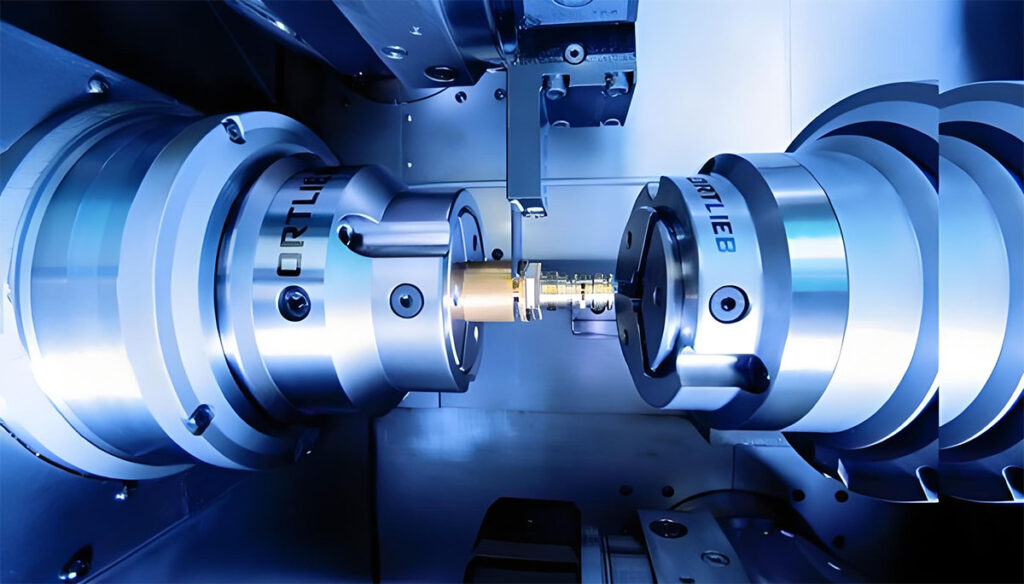
In today’s fast-changing industrial world, precision is everything. Whether it’s a small medical screw or a complex aerospace fitting, every part must meet tight specifications. That’s where Multi-axis CNC Turning Parts come in. These components are made using advanced machines that rotate and cut from different angles, all in one go. That means fewer errors, faster results, and higher quality.
If you’re an engineer, designer, or business owner who depends on accurate metal or plastic parts, understanding this process can help you choose the right solution. In this article, we’ll explain the key features of multi-axis CNC turning, show its real-world uses, and offer helpful advice to make the most of it.
Understanding Multi-axis CNC Turning Parts
Multi-axis CNC turning parts are made by machines that rotate the part and use tools to cut it into shape. The term “multi-axis” means the machine moves in more than just the basic X and Z directions. Extra axes allow the machine to reach complex angles and make cuts in one go.
For example, a 3-axis lathe moves left-right, up-down, and back-forth. But a 5-axis machine adds rotary movements that let it work on multiple sides without changing the setup. This creates more accurate parts, faster and with fewer errors.
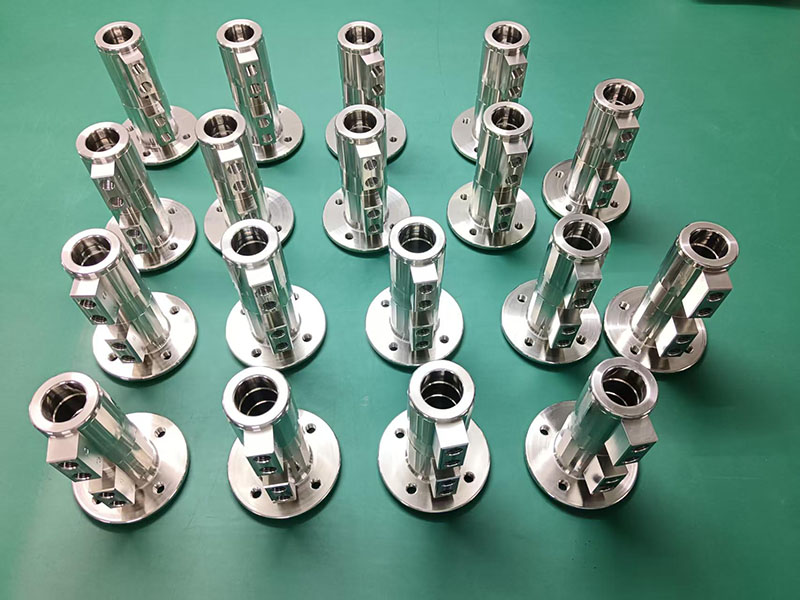
Multi-axis CNC turning is used in almost every modern industry—from satellites to surgical tools. It combines speed, precision, and flexibility to produce complex parts that were once impossible or very expensive to make.
Types of Multi-Axis CNC Machines
Different machines are built for different tasks. Here are the most common ones.
| Type | Movement | Use Case |
| 3-Axis | X, Y, Z | Simple turning and drilling |
| 4-Axis | X, Y, Z + A (rotation) | Side holes, grooves, or contour shaping |
| 5-Axis | X, Y, Z + A & B | Complex curves and part geometry |
| 9-Axis | All above + Sub-spindle | Multi-tool cutting in one pass |
These machines can perform many tasks like drilling, milling, and cutting without changing the part’s position. That’s why multi-axis machines save time and increase accuracy.
How Multi-Axis CNC Turning Parts Are Made
The process starts with a digital 3D model, usually made in CAD software. This model is sent to CAM software, which creates toolpaths and machine code. Here’s a simplified version of the steps:
- Design: Create a digital file of the part.
- Programming: Use CAM software to plan cutting paths.
- Setup: Load material and tools into the CNC machine.
- Turning: Machine cuts the part following code instructions.
- Inspection: Use tools like CMM to check the final part.
Using fewer setups means fewer human errors and tighter tolerances.
Benefits of Using Multi-axis CNC Turning Parts
Why are these parts becoming so popular? Here are the top benefits:
- Higher Precision: Cuts from multiple angles in one go.
- Time-Saving: No need to reset the part between operations.
- Less Labor: One operator can run multiple machines.
- Better Finish: Smooth surfaces with fewer marks.
- Cost Efficiency: Lower error rates reduce material waste.
Whether you’re building a prototype or running a full production, multi-axis turning gives you a clear edge.
Applications in Various Industries
Let’s see how different industries benefit:
- Aerospace: Engine mounts, turbine blades, and sensor housings must handle high stress. CNC turning meets those needs.
- Medical: Implants, surgical tools, and equipment require extreme precision.
- Automotive: Engine parts, brake components, and gear systems.
- Electronics: Connectors, cooling parts, and frames for devices.
These industries rely on exact, clean, and reliable components. Multi-axis CNC turning delivers that consistently.
Design Tips for Multi-Axis CNC Turning Parts
Want to get the best results? Keep these tips in mind:
- Avoid Deep Pockets: Harder to reach and cut.
- Keep Wall Thickness Even: Helps with cooling and reduces warping.
- Use Fillets Instead of Sharp Corners: Easier on the tools.
- Include Tolerances on Critical Features: Makes inspection easier.
These tips help reduce machining time and avoid expensive mistakes.
Materials Suitable for Multi-Axis Turning
Not all materials are the same. Each type has its own cutting needs
| Material | Use Case |
| Aluminum | Light and easy to machine |
| Titanium | Strong, ideal for aerospace and medical |
| Stainless Steel | Rust-proof, good for food and health tools |
| Brass | Soft and precise, used in electronics |
| Plastics (PEEK, Delrin) | Lightweight, used in medical and automotive |
Each material may require different tools, speeds, or coolant. Experienced machine shops know how to handle them all.
10 Tips for Multi-axis CNC Turning Parts
1. Choose the right material early.
2. Keep your designs simple where possible.
3. Use trusted CAD/CAM software.
4. Collaborate with experienced machinists.
5. Avoid thin walls that may warp.
6. Set clear tolerance limits.
7. Use standard features when possible.
8. Always plan for inspection and QA.
9. Prototype before full production.
10. Choose a reliable supplier with certifications.
FAQs
What are multi-axis CNC turning parts used for?
They’re used in aerospace, medical, automotive, and electronics industries where precision is critical.
How many axes are typical in CNC turning?
Most shops use 3 to 5 axes, but high-end machines can go up to 9 axes.
Is multi-axis CNC machining expensive?
It may cost more upfront but saves money in the long run by reducing errors and labor.
Can multi-axis CNC machines work with plastic?
Yes, they can handle many plastics like PEEK, Delrin, and Nylon.
What’s the difference between milling and turning?
Turning rotates the part; milling rotates the tool. Multi-axis machines often do both.
Do I need special software for multi-axis CNC?
Yes, advanced CAM software is required to program the tool paths accurately.
Are multi-axis parts stronger?
They can be, due to reduced stress and more even surfaces.
What tolerances can multi-axis machines achieve?
They can reach tolerances of ±0.001mm depending on the machine and material.
Can I use multi-axis CNC for prototyping?
Absolutely! It’s a great choice for both prototypes and mass production.
What should I look for in a CNC supplier?
Check for certifications, modern equipment, strong support, and great customer feedback.
Conclusion
Multi-axis CNC turning parts are a revolution in modern manufacturing. They allow for high complexity, perfect accuracy, and time-saving production. Whether you’re making hundreds of parts or a single prototype, the technology adapts to your needs. From aerospace to medical, these parts shape the future of industries.
Multi-axis CNC turning parts bring efficiency, accuracy, and flexibility to your production line. They are a smart choice for anyone in need of high-quality components. By understanding the process and choosing the right partner, you can improve your products and reduce costs. It’s a powerful tool for any modern manufacturer.
Thank you for reading! SYM Precision Machining is ready to support your next high-precision project—get in touch today!
Related Articles: 5-Axis CNC Precision Machining Services, How to Choose the Right CNC Turning Shop?