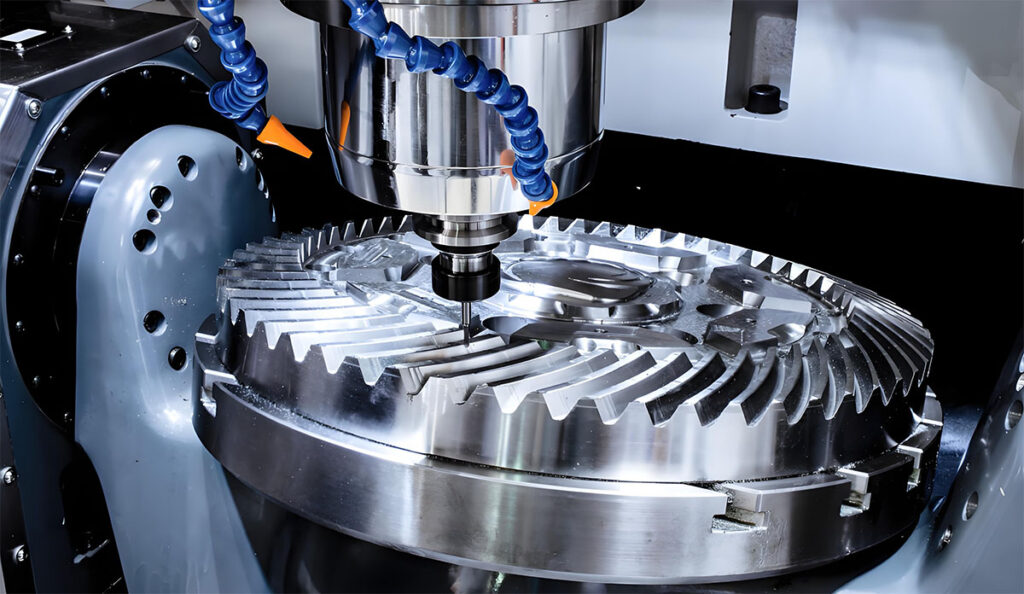
Discover how 5-axis CNC precision machining services revolutionize complex part production with unmatched speed, accuracy, and versatility.
Today’s manufacturers are under pressure to deliver precision, speed, and efficiency like never before. From aerospace turbines to medical implants, the demand for complex, high-tolerance parts is growing fast. That’s where 5-axis CNC precision machining services step in changing the game in modern fabrication.
At its core, 5-axis machining refers to the ability of a CNC machine to move a cutting tool or part along five different axes at once. This allows shops to produce highly intricate parts with fewer setups and faster turnaround times. In this guide, we’ll break down the ins and outs of 5-axis CNC machining, its key benefits, and how to choose the right partner for your next project.
Let’s explore why 5-axis machining isn’t just the future — it’s already here.
Introduction to 5-Axis CNC Precision Machining Services
5-axis CNC precision machining services offer cutting-edge capabilities that go beyond the traditional 3-axis or 4-axis systems. So, what exactly makes this method so special?
In simple terms, a 5-axis CNC machine can move a part or a cutting tool along the X, Y, and Z linear axes, but also rotate on the A and B (or sometimes C) axes. This freedom allows the tool to approach the part from any direction. As a result, machinists can create complex geometries in a single setup that might otherwise require multiple machines and steps.
These services are particularly ideal for high-precision industries such as aerospace, automotive, and medical device manufacturing where accuracy, complexity, and surface finish are non-negotiable.
Understanding how 5-axis machining operates helps you appreciate its power. Here’s how it goes down:
- Simultaneous motion: The machine tool moves in five directions at the same time, keeping the cutting tool at an optimal angle.
- Tool orientation: It adjusts the angle of the cutting tool relative to the surface, improving access and precision.
- Complex surfaces: Sculpted or contoured parts become much easier to machine.
Advanced Computer-Aided Manufacturing (CAM) software calculates the toolpath and controls the motion in real-time. This synergy between hardware and software delivers smooth, highly accurate cuts, even on curved surfaces or tight corners.
Benefits of 5-Axis CNC Precision Machining
There’s a reason shops all over the world are upgrading to 5-axis. Let’s walk through some key advantages:
- Fewer setups: You can machine five sides of a part in a single setup, saving time and improving accuracy.
- Better surface finish: Since the tool stays at a more consistent angle, the result is a smoother finish.
- Greater accuracy: Less repositioning means fewer errors and tighter tolerances.
- Shorter lead times: Faster machining and less manual labor lead to faster delivery.
- Extended tool life: Optimized angles reduce stress and vibration on the tool.
Whether you’re making turbine blades or dental implants, 5-axis machining helps get it done better and faster.
Industries That Rely on 5-Axis CNC Machining
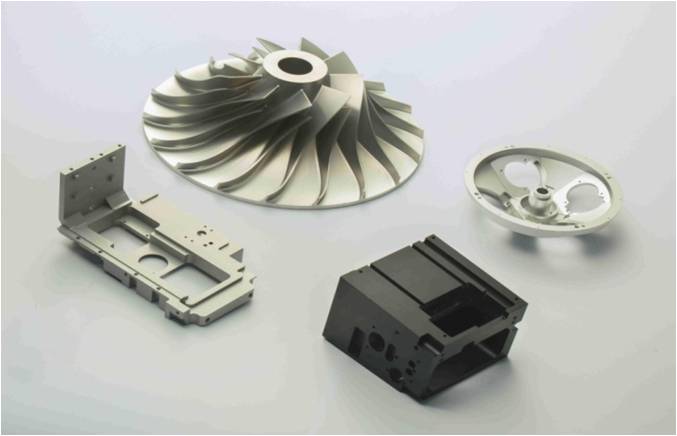
This technology isn’t just for niche jobs. It’s revolutionizing many everyday parts, like:
— Complex medical implants
— Aerospace impellers and housings
— Optical instrument casings
— Custom jigs and fixtures
— High-performance automotive components
— Consumer electronics prototypes
With the ability to hold tight tolerances, all these 5-axis cnc machining jobs aren’t limited to just one field. They’re at home in a wide range of industries:
| Industry | Use Case |
| Aerospace | Engine parts, airframe components |
| Medical | Orthopedic implants, surgical tools |
| Automotive | Custom engine components, lighting parts |
| Energy | Turbine blades, valve housings |
| Defense | Optics systems, weapon components |
| Electronics | Heat sinks, housings, connectors |
In all these sectors, precision is key, and 5-axis delivers.
Materials Used in 5-Axis CNC Machining
Choosing the right material is just as crucial as the machine itself. Here are common materials:
- Aluminum: Lightweight, easy to machine, great for aerospace and automotive.
- Titanium: Strong, heat-resistant — perfect for medical and defense parts.
- Stainless Steel: Durable and corrosion-resistant for high-stress applications.
- Plastics: ABS, PEEK, and Delrin for lightweight or non-conductive components.
- Brass & Copper: Used in electronics and specialty fittings.
Each material has its own machining challenges, but with the right tooling and speeds, 5-axis machines can handle them all.
Common Challenges and How Experts Overcome Them
Every machining process has its hurdles, and 5-axis is no exception. Here’s how top shops handle them:
- Programming complexity: High-end CAM software and skilled programmers make all the difference.
- Fixturing difficulties: Experts use modular workholding or custom jigs to secure oddly shaped parts.
- Surface finishing issues: Toolpath optimization reduces dwell marks and chatter.
- Tool wear: Predictive maintenance and real-time monitoring help extend tool life.
By planning ahead and investing in skilled staff, the top players turn challenges into advantages.
Cost Considerations for 5-Axis CNC Machining Projects
Yes, 5-axis machining can seem pricey upfront, but here’s why it pays off:
- Reduced labor costs due to fewer setups
- Lower error rates and rework
- Faster delivery means quicker time to market
- Higher quality parts lead to better performance and fewer failures
So while hourly machine rates may be higher, the total project cost often ends up lower.
Technological Advancements in 5-Axis CNC Machining
Thanks to rapid innovation, today’s 5-axis machining is smarter than ever:
- Digital twins simulate machining before cutting
- AI-driven CAM software auto-generates toolpaths
- Smart sensors monitor tool condition and vibration
- IoT connectivity enables predictive maintenance
All of these help shops stay productive, precise, and competitive.
Choosing the Right 5-Axis CNC Machining Partner
Not all shops are created equal. Here’s what to look for in a machining partner:
- Experience: How long have they worked with 5-axis machines?
- Certifications: ISO 9001 or AS9100 add a layer of credibility.
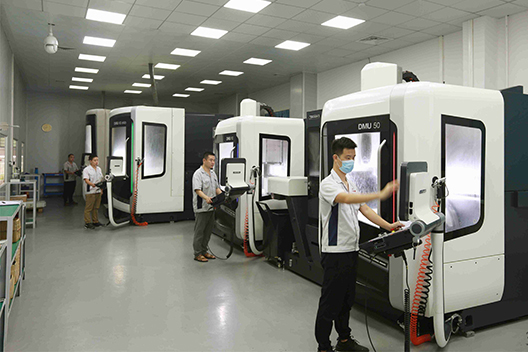
- Equipment: Do they use modern, well-maintained machines?
- Engineering support: Can they assist with DFM (Design for Manufacturability)?
- Quality control: Look for CMMs, first-article inspection, and documentation processes.
- Communication: Are they responsive and transparent?
A reliable partner can make or break your project — so don’t cut corners when choosing one. When it comes to 5-axis CNC precision machining services,SYM Precision Machining is a Trusted Partner. Let’s check the reason as below:
- Years of experience in high-mix, low-volume production
- Advanced equipment like DMG MORI and HAAS UMC machines
- ISO-certified processes for consistent quality
- Fluent communication and fast quote turnaround
- Global clientele across aerospace, medical, and automotive sectors
They don’t just meet specs — they exceed them.
Visit SYM Precision Machining to explore what they can do for your next project.
5-Axis CNC Precision Machining Services FAQs
What is 5-axis CNC machining used for?
It’s ideal for producing complex, multi-surface parts in industries like aerospace, medical, and automotive.
Is 5-axis CNC machining more expensive?
It can be, but fewer setups and faster production often lower total project costs.
Can 5-axis CNC machines handle any material?
Yes, from aluminum to titanium, plastics to steel — with the right tooling and speeds.
How accurate is 5-axis machining?
Very. Tolerances can reach ±0.005mm with the right setup and inspection.
What are the limitations of 5-axis machining?
It requires skilled programmers, high-end software, and careful planning to get optimal results.
Do I need a special CAD model for 5-axis machining?
Your CAD file should be 3D and optimized for CAM software. A good shop can assist with adjustments.
Conclusion
If precision, complexity, and speed matter to your business, 5-axis CNC precision machining services are hard to beat. From tight tolerances to exotic materials, this technology delivers results that keep you ahead of the competition.
Whether you’re designing aerospace parts or surgical tools, finding a trusted partner like SYM Precision Machining ensures you get the best value, performance, and support. Don’t just keep up with the industry, lead it.