Introduction
In precision manufacturing, a weld is more than a joint — it’s a promise. When that weld holds vacuum, contains cryogenic fluids, or seals sensitive electronics, failure is not an option.
That’s where seal welding comes in.
Unlike structural welding, which prioritizes strength, seal welding prioritizes leak-tight integrity. It’s the difference between a component that works and one that fails catastrophically.
In this post, we’ll cover:
- What seal welding is and how it differs from standard welding
- Why it’s critical for vacuum vessels, aerospace components, cryogenic vessels, and semiconductor manufacturing equipment
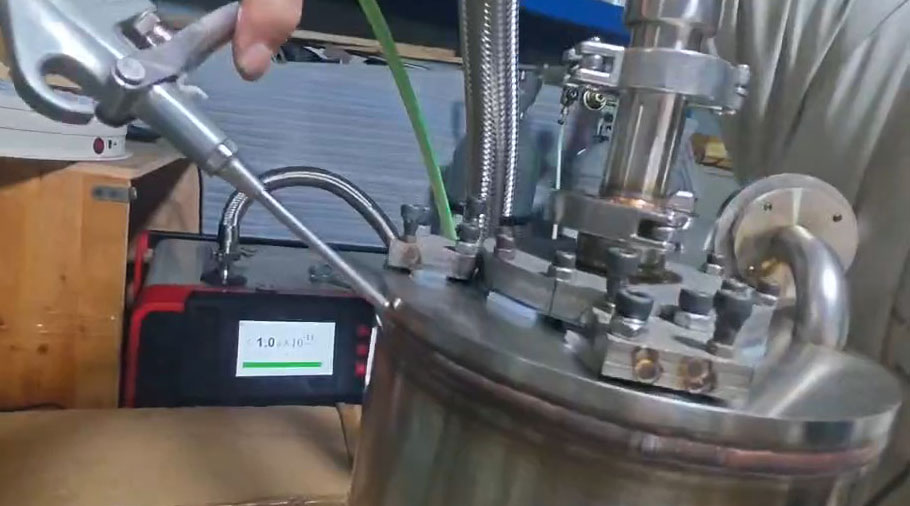
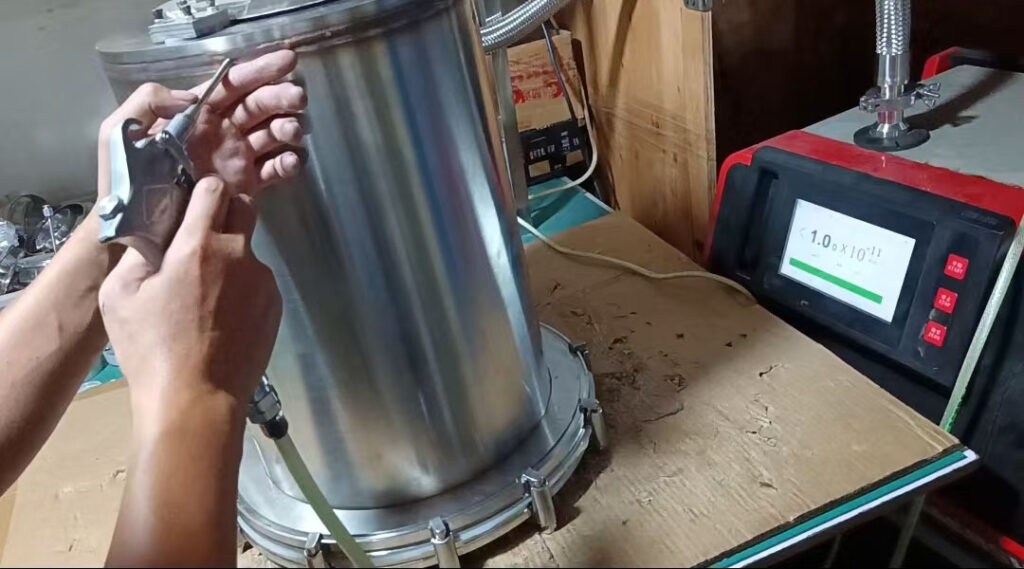
- How helium leak detectionverifies weld quality
- Best practices for achieving zero-defect seal welds
What Is Seal Welding?
Seal welding is a specialized welding process designed to create a gas-tight, liquid-tight, or vacuum-tight joint between two metal surfaces. The goal is not just fusion — it’s complete, continuous penetration with zero porosity, cracks, or inclusions.
Typical processes used:
- GTAW (TIG)– Preferred for precision and control
- Autogenous welding– No filler metal, ideal for thin sections
- Laser welding– For high-speed, minimal heat-affected zone
- Electron beam welding– For deep penetration in thick sections
The key difference from standard welding? Verification. Every seal weld is tested — often with helium leak detection — to prove it meets the required leak rate.
Why Seal Welding Matters Across Critical Industries
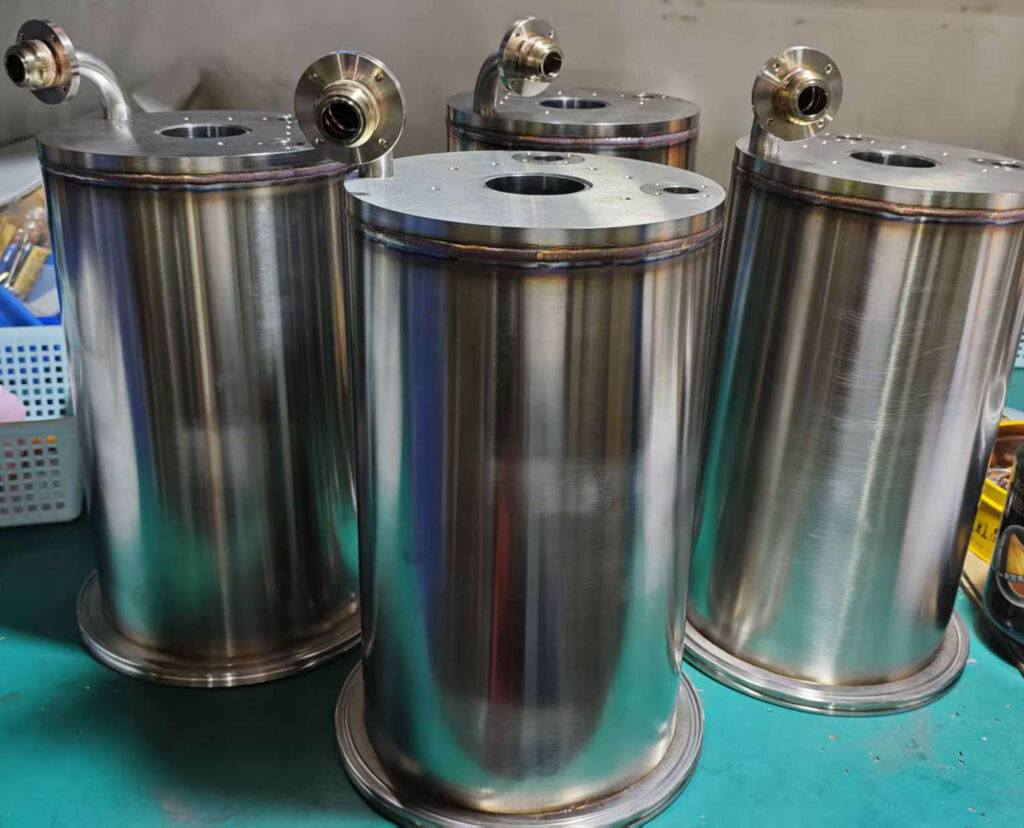
Vacuum Vessels
Vacuum vessels operate at pressures far below atmospheric. Even a microscopic leak ruins the vacuum, compromising experiments, coatings, or material processing.
Seal welding on vacuum vessels must achieve:
- Ultra-high vacuum (UHV)compatibility
- Minimal outgassingfrom weld zones
- Smooth, crevice-freeinternal surfaces
A single pinhole in a UHV chamber can take days to locate and repair. Seal welding prevents that risk from the start.
Aerospace Components
Aerospace components face extreme conditions — vibration, temperature swings, pressure differentials, and fatigue loads. A failed seal weld in a fuel line, hydraulic system, or structural housing can ground an aircraft or abort a mission.
Requirements include:
- Fatigue-resistantweld profiles
- Lightweightjoint design (no excess material)
- Traceable certificationper NADCAP or AS9100
Seal welding ensures every joint survives the full service life — from takeoff to touchdown, and beyond.
Cryogenic Vessels
Cryogenic vessels store liquefied gases at temperatures as low as –196°C (liquid nitrogen) or –269°C (liquid helium). At these extremes, materials contract, thermal stresses build, and embrittlement becomes a real threat.
Seal welding for cryogenic service demands:
- Ductile weldsthat flex with thermal cycling
- No cold cracksor stress risers
- Compatibilitywith austenitic stainless steels, aluminum, or Invar
The weld must remain leak-tight from ambient temperature to cryogenic conditions — and back again.
Semiconductor Manufacturing Equipment
Semiconductor manufacturing equipment operates in cleanroom environments where contamination is measured in parts per billion. Weld defects like porosity, spatter, or rough surfaces trap particles and ruin wafer yields.
For semiconductor tools, seal welding requires:
- Electropolishedor passivated finishes
- No dead legsor crevices where particles collect
- Ultra-high purity(UHP) gas compatibility
Every weld in a gas delivery line, process chamber, or load lock must be verified by helium leak detection to ensure zero contamination risk.
How Helium Leak Detection Verifies Seal Welds
You can’t see a leak. You can’t feel it. But helium can find it.
Helium leak detection is the gold standard for verifying seal welds because helium is:
- Inert– doesn’t react with materials
- Small molecule– penetrates even sub-microscopic defects
- Non-toxic– safe for operators and equipment
Two primary methods:
| Method | Best For | Sensitivity |
| Vacuum (spray) mode | Components under internal vacuum | 1×10⁻¹⁰ mbar·L/s |
| Sniffer (accumulation) mode | Large vessels, field inspections | 1×10⁻⁶ mbar·L/s |
Every seal weld we produce is tested — and documented — so you have proof of integrity.
Best Practices for Zero-Defect Seal Welding
After years of welding critical components, we follow a strict playbook:
- Cleanliness Is Everything
Any oil, grease, or oxide layer causes porosity. Parts are degreased, pickled, or mechanically cleaned before welding.
- Fit-Up Matters
Gaps > 0.5mm create burn-through or lack of fusion. Precision fixturing ensures consistent joint alignment.
- Shielding Gas Purity
Oxygen pickup ruins corrosion resistance. We use 99.999% argon with back-purge on reactive materials.
- Heat Input Control
Too much heat = distortion. Too little = lack of penetration. We calculate heat input per material thickness and weld geometry.
- Weld Procedure Qualification
Every material-thickness combination has a qualified WPS (Weld Procedure Specification). No shortcuts.
- In-Process Inspection
Visual checks between passes catch issues early — before they become rejections.
- Post-Weld Testing
Helium leak detection, dye penetrant, or radiographic inspection — matched to your specification.
Seal Welding vs. Full Penetration Welding – What’s the Difference?
| Feature | Seal Welding | Full Penetration Welding |
| Primary Goal | Leak-tightness | Structural strength |
| Penetration | Complete fusion through joint | May be partial or complete |
| Testing | Always leak-tested | May be visually inspected only |
| Applications | Vacuum, pressure, clean systems | Load-bearing structures |
| Typical Processes | GTAW, autogenous, laser | SMAW, GMAW, FCAW |
In critical systems, seal welding often includes full penetration — plus leak testing.
Frequently Asked Questions About Seal Welding
Q: Can seal welding be automated?
A: Yes. Orbital welding and robotic TIG are common for repeatable production runs — especially in semiconductor and aerospace.
Q: How do you test seal welds without damaging them?
A: Non-destructive testing (NDT) methods like helium leak detection, dye penetrant, and radiography leave the weld intact.
Q: What materials are easiest to seal weld?
A: Austenitic stainless steels (304, 316), titanium, and Inconel weld well. Aluminum requires more care but is achievable.
Q: How long does a seal weld inspection take?
A: Helium leak detection typically takes 5–20 minutes per weld, depending on component size and sensitivity requirement.
Q: Can you repair a failed seal weld?
A: Yes — but only if the repair doesn’t compromise the parent material. In many cases, the component must be re-welded or scrapped.
Final Thoughts – Seal Welding Is Non-Negotiable
If your system holds vacuum, contains pressure, or handles sensitive processes, seal welding isn’t optional — it’s essential.
A single leak can mean:
- Days of downtime
- Scrapped batches(semiconductor)
- Mission failure(aerospace)
- Safety hazards(cryogenic)
That’s why we treat every seal weld as a critical operation — from material prep to final helium leak detection verification.
Need a Seal Weld You Can Trust?
Whether you’re building vacuum vessels, aerospace components, cryogenic vessels, or semiconductor manufacturing equipment — we deliver leak-tight, certifiable seal welds.
Contact us today for a free consultation, weld procedure review, or quote.