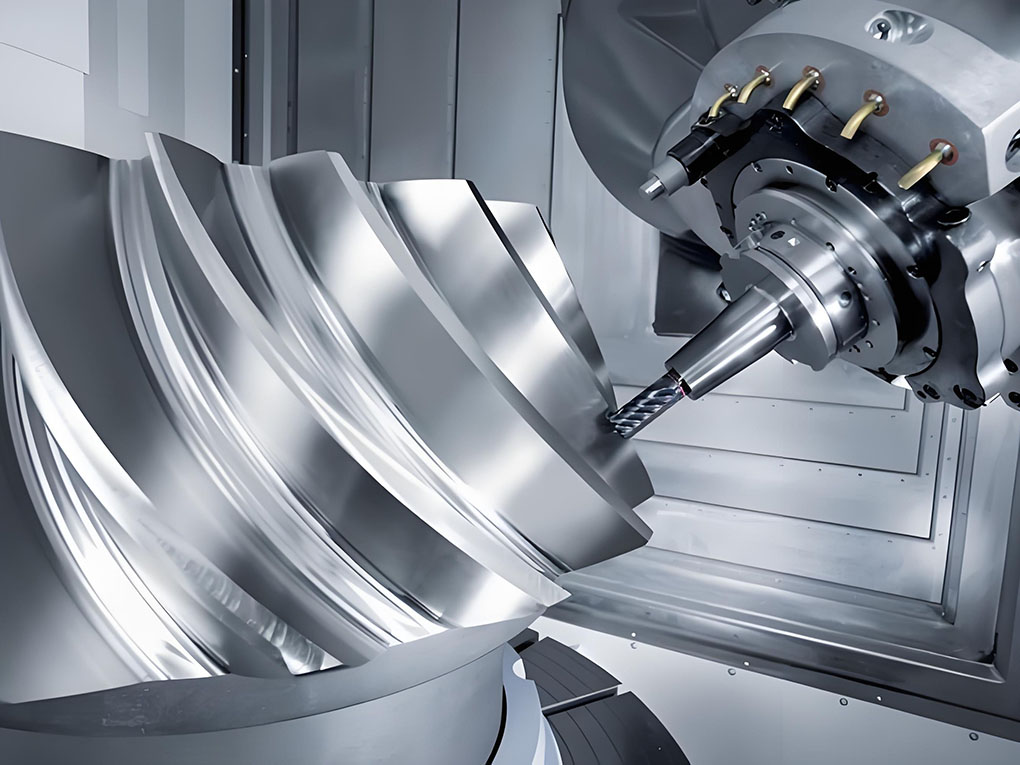
At the heart of all these processes, technologies, and decisions lies precision titanium machining — the combination of engineering expertise, advanced machinery, and skilled operators that turn raw titanium into mission-critical parts.
It’s a craft that requires patience, planning, and continuous improvement. Whether you’re making a bone screw or a rocket nozzle, precision matters — every micron counts.
Learn everything you need to know about precision titanium machining, including how to optimize CNC processes, reduce costs, and choose the right titanium CNC service provider for aerospace, medical, and industrial needs.
Introduction to Precision Titanium Machining
Titanium is one of the most respected metals in modern manufacturing. It’s tough, lightweight, resistant to corrosion, and biocompatible. These unique properties make it ideal for industries that demand reliability and performance, like aerospace, medical, and automotive sectors.
Precision titanium machining is the art and science of shaping titanium parts with extreme accuracy using computer-controlled tools (CNC). It’s more than just cutting metal — it’s about doing so in a way that meets strict tolerances, complex geometries, and functional needs.
In this guide, we will explore every aspect of machining titanium with precision. Whether you’re a product designer, mechanical engineer, purchasing manager, or simply curious about advanced materials, you’ll learn how CNC machining transforms raw titanium into high-performance components used worldwide.
Titanium Properties and Industrial Benefits
Titanium stands out because of its unique properties. First, its strength-to-weight ratio is superb—lighter than steel but nearly as strong. Second, it resists harsh corrosion from salt water, biofluids, and harsh chemicals. Third, for medical implants, titanium is biocompatible: the body accepts it without adverse reactions. All these make titanium precious in high-stakes applications.
However, its low thermal conductivity makes machining tricky—heat doesn’t dissipate fast, so tools wear quickly and surfaces may harden if not cut properly. Skilled machinists know how to minimize these downsides. They use slow cutting speeds, flood coolant, and carefully selected tools to preserve part integrity.
| Property | Benefit |
| High strength-to-weight ratio | Stronger than steel but 45% lighter |
| Corrosion resistance | Ideal for marine and chemical applications |
| Heat resistance | Withstands high temperatures in aerospace engines |
| Biocompatibility | Safe for medical implants and tools |
| Non-magnetic | Great for electronics and defense |
Titanium Grades Used in CNC Machining
Not all titanium is the same. Common alloys include Ti‑6Al‑4V (Grade 5), Grade 23, and Grade 2. Grade 5 is the most widely used. Each grade has different machinability, and the material cost varies: Grade 5 costs more than Grade 2, but offers superior performance. Experienced suppliers track every batch and maintain certificates for traceability. Choosing the right alloy depends on part function, cost targets, and regulatory needs.
| Grade | Common Use | Characteristics |
| Grade 2 | Aerospace frames, heat exchangers | Good formability, moderate strength |
| Grade 5 (Ti-6Al-4V) | Implants, aerospace fasteners | High strength, most popular alloy |
| Grade 9 | Bike frames, aircraft tubing | Good weldability, medium strength |
| Grade 23 (ELI) | Surgical implants | Extra-low interstitials, high purity |
Common Applications of Precision Titanium Machining
Titanium’s special properties make it a top choice in industries where performance, durability, and safety matter most.
1. Aerospace: Used in aircraft engine parts, fuselage components, and hydraulic systems. Titanium’s heat resistance and strength make it essential for jet engines.
2. Medical: Surgical tools, orthopedic implants, dental fixtures — all rely on biocompatible titanium that won’t corrode or react with body fluids.
3. Automotive: Performance cars use titanium for exhausts, valves, and connecting rods due to its lightweight and strength.
4. Marine: Submarine components and deep-sea equipment use titanium because it resists seawater corrosion better than stainless steel.
5. Defense: Military aircraft, armor plating, and weapons benefit from titanium’s strength-to-weight ratio and non-magnetic properties.
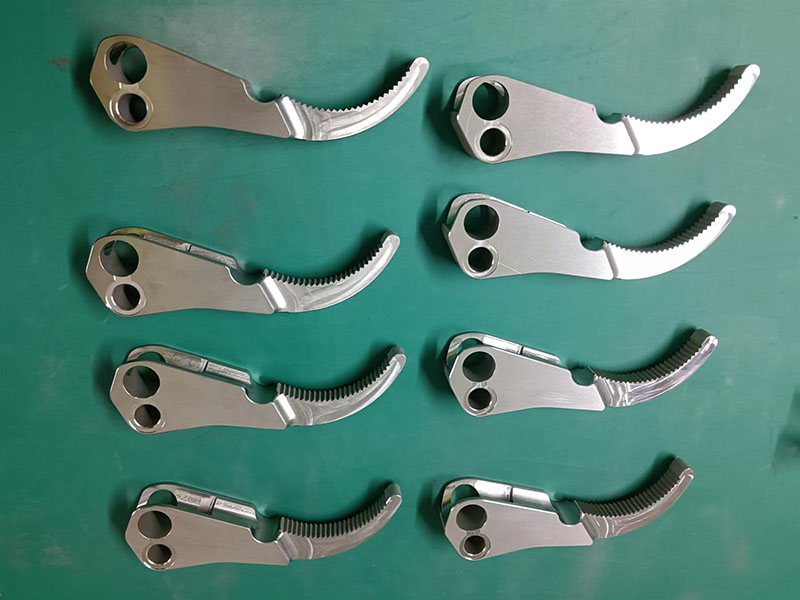
In each of these areas, titanium precision machined components play a critical role in delivering reliability and long service life.
Challenges in Titanium Machining
While titanium is a fantastic material, machining it comes with unique challenges:
- Low thermal conductivity: Heat builds up near the tool, leading to premature wear.
- High reactivity at elevated temperatures: It reacts with cutting tools, dulling them faster.
- Elastic modulus: It’s springy, which makes it harder to achieve tight tolerances.
- Chip control: Long, stringy chips are hard to manage and can damage the workpiece or tool.
To succeed, machinists must use special strategies, tools, and machines designed for titanium.
Advanced CNC Methods Used for Titanium
CNC (Computer Numerical Control) is the foundation of modern titanium machining. Here are the top methods used:
- CNC Milling
Removes material using rotary cutters. Great for flat surfaces, pockets, and 3D contours.
- CNC Turning
Spins the titanium part while a tool shapes it. Ideal for cylindrical parts like shafts and connectors.
- 5-Axis CNC Machining
Allows movement in five directions, perfect for complex aerospace and medical parts that need multiple angles and tight tolerances.
- EDM (Electrical Discharge Machining)
Cuts titanium with sparks rather than physical contact. Useful for hard-to-reach areas and internal geometries.
- Swiss-Type CNC Turning
Used for small titanium parts with tight tolerances and long length-to-diameter ratios.
Each method has a specific role based on part geometry, material volume, and accuracy needs.
Design Best Practices for Titanium Precision Machined Components
When designing parts for titanium machining, keep these points in mind:
DO:
- Use generous corner radii (reduce stress and improve tool life)
- Design for standard tooling if possible
- Minimize deep cavities to avoid tool deflection
- Include clear GD&T (Geometric Dimensioning and Tolerancing)
DON’T:
- Use unnecessarily thin walls — titanium is springy and hard to machine
- Over-specify tolerances where not needed — this raises cost
A partnership between engineers and machinists ensures functional, manufacturable parts.
Titanium CNC Milling Machine Technology Overview
A titanium CNC milling machine needs to be powerful, stable, and smart.
Cutting tools are equally important — carbide tools with TiAlN coatings are the most common for titanium.
| Machine Feature | Why It Matters |
| High spindle torque | To cut through hard titanium without stalling |
| Rigid construction | Prevents vibrations that damage the surface finish |
| Coolant system | Prevents overheating and extends tool life |
| Advanced software | Optimizes toolpaths and reduces machining time |
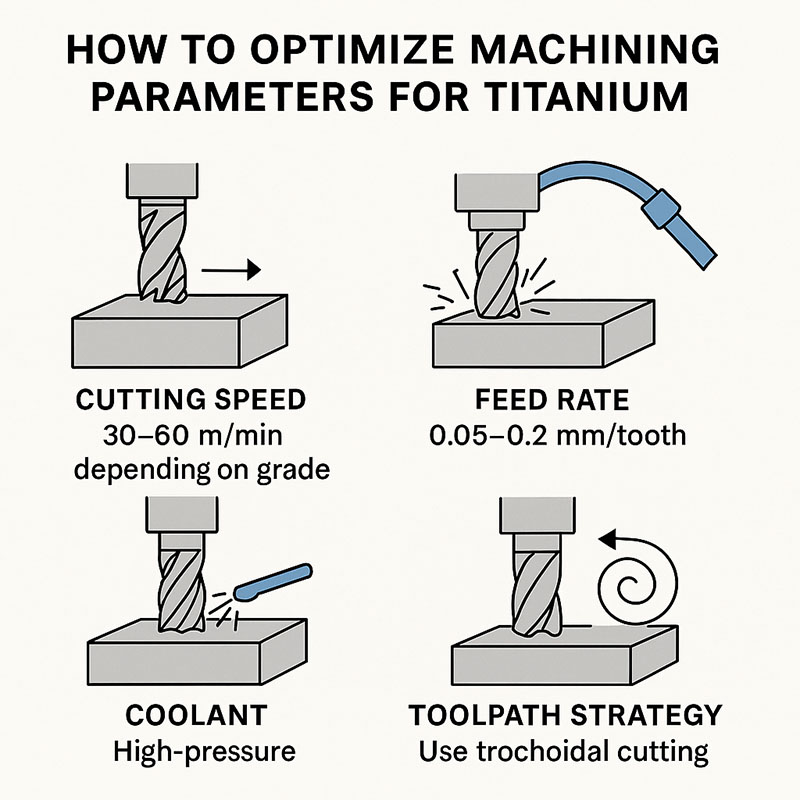
How to Optimize Machining Parameters for Titanium
To get the best results from CNC titanium machining, use the right settings:
- Cutting speed: 30–60 m/min depending on grade
- Feed rate: 0.05–0.2 mm/tooth
- Coolant: High-pressure, water-based with additives
- Toolpath strategy: Use high-speed machining and trochoidal cutting to avoid heat buildup
Constant monitoring and tool replacement schedules help maintain quality and reduce part failure.
Cost Factors in Titanium CNC Machining
Titanium machining isn’t cheap — but understanding the cost structure helps you optimize your budget.
| Cost Driver | Impact |
| Raw Material | Titanium is expensive, especially aerospace grades |
| Tool wear | Tools dull quickly and need frequent replacement |
| Machine time | Slower cutting speeds = longer cycle times |
| Setup complexity | More setups = higher labor costs |
| Quantity | Higher volume = lower cost per unit due to efficiency |
To reduce costs, simplify your design, minimize setups, and use standard features where possible.
Choosing the Right Titanium CNC Machining Service Provider
With so many titanium machining companies out there, how do you choose the best one?
Key Factors to Consider:
- Experience with titanium: Not all shops can handle its difficulty.
- Precision capabilities: Can they meet ±0.01mm or tighter tolerances?
- CNC equipment: Do they have 5-axis machines and advanced cutting tools?
- Certifications: Look for ISO 9001, AS9100, or ISO 13485 if you’re in aerospace or medical.
- Material sourcing: Do they supply certified titanium from trusted mills?
Choose a provider with proven work in your industry and strong customer support.
FAQs on Precision Titanium Machining
- Is titanium harder to machine than stainless steel?
Yes, due to its low thermal conductivity and higher reactivity with tools. - What’s the tightest tolerance possible in titanium machining?
±0.001mm is possible with grinding or EDM, but standard tolerances range around ±0.01mm. - Why do titanium parts cost more?
Material cost, slower machining speed, and higher tool wear drive up prices. - Can titanium be machined using standard CNC machines?
Yes, but the machine must be rigid, powerful, and set up for low-speed, high-force cutting. - What industries rely most on titanium machining?
Aerospace, medical, defense, marine, and automotive sectors. - Is it better to mill or turn titanium?
Depends on the part geometry. Turning is best for cylindrical parts; milling is for complex surfaces. - How can I reduce costs in titanium machining?
Simplify design, order higher volumes, and work with a specialized machine shop. - Does titanium warp during machining?
If not clamped or cooled properly, yes — it can flex and cause dimensional issues. - What tool coatings work best for titanium?
TiAlN (Titanium Aluminum Nitride) and diamond-like coatings are most effective. - How long do tools last when machining titanium?
Far shorter than aluminum or steel — frequent tool changes are expected.
Conclusion
Precision titanium machining is a vital capability in modern manufacturing. From medical implants to aerospace frames, titanium’s advantages are too valuable to ignore. But to machine it well, you need the right tools, strategy, and team.
By understanding the properties of titanium, choosing the right CNC method, designing smartly, and partnering with the right shop, you’ll unlock the full power of this amazing metal.
If your next product demands strength, performance, and reliability — titanium is your answer. And with precision machining, your success is only a micron away.
If you’re looking for expert titanium machining capabilities, SYM Precision Machining delivers trusted, certified, and fast services for prototypes and production parts.
Related Article :
Ultra-Tight tolerance machining (±0.001mm).
11 Must-Know Insights When Choosing a Precision Machined Components Supplier