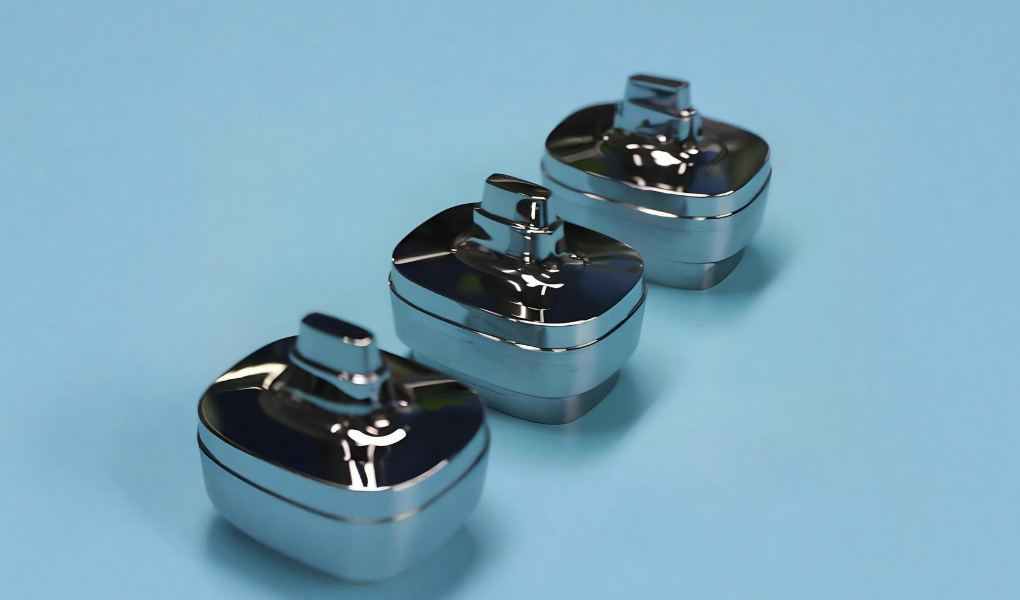
Electropolishing is a metal-finishing process that makes parts smooth, clean, and more resistant to rust. It’s a key step for many industries — from medical tools to food equipment to aerospace parts. In this article, we’ll explain what electropolishing is, how it removes burrs, why it helps prevent corrosion, and how you can design parts so electropolishing works best. We’ll also show how SYM Machining uses electropolishing to make better parts.
What is electropolishing services?
Electropolishing is an electrochemical process. It uses electricity and a special liquid called an electrolyte to remove a thin layer of metal from the surface of a part. Think of it like a gentle, controlled sanding done by chemistry and electricity. Finally, the result is a bright, even surface with fewer rough spots.
Key ideas:
- The part becomes the anode (positive side) in a circuit.
- An electrical current passes through the electrolyte.
- Metal atoms leave the surface in tiny amounts.
- Rough peaks dissolve faster than valleys, so the surface evens out.
Why electropolishing matters: two big benefits
Deburring and smoothing
When parts are cut, stamped, or machined, tiny sharp bits of metal called burrs can remain. Burrs can cause problems:
- They can cut or scratch people and other parts.
- They can trap dirt and bacteria.
- They can stop machines from fitting together well.
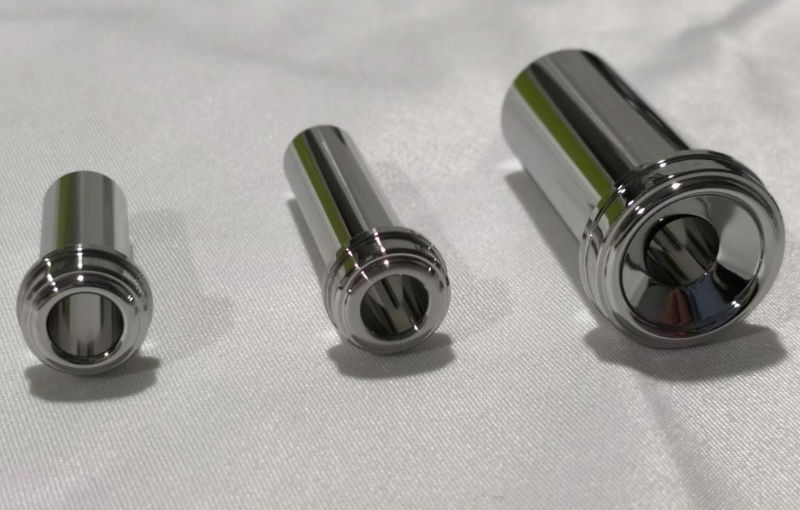
Electropolishing removes those tiny peaks and burrs. Because it smooths the surface at the microscopic level, it not only eliminates sharp edges but also reduces places where dirt or fluids can get stuck.
Better corrosion resistance
Corrosion (rust and other chemical damage) often starts at rough spots where chemicals can collect. Electropolishing levels out these rough spots and removes surface impurities. That makes it harder for corrosion to begin. For metals like stainless steel, electropolishing also boosts the chromium-rich oxide layer that protects the metal. This makes the part last longer in wet, salty, or harsh environments.
How electropolishing removes burrs — simple steps
Clean the part: Oil, dirt, and grease are removed first. A clean surface gives the best results.
Rack or hang the part: The part is attached to a rack or fixture that connects it to the electricity source.
Place in the electrolyte: The part is dipped into the chemical bath.
Apply the current: Electricity runs through the bath for a set time. The current and time control how much metal is removed.
Rinse and dry: After electropolishing, parts are rinsed, neutralized, and dried.
Inspect: Quality checks ensure deburring and corrosion resistance .
Because metal is removed evenly and only in tiny amounts, sharp edges and burrs disappear without changing the part’s size or important shapes.
What kinds of metals can be electropolished?
Electropolishing works best on metals that form a stable oxide layer and conduct electricity. Common metals include:
- Stainless steel — the most common metal for electropolishing.
- Copper and copper alloys (like brass).
- Nickel and nickel alloys.
- Titanium — used in some high-end applications.
Aluminum is less common but can be electropolished in certain ways. The most common industrial use remains stainless steel because of how well it responds.
Electropolishing vs. mechanical polishing
| Feature | Electropolishing | Mechanical polishing |
| Removes burrs evenly | ✅ Yes | ⚠️ Often uneven |
| Changes part dimensions | ⚪ Tiny, controlled | ❗ Can remove more material |
| Cleanliness | ✅ Leaves clean surface | ⚠️ Can embed abrasives |
| Micro-smooth finish | ✅ Yes | ⚠️ Depends on skill |
| Best for complex shapes | ✅ Yes — reaches crevices | ❌ No — hard to reach inside |
| Improves corrosion resistance | ✅ Yes | ⚠️ Not always |
Electropolishing is especially useful when parts have complex shapes, tiny holes, or tight tolerances. Mechanical polishing can work for flat, simple parts, but it’s harder to make every surface even.
Where electropolishing is used
Electropolishing is used across many industries. Here are a few examples:
- Medical devices: Both surgical tools and implants need ultra-clean, smooth surfaces. Electropolishing reduces places where bacteria can hide.
- Food and beverage: Tanks, pipes, and valves that touch food must be easy to clean. Electropolished stainless steel resists corrosion and helps meet hygiene rules.
- Aerospace: Parts that face harsh air, salt, or chemicals need long-lasting surfaces.
- Semiconductor manufacturing: Equipment that handles tiny, delicate parts needs a contamination-free finish.
- Automotive and motorcycle: Parts that need a shiny look and rust resistance benefit from electropolishing.
Design tips: how to make parts electropolishing-friendly
Good part design makes electropolishing faster and cheaper. Here are clear tips you can use:
- Avoid deep, narrow crevices. These spots are harder to clean and may not get evenly polished.
- Add consistent wall thickness. Uniform thickness helps avoid uneven current flow during electropolishing.
- Use rounded edges when possible. Sharp internal corners are hard to polish evenly.
- Design for racking. Include small tabs or features that make it easy to hang the part in the bath without blocking important surfaces.
- Think about holes and threads. Open holes and certain threads can trap electrolyte or air. Discuss with the finisher whether they need to mask or redesign.
- Specify tolerances carefully. Electropolishing removes a small amount of metal. If tolerance is extremely tight, let your finisher know so they can control the process.
Cost and time: what to expect
Electropolishing adds cost and time to part production, but it also brings value:
- Cost factors: Part size, material, part complexity, and batch size. Small batches cost more per part than large runs.
- Time factors: Rack preparation, cleaning, electropolishing time, rinsing, and drying. Lead time depends on shop workload.
- Value: Reduced rejection rates, better corrosion resistance, less post-processing, and longer part life can save money over time.
Common myths about electropolishing — debunked
Myth 1: Electropolishing removes too much material.
Truth: It removes only a thin, controlled layer. In addition, the amount is small and planned to keep parts inside tolerance.
Myth 2: Electropolishing gives a mirror shine only.
Truth: You can get different finishes. Electropolishing can make parts bright or give them a satin, smooth look depending on settings.
Myth 3: Electropolishing is only for stainless steel.
Truth: Stainless steel is the most common, but other metals like copper, nickel, and titanium can also be electropolished.
How SYM Machining uses electropolishing?
SYM Machining works with customers to create high-quality parts. Here’s an example workflow they might use:
- Review the part: SYM inspects drawings and suggests design tweaks for electropolishing.
- Pre-cleaning: Cleaning parts thoroughly to remove oils and debris.
- Racking and masking: Placing parts on racks. masking the areas that shouldn’t be polished.
- Electropolishing bath: Parameters such as current, temperature, and time are set for the metal type and desired finish.
- Rinse and neutralize: Cleaning parts to remove chemicals.
- Final checks: SYM measures surface roughness, inspects for burrs, and also confirms dimensions.
- Documentation: Results and process details are recorded for traceability.
FAQ
Q: Will electropolishing remove my part’s plating or coating?
A: Yes — electropolishing removes metal from the surface. If a plating or coating must stay, do not electropolish unless the finisher says it’s safe.
Q: Shall we apply electropolish for tiny threaded holes?
A: Often yes. But threads can change slightly. Tell your finisher about threads so they can control the process.
Q: Is electropolishing food-safe?
A: Electropolishing helps make stainless steel easier to clean and more hygienic. After electropolishing, parts are usually safe for food equipment if rinsed and passivated correctly.
Q: How long does electropolishing last?
A: It improves corrosion resistance, so parts usually last longer, If we don’t scratch or damage the surface of product.
Q: Does electropolishing make metal stronger?
A: It doesn’t make the metal itself stronger, but it removes stress-rising burrs and defects that can cause failure, so parts can perform better.
Conclusion
Electropolishing is a smart choice when you need smooth, clean, and corrosion-resistant metal parts. It removes burrs at the microscopic level, evens out surfaces, and improves how a part resists rust. For complex shapes or high-hygiene needs, it’s often better than mechanical polishing.
If you want parts that look better, last longer, and meet strict cleanliness rules, electropolishing is worth considering. SYM Machining can help you decide, offer design tips, and also deliver consistent results from prototype to production.
Related articles:
Post-processing services for machining
More Than Just a Black Finish: The Engineering Behind DLC Coating