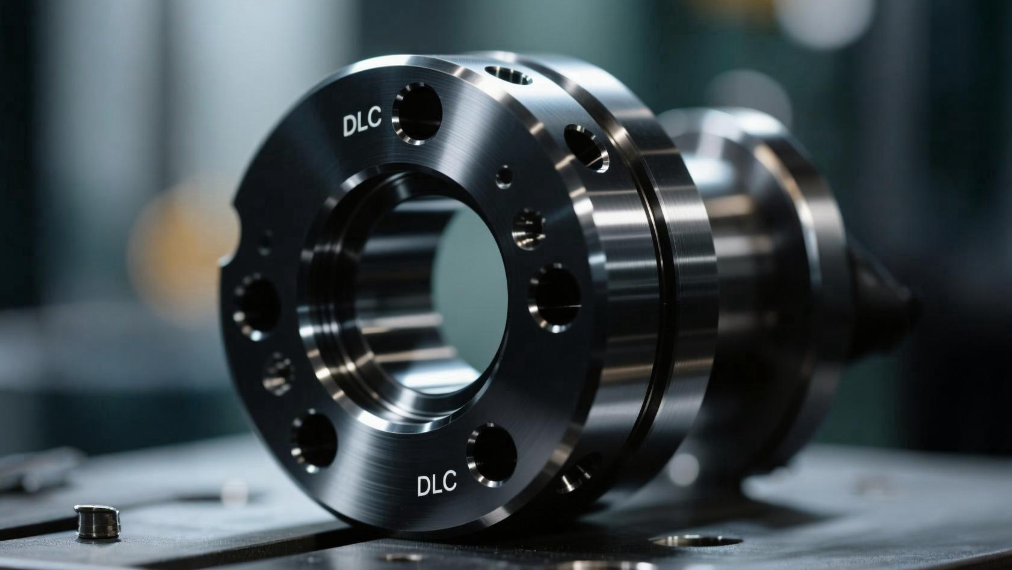
When you see a shiny black surface on a tool, a watch, or an engine part, it’s easy to think it’s just for style. But that deep black color might be more than it seems. Beneath that smooth, glossy finish lies advanced engineering — something called DLC coating, short for Diamond-Like Carbon coating.
DLC coatings are not just about looks. They are about performance, protection, and precision. They help parts resist wear, reduce friction, and last longer under harsh conditions. That’s why industries like aerospace, automotive, medical, and machining rely on DLC technology for high-performance metal parts.
What Is DLC Coating
DLC stands for Diamond-Like Carbon. It’s a very thin layer of carbon material that mimics some properties of diamond — one of the hardest materials on Earth.
A DLC coating is applied to metal parts to make them:
- Harder
- Smoother
- More resistant to wear and corrosion
- Low in friction (they move easily without sticking)
Although the layer is only a few micrometers thick — thinner than a human hair — it can completely change how a part performs.
How It Got Its Name
DLC is called “diamond-like” because it contains carbon atoms arranged in a structure similar to diamond. This unique structure gives it diamond-like properties such as extreme hardness and a shiny black finish.
How DLC Coating Is Made
DLC coatings are created using advanced vacuum technologies that deposit carbon onto a metal surface. The most common methods include:
a. Physical Vapor Deposition (PVD)
In this process, carbon atoms are released in a vacuum chamber and bond to the metal surface, creating a hard, smooth coating.
b. Chemical Vapor Deposition (CVD)
This method uses chemical reactions at high temperatures to form the DLC layer on the part’s surface.
Both methods require special equipment and precise control of temperature, pressure, and gas composition. The process may sound complex, but the result is a perfectly bonded layer that enhances the part’s durability and performance.
Types of DLC Coating
There are several types of DLC coatings, each designed for different applications. The main types include:
- Hydrogenated DLC (a-C:H) – Common and versatile, used in automotive and mechanical parts.
- Non-Hydrogenated DLC (a-C) – Very hard, often used in high-performance tools.
- Tetrahedral Amorphous Carbon (ta-C) – The hardest form of DLC, closest to diamond in properties.
- Metal-Doped DLC (Me-DLC) – Mixed with metals like tungsten or titanium for special friction and wear performance.
Choosing the right type depends on the application, operating environment, and material of the base part.
Why Engineers Choose DLC Coating
Let’s look at why DLC coatings are used in so many industries:
1. Extreme Hardness
DLC coatings can reach hardness levels up to 80 HRC or higher — almost as hard as diamond. This helps parts resist scratches, dents, and wear even under high pressure or temperature.
2. Low Friction
The smooth carbon layer reduces friction between moving parts. This means less energy loss, lower heat generation, and longer component life.
3. Corrosion Resistance
DLC forms a barrier that protects metal surfaces from oxidation and chemical corrosion — perfect for humid, acidic, or saline environments.
4. Biocompatibility
Certain types of DLC are safe for medical devices like surgical tools and implants. The coating prevents metal ions from leaching out and irritating human tissue.
5. Electrical Insulation
In some applications, DLC also serves as a non-conductive coating to prevent unwanted electrical discharge.
6. Aesthetic Appeal
Of course, the smooth black appearance is also visually attractive. Many luxury watches and tools use DLC not just for performance, but also for its premium look.
DLC Coating vs Other Surface Treatments
To understand why DLC stands out, let’s compare it with other common finishes used in CNC machining.
As the table shows, DLC coating combines the best of both worlds — aesthetic quality and high performance.
| Finish Type | Main Benefit | Hardness | Color | Friction | Typical Use |
| Anodizing | Corrosion resistance for aluminum | Medium | Silver, black, colored | Medium | Decorative, corrosion protection |
| Plating (Nickel/Chrome) | Shine, corrosion resistance | Medium | Silver/metallic | Medium | Automotive, consumer parts |
| Black Oxide | Low cost black finish | Low | Black | High | Tools, fasteners |
| DLC Coating | Extreme hardness, low friction | Very High | Deep black | Very Low | High-end tools, engine parts, medical components |
Where DLC Coating Is Used
a. Automotive Industry
Engine parts such as pistons, camshafts, and fuel injectors use DLC to reduce friction and increase fuel efficiency.
b. Medical Devices
Scalpels, surgical instruments, and implants use DLC for biocompatibility, smooth cutting, and corrosion protection.
c. Aerospace Components
DLC-coated bearings and actuators operate smoothly under extreme conditions in aircraft systems.
d. Cutting Tools
End mills, drills, and punches last longer and cut more cleanly with DLC coatings.
e. Consumer Electronics and Watches
Luxury watches and smartphone components use DLC for a stylish, durable black finish.
Engineering the Perfect DLC Coating
Applying a DLC coating isn’t just about putting on a black layer — it’s an engineered process.
SYM Machining and its partners follow strict steps to ensure every coating meets the performance needs of our clients:
- Surface Preparation – The base metal must be extremely clean and smooth. Any dirt or scratches can weaken the coating bond.
- Vacuum Deposition – Using advanced PVD or CVD chambers, appling carbon atoms under high vacuum and temperature control.
- Thickness Control – The coating is carefully monitored to ensure consistent thickness (usually 1–5 micrometers).
- Testing and Inspection – Testing hardness, friction, and adhesion of coated parts.
- Final Polishing or Cleaning – A light polish may be applied to achieve the desired finish and luster.
SYM Machining ensures precision at every stage, from CNC machining to surface finishing, so each DLC-coated part performs flawlessly in the field.
Advantages of DLC for CNC Machined Parts
When used on CNC metal parts, DLC brings multiple advantages:
- Longer tool life — reduces wear and maintenance.
- Better accuracy — low friction means consistent motion and tighter tolerances.
- Improved appearance — the smooth, dark finish adds a premium touch.
- Lower maintenance costs — fewer replacements and less lubrication needed.
Better performance in harsh conditions — works well in oil-free, high-heat, or corrosive environments.
Conclusion: Performance Beyond the Surface
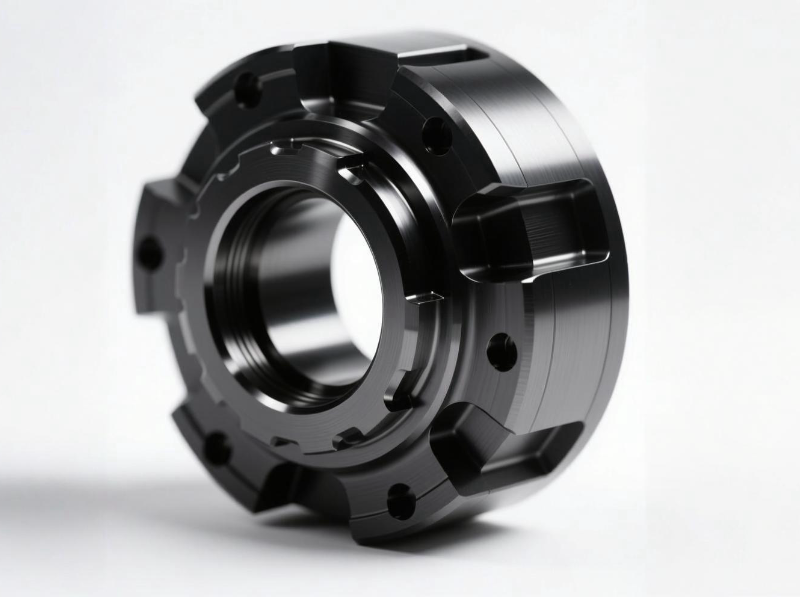
DLC coating is far more than just a black finish — it’s a breakthrough in surface engineering.
It transforms ordinary metal into something extraordinary: harder, smoother, more durable, and more beautiful.
From surgical tools to race car engines, DLC coatings play a key role in improving performance, reliability, and longevity.
At SYM Machining, we bring this advanced technology to your CNC parts with precision and care. Whether you need parts that endure heavy wear, resist corrosion, or simply look stunning, our team ensures every detail meets your expectations.
Learn more about surface finishing for your precision metal parts