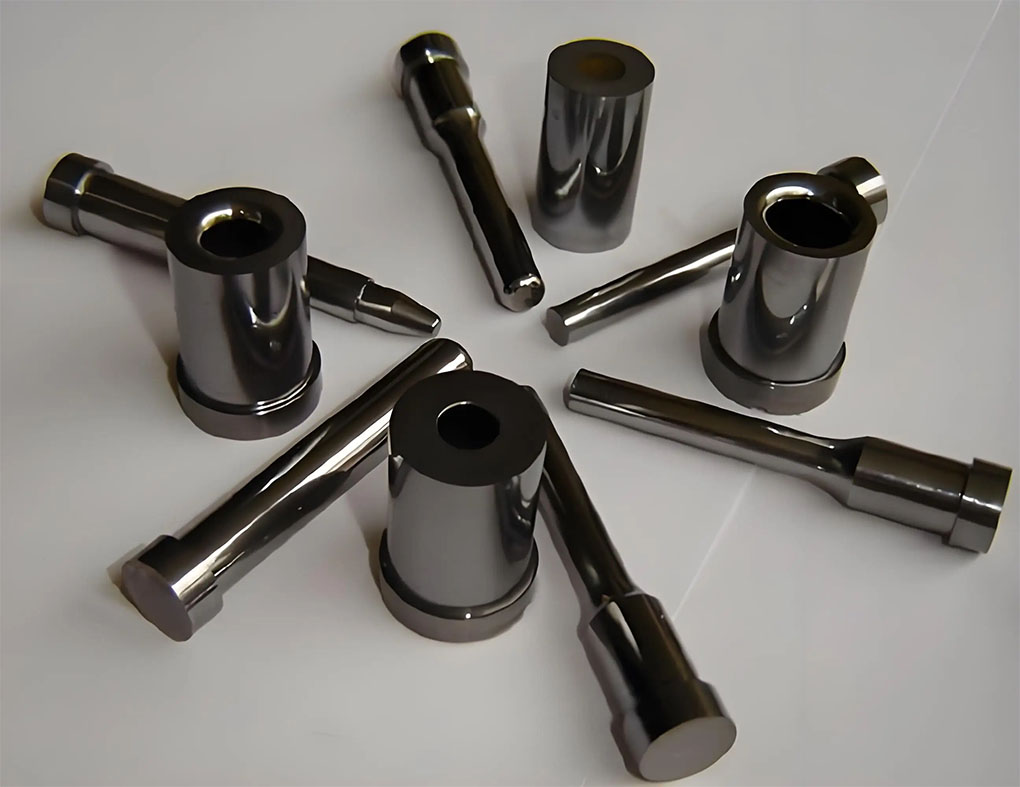
Tungsten carbide is one of the most popular materials used in various industries due to its versatility. Its hardness, corrosion resistance, and durability are some attributes that make it suitable for different applications.
In the demanding world of modern manufacturing, tungsten carbide stands as a titan of industry. Known for its incredible hardness, wear resistance, and thermal stability, it is the material of choice for high-stress applications ranging from aerospace components to intricate surgical tools. However, the very properties that make carbide desirable—its density and brittle strength—also make it notoriously difficult to machine and measure.
The Unique Challenges of Carbide Measurement and Machining
Tungsten carbide is a composite material, typically consisting of tungsten carbide particles “cemented” together by a metallic binder, such as cobalt or nickel. Unlike standard steels, carbide does not respond to traditional machining in the same way. It is prone to micro-chipping and requires specialized diamond-tipped tooling or Electrical Discharge Machining (EDM) to shape. Because the material is so rigid, it does not “give” or deform elastically under stress; it either holds its shape or it breaks.
This rigidity presents a dual challenge for accuracy. First, the machining process itself must be monitored with extreme care to prevent thermal cracking or surface leaching. Second, the measurement tools used must be capable of resolving minute details without damaging the surface of the part. Traditional contact-based measurement can sometimes be problematic if the carbide surface has a specific coating or if the part has extremely fragile geometries.
Advanced Detection Methods: How to Identify Inaccuracies
Detecting inaccuracies in carbide parts requires a multi-layered approach that combines traditional metrology with advanced non-destructive testing (NDT). Because carbide is often used in high-pressure environments, internal flaws are just as dangerous as external dimensional errors.
1. High-Resolution Coordinate Measuring Machines (CMM)
The CMM remains the gold standard for verifying the geometric dimensions of complex carbide parts. For carbide specifically, using a bridge-type CMM equipped with ruby-tipped probes or laser scanners is essential. These machines can map the surface of a part in 3D space, comparing the physical object against the original CAD model. When dealing with carbide, it is vital to account for temperature fluctuations in the inspection room, as even the slight thermal expansion of the machine’s own components can skew results when tolerances are measured in microns.
2. Surface Profilometry and Roughness Analysis
Carbide parts often function in high-friction environments where the surface finish is paramount. Detection of inaccuracies must include a check of the Ra (roughness average). Using a diamond-stylus profilometer, the surface texture is measured to ensure it meets the specification. An incorrect surface finish on a carbide seal, for instance, could lead to leakage or rapid degradation of the mating part.
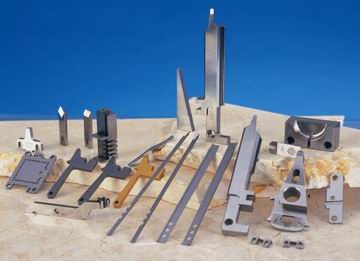
Strategies to Ensure Absolute Accuracy During Production
Detection is reactive; true quality comes from a proactive manufacturing strategy. Ensuring accuracy in carbide parts starts long before the final inspection. It begins with material selection and continues through every stage of the machining process.
Precision Grinding and EDM Control
Most carbide parts require diamond grinding or Wire EDM (Electrical Discharge Machining) to reach their final dimensions. To ensure accuracy, the “overcut” in EDM must be perfectly calculated. If the spark gap is not precisely controlled, the part will be undersized. Similarly, in diamond grinding, the choice of grit size and the coolant flow rate are vital. Excess heat during grinding can cause “grinding cracks,” which are nearly invisible but compromise the part’s integrity. Ensuring accuracy means maintaining a “slow and steady” approach, prioritizing thermal stability over cycle speed.
Applications of Tungsten Carbide Machined Parts
1. Energy and Petroleum Industry
The oil and gas sector is perhaps the most demanding environment for carbide components. Parts must survive abrasive sand, corrosive saltwater, and immense underground pressures.
- Drilling Inserts and Bits: Tungsten carbide buttons are pressed into drill bits to crush rock during oil well exploration.
- Flow Control Components: Choke valves, seats, and stems are machined from carbide to resist the high-velocity “wash” of abrasive fluids that would erode stainless steel in days.
- Progressing Cavity Pump Parts: Used in the extraction of heavy crude, these parts rely on carbide’s wear resistance to maintain a seal under friction.
2. Aerospace and Defense
In aerospace, weight is a factor, but durability is non-negotiable. Carbide is used in critical areas where components face high-frequency vibration and thermal cycling.
- Engine Components: High-precision carbide seals and bearings are used in jet engines where temperatures reach levels that would soften traditional alloys.
- Ammunition and Armor: Due to its extreme density and hardness, tungsten carbide is used in armor-piercing rounds and as a protective shielding material for military vehicles.
- Cutting Tools for Composites: Aerospace manufacturers use carbide end mills to machine carbon-fiber-reinforced polymers (CFRP), which are notoriously abrasive to standard tooling.
3. Metalworking and Tool Manufacturing
This is the most common application of the material. Almost all modern high-speed machining is made possible by tungsten carbide.
- Indexable Inserts: These are used for turning, milling, and drilling. They allow machines to run at higher speeds and feeds, significantly reducing production time.
- Progressive Dies and Punches: In high-volume stamping (like making soda cans or automotive body parts), carbide dies can produce millions of parts before showing signs of wear, whereas steel dies would require frequent sharpening.
- Drawing Dies: Used to pull wire and tubing into specific diameters; carbide’s low friction coefficient ensures a smooth surface finish on the wire.
4. Medical and Surgical Equipment
Carbide’s resistance to corrosion and its ability to hold a “micro-edge” make it ideal for the medical field.
- Surgical Inserts: Needle holders and forceps often feature tungsten carbide inserts in the “jaw” to provide a non-slip grip on suturing needles.
- Surgical Blades and Drills: Bone drills and specialized scalpels use carbide to ensure clean cuts and long tool life through repeated sterilization cycles.
- Dental Burrs: The small, high-speed drills used by dentists to remove decay are almost exclusively made of tungsten carbide.
5. Automotive Engineering
The automotive industry relies on carbide to maintain the tight tolerances required for modern, fuel-efficient engines.
- Valve Seats and Guides: These components must withstand millions of high-heat cycles without losing their shape.
- Brake System Components: High-performance braking systems sometimes utilize carbide coatings or components to reduce brake fade and maximize friction consistency.
- Shafts and Journals: In turbochargers, where shafts spin at over 100,000 RPM, carbide’s rigidity prevents “shaft whip” and catastrophic failure.

Why Choose Carbide for These Applications?
| Property | Benefit in Application |
| Hardness | Maintains sharp edges and prevents surface deformation. |
| Thermal Stability | Operates at temperatures up to 800°C without losing strength. |
| High Density | Provides necessary weight and balance in small volumes (e.g., vibration dampening). |
| Chemical Inertness | Resists oxidation and corrosion in harsh chemical environments. |
Real-Time In-Process Monitoring
The most sophisticated facilities use sensors integrated into the machining centers. These sensors monitor tool wear and vibration in real-time. Since carbide is so hard, it wears down even diamond tools over time. If the tool wears down, the part’s dimensions will gradually drift. By using automated tool-offset compensation, the machine can adjust itself mid-process to ensure that the first part in a batch is identical to the thousandth.
Material Batch Validation
Accuracy is often sabotaged by inconsistent raw materials. Before machining begins, it is essential to verify the grade of the tungsten carbide. This involves testing the hardness (typically via the Rockwell A scale) and the density. If the raw “blank” has inconsistent carbon content, it will react unpredictably to the heat of machining, leading to warping or dimensional instability that no amount of precision grinding can fix.
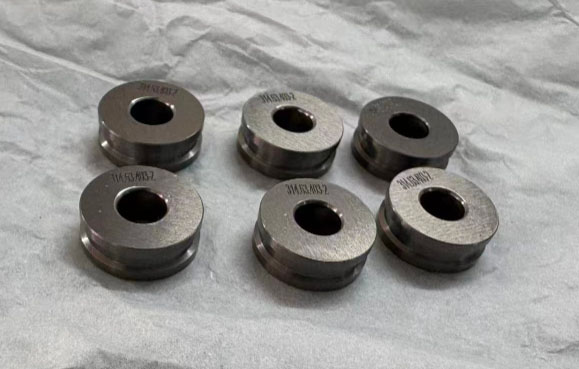
The Role of Environmental Calibration in Final Verification
One of the most overlooked aspects of ensuring carbide accuracy is the environment in which the measurements take place. Tungsten carbide has a low coefficient of thermal expansion, but it is not zero. In a high-precision setting where tolerances are ±0.002mm, a five-degree difference in room temperature can be the difference between a “pass” and a “fail.”
A professional laboratory ensures that parts are “soaked”—allowed to sit in the inspection room environment for several hours—before measurement begins. This ensures that the part and the measuring instruments are in thermal equilibrium. Furthermore, the use of air-bearing stages and vibration-isolated tables prevents external tremors from affecting the sensitivity of the detection equipment.
Conclusion: Achieving Perfection in Carbide Machining
The journey from a raw material to a high-precision component is one of extreme technical rigor. Detection requires more than just a keen eye; it demands an investment in high-end CMM technology, ultrasonic diagnostics, and a deep understanding of material science. Ensuring accuracy is a holistic endeavor, blending careful environmental control with real-time process monitoring and expert-level diamond machining techniques.
When precision is the only option, you need a partner who understands the nuances of this challenging material. We combine years of specialized experience with state-of-the-art equipment to deliver components that exceed the most stringent industry standards.
For your most demanding projects and complex geometries, trust the experts in high-precision manufacturing. Reach out to SYM Machining today for a consultation on your tungsten carbide requirements and experience the pinnacle of accuracy and reliability.
Related Article:
Ultra-Tight tolerance machining (±0.001mm) | Expert Guide
11 Must-Know Insights When Choosing a Precision Machined Components Supplier