Aluminum is one of the most popular materials in modern manufacturing. Since it’s lightweight, easy to machine, and has a natural resistance to corrosion. However, in harsh environments, such as marine, aerospace, or industrial settings, even aluminum needs extra protection to prevent wear, oxidation, and corrosion.
That’s where aluminum anodizing comes in.
Introduction
Anodizing is not just a surface treatment; it’s a science-based process that turns the surface of aluminum into a protective shield. It makes aluminum parts stronger, more durable, and more attractive — all without changing the material’s natural benefits like light weight and recyclability.
In this article, we’ll explain how aluminum anodizing works, why it improves corrosion resistance, what types exist, and how companies like SYM Machining use anodizing to produce durable CNC-machined aluminum parts for global industries.
What Is Aluminum Anodizing
Aluminum anodizing is an electrochemical process that thickens and strengthens the natural oxide layer on the surface of aluminum. The word “anodizing” comes from the fact that the aluminum part becomes the anode (positive electrode) in an electrical circuit.
Instead of adding another material on top, anodizing changes the surface itself, turning it into aluminum oxide (Al₂O₃). This oxide layer is hard, stable, corrosion-resistant, and porous, which means it can also be colored or sealed for extra protection.
You can think of anodizing as turning aluminum into its own armor.
Why Aluminum Needs Surface Protection
Aluminum naturally forms a thin oxide layer when exposed to air. This oxide film provides some corrosion resistance, but it’s only a few nanometers thick. In normal environments, this might be enough.
However, in demanding applications — like aerospace components, marine equipment, or outdoor enclosures — the natural oxide layer can wear off or get damaged. Once that happens, the exposed aluminum reacts quickly with oxygen, moisture, or chemicals, leading to:
- Corrosion or pitting (small holes on the surface)
- Surface discoloration
- Reduced strength and fatigue resistance
- Poor appearance
That’s why engineers often choose to anodize aluminum, which creates a much thicker, stronger oxide layer that won’t flake, chip, or peel like paint or plating might.
How the Anodizing Process Works
Let’s look at how anodizing happens step by step:
Step 1: Cleaning and Preparation
The aluminum parts are first cleaned using alkaline and acidic solutions to remove oils, dirt, or oxides. This ensures a smooth, uniform surface.
Step 2: Etching (Optional)
Etching helps remove small surface imperfections and gives a matte or satin finish.
Step 3: Desmutting
This removes smut (residues or impurities) left after etching. It helps prepare the surface for uniform anodic film growth.
Step 4: Anodizing (Electrochemical Reaction)
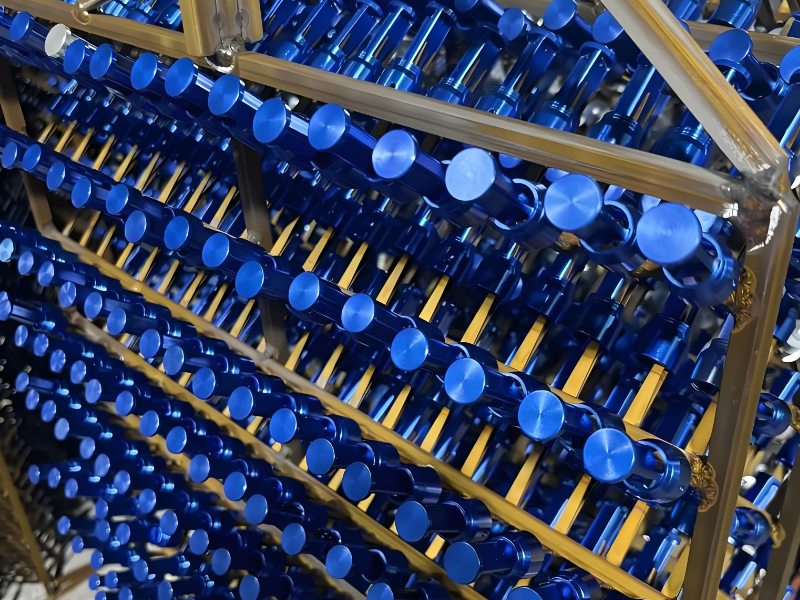
The cleaned aluminum part is placed in an acidic electrolyte bath — usually sulfuric acid — and connected to a power supply.
When an electric current passes through the bath:
- The aluminum part acts as the anode.
- Oxygen ions from the electrolyte combine with the aluminum atoms on the surface.
- This forms a controlled layer of aluminum oxide.
Step 5: Coloring (Optional)
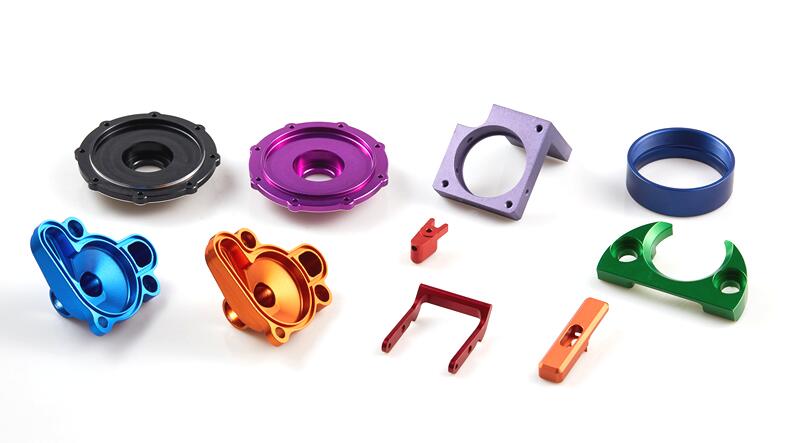
The porous anodized layer can absorb dyes or metallic salts, allowing for various color finishes like black, red, blue, gold, or silver.
Step 6: Sealing
To complete the process, the pores in the anodized layer are sealed using hot water or chemical treatments. This step locks in color, enhances corrosion resistance, and stabilizes the oxide film.
The Science Behind Anodizing: Why It Improves Durability
The anodized layer created during this process is not a coating — it’s part of the aluminum itself. That’s what makes it so durable.
Here’s what happens at the microscopic level:
- The outer layer becomes hard aluminum oxide.
- The inner layer remains aluminum metal.
- Together, they form a bonded structure that cannot peel or flake.
Because aluminum oxide is ceramic-like, it’s very hard and resistant to scratches and wear. It’s also chemically stable, meaning it won’t react easily with air, water, or chemicals.
This combination provides excellent corrosion resistance, wear resistance, and surface hardness.
Types of Aluminum Anodizing
TypeI: Chromic Acid Anodizing
- Oxide Thickness: 5–2.5 microns
- Color: Grayish or dull
- Best for: Aerospace parts where tight tolerances are critical
- Advantages: Thin layer, minimal dimensional change
- Disadvantages: Lower wear resistance
TypeII: Sulfuric Acid Anodizing
- Oxide Thickness: 5–25 microns
- Color: Can be dyed easily
- Best for: Consumer products, electronics, general industrial parts
- Advantages: Good corrosion resistance, wide color range
- Disadvantages: Moderate wear resistance
TypeIII: Hardcoat Anodizing (Hard Anodizing)
- Oxide Thickness: 25–100 microns
- Color: Dark gray to black
- Best for: High-wear or outdoor applications (gears, pistons, actuators)
- Advantages: Excellent hardness and corrosion resistance
- Disadvantages: Higher cost, darker color
At SYM Machining, Type II and Type III anodizing are most commonly used for CNC aluminum parts, offering the perfect balance between cost, appearance, and performance.
Key Benefits of Aluminum Anodizing
1. Superior Corrosion Resistance
The anodized layer acts as a barrier between the metal and the environment, preventing oxygen, salt, or moisture from reaching the base aluminum. This makes anodized parts ideal for marine, outdoor, and industrial uses.
2. Enhanced Surface Hardness
Hardcoat anodized surfaces can reach up to 500 HV on the Vickers hardness scale — much harder than untreated aluminum. This makes parts more resistant to scratches, abrasion, and impacts.
3. Improved Wear Resistance
In applications involving friction, anodized aluminum lasts much longer. The oxide layer reduces wear from repeated motion, extending the life of mechanical parts.
4. Better Adhesion for Paints and Dyes
The porous anodized surface naturally holds dyes and coatings better. That’s why anodized parts often come in a variety of colors without fading or peeling.
5. Electrical Insulation
Anodizing creates a non-conductive surface, useful for electrical or electronic housings where insulation is required.
6. Environmentally Friendly
The anodizing process uses water-based solutions and doesn’t create toxic waste or heavy-metal byproducts. Plus, aluminum itself is 100% recyclable.
7. Applications of Anodized Aluminum Parts
Aluminum anodizing is used in nearly every industry, because of its combination of lightweight, durability, and appearance.
| Industry | Common Anodized Parts |
| Aerospace | Structural panels, landing gear, control housings |
| Automotive | Engine covers, gear components, handles |
| Electronics | Laptop cases, smartphone bodies, camera housings |
| Medical | Surgical tools, dental equipment, prosthetics |
| Marine | Boat fittings, underwater sensors |
| Robotics | Actuator housings, frames, control covers |
| Architecture | Window frames, decorative panels, lighting systems |
SYM Machining provides CNC-machined anodized aluminum parts for all these sectors, ensuring excellent quality and performance across diverse applications.
Color and Aesthetic Options
One of the most appealing features of anodizing is that it can be colored while keeping the metallic texture visible.
Common colors include:
- Natural (silver)
- Black
- Blue
- Red
- Gold
- Bronze
- Clear matte
Because the color is absorbed into the oxide layer rather than sitting on top, anodized colors are fade-resistant and durable, even in sunlight or harsh environments.
Comparison: Anodizing vs. Other Surface Treatments
Anodizing stands out for its strength, lightness, and eco-friendliness.
| Feature | Anodizing | Painting | Powder Coating | Plating (e.g., Nickel) |
| Corrosion Resistance | Excellent | Moderate | Good | Very Good |
| Hardness | High | Low | Medium | High |
| Weight | No added weight | Adds coating | Adds coating | Adds coating |
| Adhesion | Part of metal | On surface | On surface | On surface |
| Color Variety | Wide range | Very wide | Moderate | Limited |
| Environmental Impact | Low | Moderate | Moderate | High |
| Typical Use | Aerospace, electronics | General decoration | Appliances | Tools, heavy industry |
How SYM Machining Uses Anodizing to Improve CNC Parts
At SYM Machining, anodizing is a key part of the surface finishing process for CNC aluminum parts. Our team ensures every step is done with precision to meet international standards and customer requirements.
Our Process Includes:
- Material Verification – Confirming aluminum grades like 6061, 6082, or 7075 meet quality standards.
- CNC Machining – Producing precise components with tight tolerances.
- Surface Preparation – Cleaning and polishing before anodizing.
- Anodizing (Type II or Type III) – Applying the right process based on part function.
- Coloring (Optional) – Matching brand or functional colors.
- Sealing and Inspection – Final step to ensure corrosion resistance.
- Quality Control – Full inspection, including film thickness and appearance testing.
SYM Machining’s anodized parts are trusted by global customers for their consistent finish, strong protection, and aesthetic appeal.
Common Questions To Aluminum Anodizing
Q1: Can anodizing completely prevent corrosion?
Anodizing provides excellent protection against corrosion, but no process is 100% perfect. For extremely harsh environments (like saltwater immersion), additional sealing or coatings can further improve durability.
Q2: Can anodized parts be machined afterward?
Not recommended. Machining after anodizing will remove the protective oxide layer. It’s best to complete machining first, then anodize.
Q3: How thick is the anodized layer?
Thickness depends on the type:
Type II: 5–25 microns
Type III: 25–100 microns
Hardcoat anodizing provides maximum protection.
Q4: Does anodizing change part dimensions?
Slightly. About half of the anodized thickness grows into the surface and half grows outward. Engineers account for this during design.
Q5: Can only aluminum be anodized?
Mostly yes. Magnesium and titanium can be anodized, but the process and results differ. Aluminum is the most common and cost-effective metal for anodizing.
Conclusion
Aluminum anodizing is one of the most effective ways to improve corrosion resistance and durability without adding weight or changing material properties.
On the other hand, it strengthens the surface, enhances appearance, and provides lasting protection — making it ideal for aerospace, automotive, electronics, and many other industries.
At SYM Machining, anodizing is more than just a finishing step, and it’s part of our commitment to delivering high-quality, long-lasting CNC aluminum parts that perform reliably in any environment.
Whether you need decorative anodizing for visual appeal or hardcoat anodizing for industrial performance, SYM Machining offers custom solutions that meet your engineering and aesthetic goals.
Related articles:
Post-processing services for machining
AL6061 vs. AL7075 Machining: Key Differences & Best Applications