In the world of precision manufacturing, few methods can match the accuracy and versatility of Swiss screw machining parts. Whether it’s a tiny bone screw for orthopedic surgery or a connector in a spacecraft, these parts are the unsung heroes behind many of the technologies we rely on daily.
Swiss screw machining was originally developed in Switzerland for watchmaking. Over the years, it evolved into a global standard for small, intricate, and high-precision components. What sets it apart is the unique way the material is fed through the machine, supported very close to the cutting tool, which reduces vibration and allows for extremely tight tolerances.
This article dives deep into everything you need to know about Swiss screw machining parts,from how they’re made, what they’re used for, and why industries from aerospace to electronics trust this method above all others. Stick with us and find out why these parts are worth every micron of precision.
Introduction
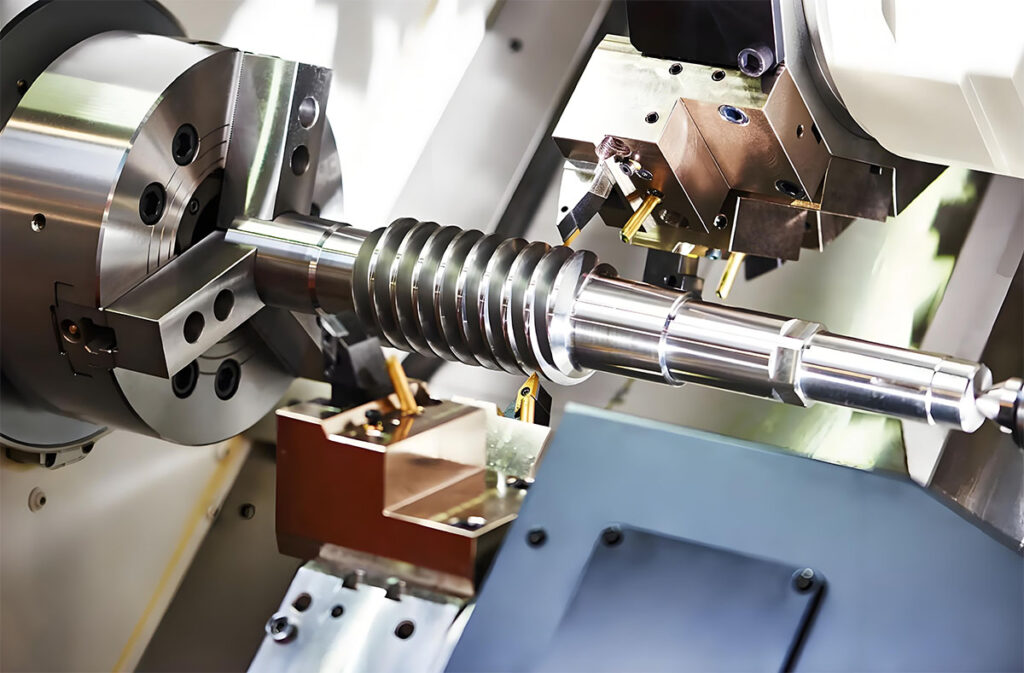
Swiss screw machining parts are created using a Swiss-type lathe, also called a sliding headstock lathe. Unlike traditional lathes, where the part stays stationary and the tool moves, the Swiss lathe feeds the material through a guide bushing — keeping it stable and minimizing deflection.
This results in exceptional dimensional accuracy, even when machining very small diameters or long, slender parts. Swiss screw machines are also known for:
- Performing multiple operations in one cycle
- Reducing part handling and setup time
- Producing complex geometries in one pass
These capabilities make Swiss screw machining ideal for industries that require consistent part quality over long production runs.
Understanding the Swiss Screw Machining Process
Let’s break down how this process works:
- Sliding headstock: The bar stock slides through a guide bushing, giving support near the cutting zone.
- Multiple tools: Several tools can operate simultaneously — turning, drilling, and milling all in one cycle.
- Live tooling: Enables cross-drilling, slotting, or other operations without moving the part to another machine.
- Automated bar feeders: Allow for lights-out, high-volume production with minimal operator intervention.
The result? Speed, repeatability, and precision. Unlike traditional machining methods, Swiss machines can crank out thousands of parts with nearly identical specifications, down to the micron.
Key Advantages of Swiss Screw Machining Parts
Why are Swiss screw machining parts so widely used? Let’s highlight the major benefits:
- Exceptional accuracy: Tolerances down to ±0.0001″ are possible.
- Efficient production: Minimal setups reduce cycle times and costs.
- Superior finish: Smooth surface finishes reduce the need for post-processing.
- Compact size capability: Ideal for parts under 1.25″ in diameter, especially those with complex features.
- Multi-tasking machines: One machine does it all — turning, milling, drilling.
Whether you’re in aerospace or medtech, Swiss machining provides a trusted solution for demanding applications.
Materials Commonly Used for Swiss Screw Machining
Material selection is key in any machining process. Swiss lathes are designed to handle a wide variety of metals and plastics:
| Material | Common Uses |
| Brass | Fittings, electronic connectors |
| Stainless Steel | Medical devices, surgical screws |
| Titanium | Aerospace parts, orthopedic implants |
| Aluminum | Lightweight components |
| Plastic (PEEK, Delrin) | Insulating or low-friction parts |
Each material has its quirks, but Swiss machines can be configured with the right tools, speeds, and feeds to handle them with ease.
Applications of Swiss Screw Machining Parts
Swiss screw machining shines in industries that need high-precision, high-volume, small-diameter parts. Here’s where you’ll commonly find them:
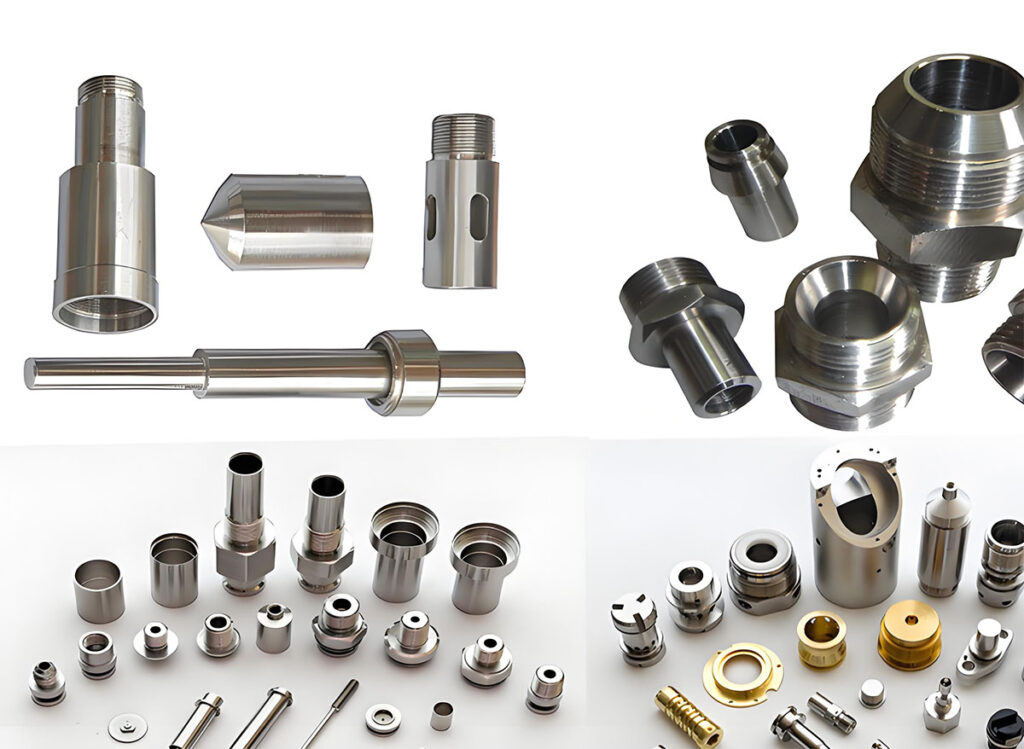
- Medical – Bone screws, surgical instruments, implantable devices
- Aerospace – Connectors, nozzles, bushings
- Electronics – Terminals, sensor housings, micro-components
- Automotive – Transmission parts, fuel system components
- Defense – Firearm parts, radar connectors
These parts often have strict requirements for accuracy, strength, and material performance — and Swiss machining checks all the boxes.
Comparing Swiss Screw Machining with Traditional CNC Turning
| Feature | Swiss Machining | CNC Turning |
| Material support | Guide bushing (stable) | Chuck (less support) |
| Ideal part size | Small & slender | Larger & simpler |
| Cycle time | Faster | Slower |
| Multi-axis capability | High | Medium |
| Setup time | Lower | Higher for complex parts |
If you’re dealing with intricate geometries, small diameters, and tight tolerances , Swiss is the way to go.
Design Tips for Swiss Screw Machined Components
Designing for manufacturability can make a big difference in cost and lead time. Here are a few tips:
- Minimize unnecessary complexity — Simple features are easier and cheaper to machine.
- Use consistent diameters — Avoid large diameter changes that slow down the cycle.
- Avoid deep undercuts — They require special tools or secondary operations.
- Thread specifications — Use standard sizes when possible to save time.
A skilled Swiss machining supplier can work with your engineers during the design phase to optimize parts before they ever hit the spindle.
Outsourcing Swiss Screw Machining: What to Look For?
Not all machine shops are created equal. When outsourcing, here’s what to look for:
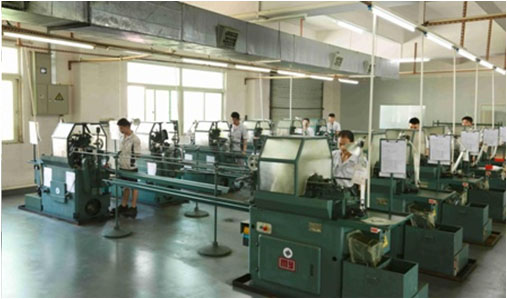
- Machine capability: Do they have true Swiss-type lathes or just claim to?
- Volume capacity: Can they scale from prototype to production?
- Quality systems: ISO certifications, inspection reports, and quality plans.
- On-time delivery: Past performance and customer reviews matter.
- Customer service: Are they responsive, transparent, and helpful?
Reliable outsourcing partners will become an extension of your own team — make that relationship count.
Cost Breakdown and Value of Swiss Screw Machining
Swiss machining may not always be the cheapest upfront, but it offers serious value:
- Lower labor costs due to automation
- Minimal rework thanks to precision
- Shorter lead times because of in-line operations
- Higher throughput with minimal scrap
So while the hourly machine rate may be higher than traditional CNC, the total cost per part often ends up lower, especially for high-volume jobs.
Swiss Screw Machining Parts FAQs
What are Swiss screw machining parts used for?
A: They’re used in industries that need small, complex, high-precision parts — like medical, aerospace, and electronics.
Are Swiss screw machines good for high-volume production?
A: Yes! They’re built for lights-out, repeatable runs that produce consistent parts at scale.
Can Swiss screw machines handle tough materials?
A: Absolutely. With the right tools and speeds, they can machine titanium, stainless steel, and high-performance plastics.
How accurate is Swiss screw machining?
A: It can achieve tolerances as tight as ±0.0001″, depending on the material and design.
Is Swiss machining more expensive than CNC turning?
A: Upfront, yes. But for complex or high-volume parts, it’s often more cost-effective overall.
Do I need a special CAD file for Swiss machining?
A: No, but a 3D model helps your machining partner optimize the process faster.
Conclusion
When precision, volume, and complexity all matter, Swiss screw machining parts offer an unbeatable combination. They’re reliable, efficient, and perfect for modern applications across demanding industries.
Whether you’re designing the next big thing in aerospace or need high-precision medical implants, turning to a trusted Swiss machining partner like SYM can make all the difference.
Check out SYM Precision Machining and get a quote that meets your needs without compromising on quality.