Introduction: Robot Arm Components
Robot arms are mechanical devices that move and interact with the world. They can pick up objects, weld, assemble parts, and even help in surgeries. Robot arms are used in factories, labs, and many other places. To work well, robot arms must be strong, accurate, and dependable.
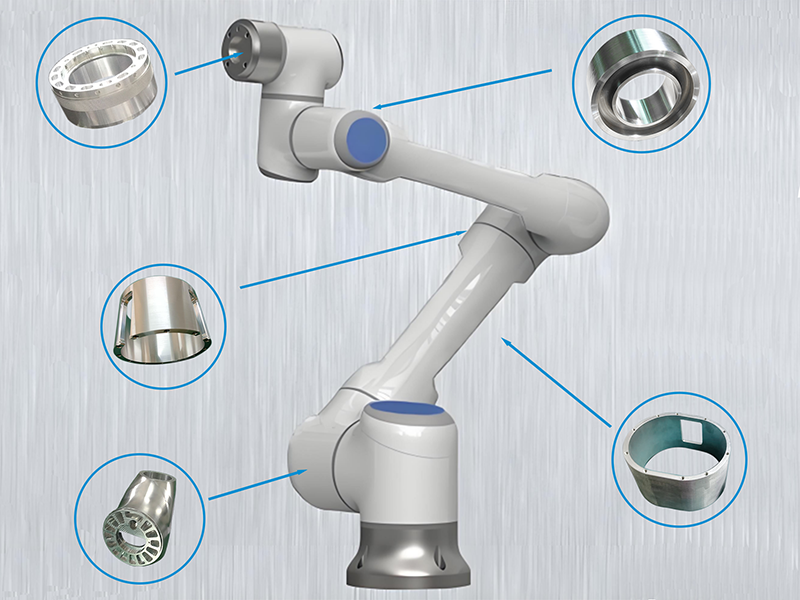
A robot arm has many parts, such as gears, joints, mounts, and housings. These parts must be made with great care so the robot can move smoothly and do its job correctly. That’s where precision CNC machining comes in. Precision CNC machining makes robot parts with exact measurements, even down to tiny fractions of a millimeter.
Why Precision Matters in Robot Arms
Imagine trying to build a model with blocks that don’t fit well together. It would wobble and fall apart, right? A robot arm is similar. When its parts are perfectly made:
- Motion is smooth and accurate.
- Wear and tear are reduced.
- The robot works reliably over long hours.
Robot arms depend on parts with exact sizes and shapes. Even small errors can cause problems. For example, if a gear is too big or too small, it may not fit its place and gears may grind or slip during motion. Robot arms are the most visible and function-critical parts of a robotic system. They determine how accurately, smoothly, and reliably a robot can move, position tools, and handle loads.
That’s why precision is not just helpful—it’s essential.
Key Robot Arm Components Made by Precision CNC Machining
Robot arms have many types of parts. Here are the most important ones that are often made with precision CNC machining:
1. Structural Frames and Arms
The arm segments and the frame of the robot are the backbone of the entire machine. These must be strong enough to hold loads and light enough to move easily.
Precision CNC machining ensures that these parts are cut accurately from materials such as aluminum or steel. This process helps robot arms balance strength with ease of motion.
2. Gears and Gearboxes
Gears are critical. They transfer motion and power between parts of the robot arm. They must mesh together smoothly without slipping.
Precision machining makes gears with tight tolerances so that robot joints turn accurately and quietly. Even tiny mistakes can lead to vibration or long-term wear.
3. Joints and Bearing Housings
Joints allow the robot arm to bend and rotate. Bearing housings hold bearings in place, creating smooth rotational motion.
These components must be machined with careful precision, because any wobble in a joint can reduce accuracy or cause failure over time.
4. Actuator and Motor Mounts
Actuators and motors power the robot. They push and pull the robot arm to make it move.
Precision CNC machining ensures that mounts for these motors fit exactly. A perfect fit keeps the motor aligned, reducing vibration and improving performance.
5. Sensor Housings and Mounts
Robots use sensors to “see” and measure their environment. These sensors must be placed accurately so they give correct information.
Precision parts protect these sensors and hold them in the right place, helping robots understand their world and make smart decisions.
Common Materials Used in Robot Arm Parts
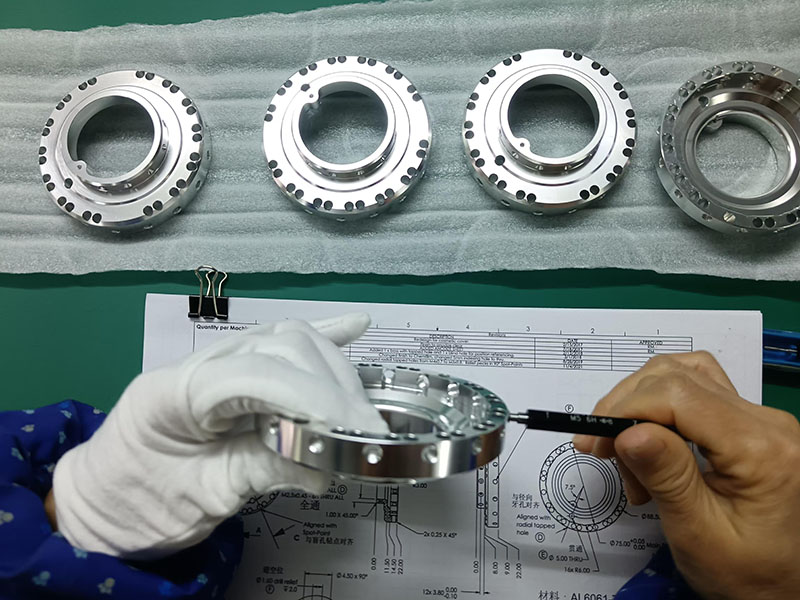
Different materials are used to create robot arm components. Each material has special qualities that make it suitable for certain parts.
Here are some examples:
- Aluminum alloys: Light and easy to machine. Good for structural parts like arms and frames.
- Stainless steel: Strong and resistant to corrosion. Often used for gears and heavy duty parts.
- Titanium: Very strong and lightweight, but harder to machine. Used in parts where strength and light weight are both needed.
- Plastics : Some robot parts, such as sensor housings or electrical insulators, are made from high-grade plastics like POM, nylon, or PEEK. These materials are durable, lightweight, and sometimes used where metal is not necessary.
Case Study: Robotics Innovation – Scaling a Flexible Robotics Pioneer
Industry: Advanced Robotics & Automation
Modern robot arms are not built from just a few simple parts. They often require dozens, or even hundreds, of precision components working together. This case study shows how SYM Precision Machining became a long-term manufacturing partner for a flexible robotics company, supporting their growth through reliable precision CNC machining and scalable production.
Client Background and Challenge
In 2016, a California-based startup specializing in flexible robotics began developing advanced robot arms for industrial automation. Each robot required over 100 different precision-machined components, mainly made from aluminum and stainless steel.
These parts were critical to robot arm performance and included structural components, joints, mounts, and housings. Each component had:
- Complex geometries
- Tight dimensional tolerances
- High surface finish requirements
As the company grew, several key challenges became clear:
- How to scale production quickly as robot demand increased
- How to maintain consistent quality across many different part numbers
- How to meet delivery schedules without slowing innovation
The client needed more than a traditional supplier. They needed a scalable and reliable manufacturing partner that could grow alongside their engineering team.
SYM Precision Machining Solution
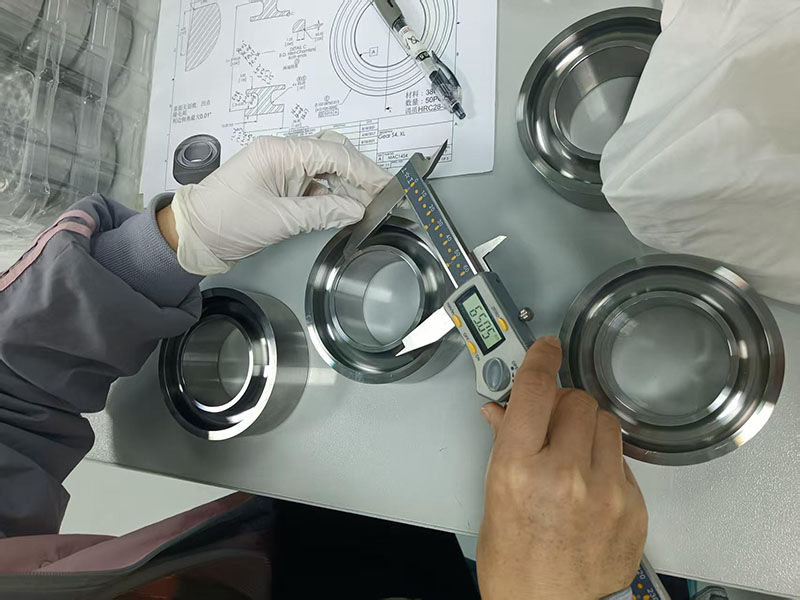
To address these challenges, SYM Precision Machining implemented a customized production strategy designed specifically for robotics manufacturing.
Dedicated Production Cell
SYM established a Dedicated Production Cell for this client. This approach provided:
- Streamlined machining workflows
- Reduced setup time between different robot arm components
- Stable and repeatable quality across aluminum and stainless steel parts
By dedicating machines, tooling, and processes, SYM ensured consistent output even as production volumes increased.
Design for Manufacturability (DFM) Optimization
SYM worked closely with the client’s engineers to provide ongoing Design for Manufacturability (DFM) support. This collaboration helped:
- Optimize part designs for CNC machining
- Reduce machining time while keeping full functionality
- Improve production efficiency without sacrificing precision
DFM support allowed the client to move smoothly from prototype to scaled production.
Kanban-Based Inventory System
To support the client’s agile production model, SYM implemented a kanban-based inventory buffer. This system ensured:
- Just-in-time delivery of robot arm components
- Reduced inventory pressure for the client
- Stable production during demand fluctuations
Results
The partnership delivered strong and measurable results:
- 8 years of continuous collaboration and ongoing production
- Over 300 robots completed annually using SYM-machined components
- Consistent quality across more than 100 precision CNC machined parts
- A solid manufacturing foundation supporting global market expansion
Client Outcome
With SYM Precision Machining as a trusted partner, the robotics company achieved scalable growth without compromising quality or delivery.
SYM machining now acts as:
- A seamless extension of the client’s engineering team
- A dependable supplier of high-precision robot arm components
- A long-term manufacturing partner supporting innovation and expansion
This case study clearly demonstrates how precision CNC machining plays a critical role in enabling robotics companies to scale efficiently and compete in global markets.
Real Uses of Precision Machined Robot Arm Parts
Robot arms are used in many industries. Here are some real examples:
In Factories
Industrial robot arms build cars, weld parts, and handle heavy materials. The parts inside these robot arms must last thousands of hours of work and move accurately every time.
In Healthcare
Robotic arms help in surgeries and laboratory automation. Precision parts help these robots perform delicate operations where even tiny mistakes are unacceptable.
In Warehouses
Robots sort packages, move products, and help with shipping. Machined parts make sure these robots are reliable and fast.
In Agriculture
Robots survey crops and collect data. Their parts must be strong enough to work outside in varied weather and harsh conditions.
Common Questions About CNC Machining and Robot Parts
What is a tolerance in machining?
Tolerance means how close a part’s actual size is to its intended size. Smaller tolerances mean higher precision. CNC machines can achieve very tight tolerances, often down to fractions of a millimeter.
Why not use 3D printing for all robot parts?
3D printing is great for prototypes and complex shapes, but metal CNC machining is better for parts that must be very strong and precise.
Can CNC machines work with any material?
CNC machines can work with most metals and many plastics, but each material may require different tools and cutting speeds. SYM works with a wide range of materials to meet various needs.
Conclusion: Precision CNC Machining Powers Modern Robot Arms
Precision CNC machining plays a crucial role in creating the parts that make robot arms work. Without machines that can cut parts to exact specifications, robot arms would not perform as well. Companies like SYM Precision Machining provide the technology, skills, and services that help engineers create better robots.
From the structural frames to the tiniest sensor housing, every component matters. Precision CNC machining ensures that these parts are accurate, strong, and reliable.
If you ever see a robot arm in action, remember that behind its smooth movements are countless precision-machined parts made with careful planning and advanced technology.
Looking for a CNC machining partner for robot arm components?
SYM machining provide precision CNC machining and 5-axis machining for robotic structural and motion components, supporting projects from prototype to production.
Explore our Precision Machining Case Studies: SYM Precision CNC Machining Case Studies