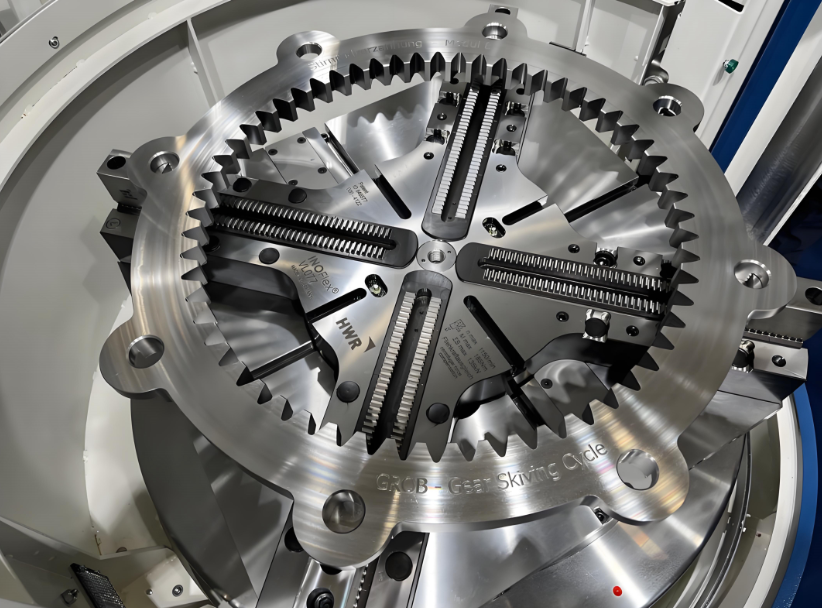
Precision machining for custom fixtures plays a critical role in ensuring reliable, repeatable, and scalable manufacturing operations. Designing and machining custom fixtures requires careful planning, engineering insight, and strong control over machining processes. The goal is to create fixtures that can reliably locate, hold, and stabilize components during manufacturing, measurement, or inspection. The following ten tips explore the key technical considerations involved in designing and machining custom fixtures that deliver long-term performance and accuracy.
Begin with a Clear Understanding of the Workpiece Geometry
A fixture is only as good as the data used to design it. Well-defined part geometry ensures proper locating points and clamp positions. Engineers should study:
- Primary and secondary datum surfaces
- Tolerance stack-ups
- Critical-to-quality features
Using the correct datum reference frame reduces deviation and ensures repeatable alignment during machining. It is also important to understand which surfaces require the tightest tolerances. For example, if a part has a precision bore or critical mating surface, the fixture must secure the part in a way that avoids distortion at that feature. Parts with thin walls or delicate features may require soft-touch clamping surfaces or distributed support points to prevent deformation.
Select Materials Based on Functional Requirements
Material selection significantly influences fixture strength, stability, machinability, weight, and longevity. The correct material ensures that the fixture maintains its dimensional integrity under clamping forces, temperature changes, and repeated production cycles.
Common material choices include:
| Material | Key Benefits | Applications |
| Tool Steel (e.g., A2, D2) | High hardness, minimal wear | Long-production jigs, heavy machining |
| Aluminum (6061, 7075) | Lightweight, good machinability | Medium-duty fixtures, fast prototyping |
| Stainless Steel (304, 316) | Corrosion resistance | Medical, aerospace, clean environments |
| Engineering Plastics (Nylon, Delrin) | Non-marring, low friction | Holding delicate components |
| Composite and Carbon Fiber | Lightweight, rigid, non-conductive | Aerospace and electronics fixtures |
The environment in which the fixture will be used also matters. For instance, high-temperature machining may require materials with low thermal expansion to prevent alignment shifts. Production lines handling abrasive materials may need wear-resistant coatings, hardening treatments, or replaceable steel inserts in high-contact areas.
Weight is another factor. Heavy fixtures may improve rigidity but may slow down operator handling or automated loading systems. In such cases, a hybrid material approach—steel only where necessary, aluminum where possible—can be effective.
By matching material properties to the operational environment, you increase both fixture accuracy and lifecycle value.
Apply the 3-2-1 Locating Principle to Ensure Stable Positioning
The 3-2-1 principle is fundamental in fixture design because it ensures repeatable and controlled location of the workpiece. The principle constrains the part’s six degrees of freedom (three translation axes and three rotation axes) without over-constraining it.
- Three points on the base plane prevent movement along the primary axis.
- Two points on a vertical face prevent movement along the secondary axis.
- One point on a third face prevents movement along the tertiary axis.
This system ensures that the part seats predictably every time, even across thousands of production cycles.
Using too many contact points, however, creates instability rather than control. Excess constraints introduce internal stress and can cause the part to bend or rock slightly, especially under cutting forces. Locating pads, precision dowel pins, and V-blocks should be placed only where they define necessary reference planes.
In high-precision applications, hardened and ground locating surfaces should be used to minimize wear and maintain accuracy. Additionally, consistent part loading orientation must be documented to prevent operator-induced variation.
Effective fixture performance begins with predictable part location—and the 3-2-1 principle is the most reliable method for achieving it.
Avoid Over-Constraining the Workpiece to Prevent Distortion
A frequent challenge in custom fixture design is balancing restraint and freedom. The fixture must hold the workpiece secured against machining forces, but excessive clamping pressure or too many constraint points can distort the part. This is especially true for thin-walled, lightweight, or heat-treated components.
Over-constraint happens when multiple fixture elements attempt to restrict the same motion direction. This creates internal stress, pushing the part out of its natural geometric form. The result is machining inaccuracies that only appear after unclamping—making troubleshooting difficult.
To prevent over-constraint:
- Use floating clamping elements where possible.
- Allow part seating to occur naturally before clamps engage.
- Choose clamp locations that do not apply force near critical surfaces.
- Distribute support points to reduce localized load stress.
Soft jaws, spring plungers, and low-contact-area pads help maintain grip without deformation. In precision environments, pressure-regulated clamping systems may be used to finely control applied force.
The best fixtures hold with stability—not force. If the part remains dimensionally true after removal, the fixture has done its job correctly.
Optimize Clamping for Rigidity, Efficiency, and Machining Accessibility
Clamping strategy influences not only dimensional accuracy but also machining efficiency. Clamps must counteract the cutting forces while maintaining access to the areas being machined. If clamps block tooling paths, operators may have to reposition the part mid-process, increasing setup time and introducing variability.
Effective clamping considers:
- Direction of machining forces (especially milling cutter side loads)
- Balance of clamping force vs. holding surface contact
- Operator ergonomics, including loading speed and ease of use
Quick-acting clamps reduce cycle times and improve workflow. For CNC machining, self-aligning pneumatic or hydraulic clamps enable consistent pressure application and automated part changeover.
Clamping elements should be placed so that forces flow through the fixture into the base plate, not into unsupported regions of the part. If chatter or vibration occurs, it is often a sign that clamping is insufficiently rigid or improperly distributed.
Good clamping secures the part with minimal adjustment and maximum stability.
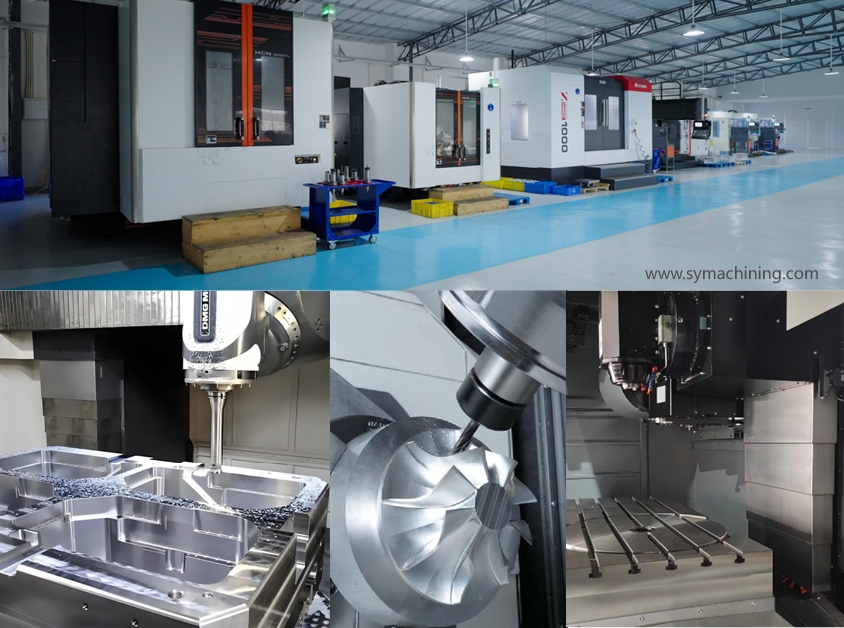
Ensure Tool and Inspection Accessibility During Fixture Design
Fixtures must be designed with the machining process in mind. A fixture that holds the part securely but obstructs tool paths is inefficient. Designers should simulate machining operations using CAM software to ensure that cutting tools have unrestricted access to surfaces without interference.
Consider:
- Tool length and approach angles
- Chip evacuation paths
- Coolant flow reach
- CMM probe clearance for inspection
- Visual inspection points for operator verification
When inspection needs are planned from the beginning, fixtures often include built-in reference surfaces or probe datums. This reduces handling time and ensures dimensional consistency throughout production.
Accessibility must support both precision and speed. A successful fixture is one that machining and inspection can occur without unnecessary repositioning.
Validate Fixture Design with Prototyping and Trial Runs
Before committing the fixture to full production use, prototyping and trial testing help verify fit, function, and operational performance. A prototype may be fully machined, or produced quickly using additive manufacturing for a preliminary fit-check.
Pilot testing should evaluate:
- Part seating feel and consistency
- Clamping pressure distribution
- Operator workflow and ergonomics
- Machine vibration and chatter under load
- Post-machining dimensional stability
Feedback from machinists and operators is essential. They observe practical issues such as awkward clamp placement or slow loading procedures—insights that are not always obvious in CAD.
Successful validation ensures that the fixture works reliably under real factory conditions—not just theoretical ones.
Use Wear-Resistant Surfaces and Replaceable Inserts for Long-Term Accuracy
Many fixture surfaces experience repeated mechanical contact. Over time, this leads to wear, which reduces accuracy. To extend fixture life and maintain repeatability, engineers should incorporate:
- Hardened steel pads
- Replaceable wear plates
- Precision-ground dowel bushings
- Ceramic or carbide-tipped locating points
These components are inexpensive to replace compared to rebuilding an entire fixture. They also support stable alignment over thousands of production cycles. In high-use environments, wear surfaces should be inspected periodically and replaced according to maintenance logs.
Long-term accuracy is achieved not only by building the fixture well—but also by planning for the way it ages.
Verify Dimensional Accuracy with High-Precision Measurement Tools
Measurement and inspection ensure that both the fixture and the parts it produces meet tolerance requirements. Precision fixtures should be inspected using:
- Coordinate Measuring Machines (CMMs)
- Optical measurement systems
- Surface plate and height gauges
- Dial or digital test indicators
Inspection focuses on:
- Locating point accuracy
- Parallelism and flatness
- Clamping repeatability
- Thermal expansion behavior (if relevant)
Documenting measurements creates a traceable record that confirms fixture stability over time. This is particularly important in regulated industries such as aerospace and medical device manufacturing.
Dimensional verification protects manufacturing consistency—and customer trust.
Design Fixtures with Maintenance, Adjustability, and Future Modifications in Mind
Fixtures should not be treated as static tools. Over time, part designs may change, production scale may increase, or machining centers may be upgraded. A well-designed fixture allows for adjustments rather than requiring full replacement.
This can include:
- Slotted mounting holes for micro-adjustments
- Modular fixture baseplates
- Swappable clamping modules for different part variants
- Easy-to-replace alignment pins and inserts
Maintenance procedures should be documented clearly, including lubrication points, cleaning routines, and wear inspection cycles. Scheduled maintenance prevents drift, extends fixture life, and maintains production accuracy.
Fixtures built for adaptation provide long-term value, especially in dynamic manufacturing environments.
Related articles:
Ultra-Tight tolerance machining (±0.001mm) | Expert Guide
7 Powerful Insights About the Cost of CNC Machining Per Hour