Introduction
Metal heat treatment is a controlled process used to change the physical and mechanical properties of metals. By heating and cooling metal in a planned way, manufacturers can make parts stronger, tougher, harder, or more resistant to wear and corrosion. Heat treatment is widely used in industries such as automotive, aerospace, construction, electronics, and industrial machinery.
In this complete guide, you will learn what metal heat treatment is, why it matters, the main heat treatment processes, and the benefits they provide.
What Is Metal Heat Treatment?
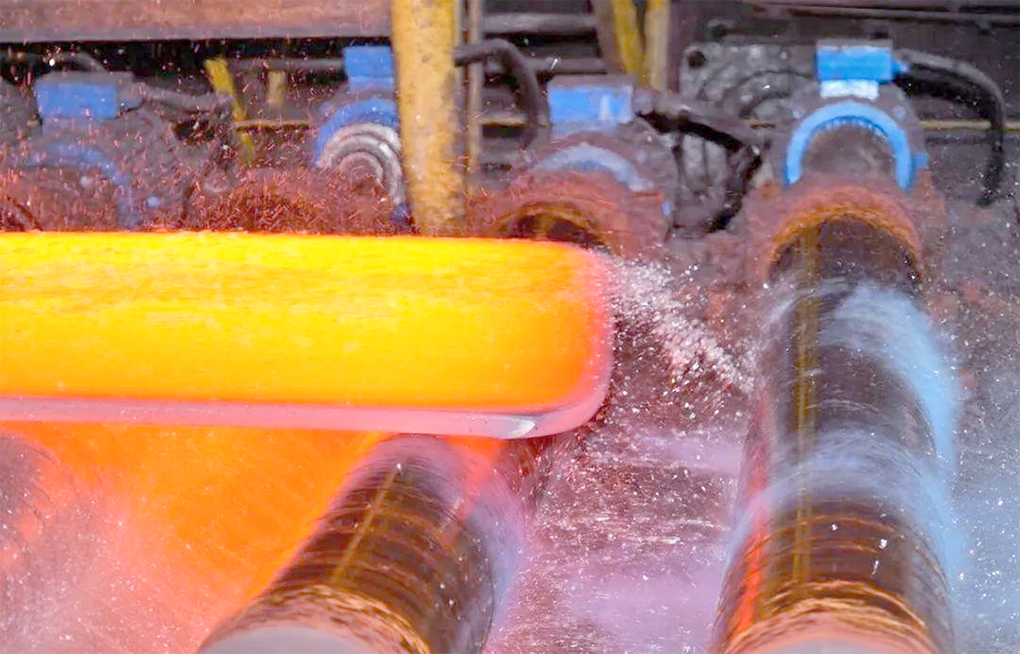
Metal heat treatment is a process requires heating the metal to a specific temperature, held at that temperature for a set time, and then cooled in a controlled way. The goal is not to change the metal’s shape, but to improve its internal structure.
Inside every metal are tiny crystals called grains. Heat treatment changes the size and arrangement of these grains. This directly affects properties such as hardness, strength, ductility, and toughness.
Common metals that undergo heat treatment include: – Steel and stainless steel – Aluminum alloys – Copper alloys – Titanium alloys.
Why Is Heat Treatment Important?
Heat treatment is critical because raw metal often does not have the right properties for real-world use. Without heat treatment, metal parts may be too soft, too brittle, or wear out too quickly.
Key Reasons for Heat Treatment
- Improve strength and hardness
- Increase toughness and impact resistance
- Reduce internal stress from machining or forming
- Improve wear and fatigue resistance
- Enhance corrosion resistance (in some alloys)
- Improve machinability or formability
Heat treatment helps metal parts perform reliably and safely in demanding environments.
Basic Steps in the Heat Treatment Process
Although there are many types of heat treatment, most follow three basic steps:
1. Heating
Heating the metal to a specific temperature based on its type and the desired result. This temperature is carefully controlled.
2. Soaking (Holding)
Helding the metal at the target temperature for a certain time. This allows the heat to spread evenly throughout the part.
3. Cooling
The metal is cooled at a controlled rate. Cooling can be done in air, oil, water, or a furnace. The cooling speed greatly affects the final properties.
Common Metal Heat Treatment Processes
1. Annealing
Annealing softens and toughens metal through a precise thermal cycle. First, we heat the metal above its recrystallization temperature. This step allows new, strain-free grains to nucleate and grow within the material. We then hold the metal at this temperature to ensure a uniform, coarse microstructure throughout. Finally, we cool it slowly, usually inside the furnace, to lock in this softer, more ductile state. This process relieves internal stresses, improves machinability, and restores ductility that prior cold working may have diminished. Essentially, annealing resets the metal’s structure for better performance.
Benefits of annealing: Reduces hardness – Improves machinability – Relieves internal stress – Refines grain structure.
Common uses: Steel sheets and wires – Copper and aluminum parts – Parts that need further machining or forming.
2. Normalizing
Normalizing refines a metal’s grain structure to increase its strength and toughness. We first heat the steel to a temperature significantly above its critical range, which completely dissolves its existing microstructure. This step allows new, fine grains to form uniformly. Unlike annealing, we then remove the metal from the furnace and cool it in still air at room temperature. This faster cooling rate produces a finer pearlitic structure, which gives normalized steel greater strength and hardness than annealed steel, though with slightly less ductility. The process also homogenizes the structure, making the metal’s properties more consistent throughout.
Benefits of normalizing: Improves mechanical strength – Refines grain size – Reduces internal stress – Creates uniform properties.
Common uses: Forged steel parts – Structural components – Automotive parts.
3. Quenching
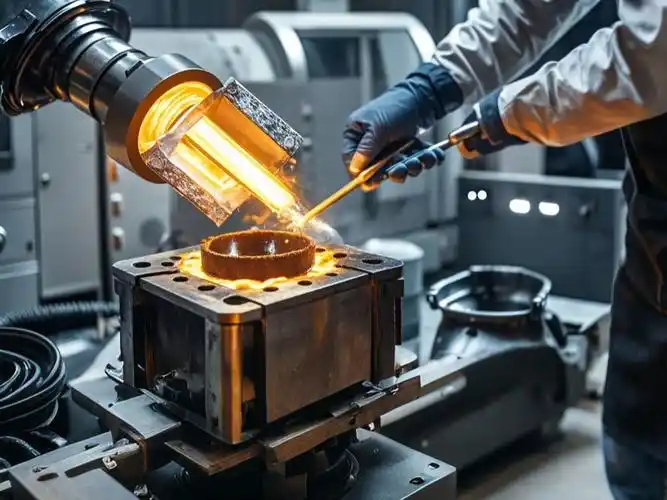
Quenching rapidly cools heated metal to lock in a very hard, but brittle, crystalline structure. We first heat the metal, typically steel, to a high temperature to create a uniform solid solution called austenite. Then, we immediately immerse the red-hot metal into a quenching medium—such as water, oil, or brine. This drastic cooling suppresses the formation of softer phases and instead forces the formation of a supersaturated, distorted structure known as martensite. While quenching achieves maximum hardness, it also introduces severe internal stresses, making the metal too brittle for most practical uses without a subsequent tempering process.
Benefits of quenching: Produces very hard metal – Improves wear resistance.
Limitations: Can cause brittleness – May lead to cracking or distortion if not controlled.
Common uses: Gears – Cutting tools – Shafts and bearings.
4. Tempering
Tempering carefully reduces the brittleness that quenching creates. After the quench, we reheat the hardened steel to a specific temperature below its critical point. This controlled heat allows the unstable martensite structure to partially decompose. During this hold, carbon atoms diffuse out to form fine carbides, which relieves internal stresses. The process trades a measured amount of hardness for a crucial increase in toughness and ductility. Ultimately, tempering tailors the final properties of the steel, transforming a glass-hard but fragile material into a usable, resilient component ready for service.
Benefits of tempering: Reduces brittleness, Improves toughness, Balances hardness and strength.
Common uses: Springs,Tools,High-strength steel components.
5. Case Hardening
Benefits: Hard, wear-resistant surface, Tough inner core, Longer service life.
Common uses: Gears, Camshafts, Pins and bushings.
Heat Treatment for Different Metals
Heat Treatment of Steel
Steel responds very well to heat treatment. By adjusting temperature and cooling speed, steel can be made soft or extremely hard. Common steel heat treatments include annealing, normalizing, quenching, tempering, and case hardening.
Heat Treatment of Aluminum
Aluminum cannot gain hardness through quenching alone like steel. Instead, we strengthen it using a precise two-step thermal process. First, we perform a solution heat treatment, heating the alloy to a high temperature to dissolve alloying elements into a solid solution, then rapidly quenching to lock this supersaturated state. Next, we subject the quenched metal to aging, either at room temperature (natural aging) or at an elevated temperature (artificial aging). This controlled aging allows fine particles to precipitate within the aluminum matrix, creating internal strain that dramatically increases strength and hardness. This process delivers alloys with an exceptional strength-to-weight ratio, good corrosion resistance, and the reliability needed for demanding aerospace and automotive applications.
Heat Treatment of Stainless Steel
We tailor heat treatment for stainless steel based on its specific type to achieve target properties. For austenitic grades, we perform annealing by heating above 1900°F (1040°C) and then rapidly quenching to restore maximum softness and corrosion resistance.
For martensitic steels, we harden them through austenitizing followed by an oil or air quench; we then must temper the resulting brittle martensite at a lower temperature to achieve a usable balance of hardness and toughness.
Finally, for precipitation-hardening grades, we use a two-step process: first a solution treatment and quench, then a lower-temperature aging cycle to precipitate hardening particles that significantly increase strength.
Heat Treatment of Copper Alloys
Copper alloys are often annealed to improve electrical conductivity and formability.
The heat treatment of copper alloys primarily aims to soften hardened material or to strengthen certain mixtures. For alloys like brass and bronze, we perform an annealing process to relieve stresses from cold working. We heat the metal to a specific recrystallization temperature—typically between 700°F and 1400°F (370°C and 760°C) depending on the alloy—and then cool it, often in water. This restores ductility for further shaping. For precipitation-hardenable alloys like beryllium copper, we use a different approach: first we solution-treat and quench to create a supersaturated solid, then age it at a lower temperature to form fine particles that dramatically increase strength and hardness.
Common Heat Treatment Defects and Challenges
Distortion: Uneven heating or cooling can cause parts to warp.
Cracking: Rapid quenching may lead to cracks if not controlled properly.
Overheating: Too much heat can damage grain structure and reduce strength.
Inconsistent Results: Poor process control can lead to uneven hardness or strength.
Proper planning and experienced heat treatment control are essential.
Conclusion
Metal heat treatment is a vital manufacturing process that improves the strength, durability, and performance of metal parts. By understanding different heat treatment processes such as annealing, quenching, tempering, and aging, manufacturers can select the right method for each application.
Whether used in cars, aircraft, or everyday machines, heat-treated metals help ensure safety, reliability, and long service life. With proper process control and expert knowledge, heat treatment continues to be a key part of modern metal manufacturing. When selecting a heat treatment method, consider the type of metal or alloy, required hardness and strength, part size and shape, End-use environment, and cost and production volume.
At SYM, we have always provided a comprehensive service that integrates precision machining with expert heat treatment and surface finishing. We often receive precision machining orders include specified heat treatment requirements, especially for mold steel and alloy structural steel machined parts, with clear instructions on the drawings indicating the exact type of heat treatment and hardness criteria. Over time, we have accumulated substantial experience in executing these processes accurately and efficiently, ensuring that each component meets strict performance and durability standards.