High-performance engineering plastics have transformed modern manufacturing across critical global industries. Among these high-performance materials, industrial nylon remains the premier choice for wear resistance, mechanical strength, and chemical durability. Modern engineering applications demand extreme accuracy from synthetic polymers. Precision nylon solutions meet these exact challenges through strict machining standards and dedicated process control. Advanced manufacturing facilities now deliver continuous precision across complex nylon parts.
Choosing custom nylon manufacturing gives engineering teams structural stability, lower total weight, and outstanding fatigue resistance. Industrial components must perform reliably under severe mechanical loads and sliding contact. High-tolerance machining turns raw engineering plastic into dynamic components for demanding production lines.
Why Modern Engineering Demands Precision Nylon Components
Industrial operations continuously replace traditional metal alloys with high-grade engineering polymers. Nylon provides an exceptional balance of mechanical strength, impact absorption, and low coefficient of friction. These inherent physical characteristics make the material ideal for heavy-duty operational environments.
Key functional advantages drive industrial adoption across modern sectors:
- Exceptional resistance to dynamic wear, mechanical sliding, and continuous surface friction.
- Natural vibration damping that significantly reduces acoustic noise in moving power assemblies.
- Strong resistance to common industrial chemicals, organic solvents, and operating lubricants.
- Superior strength-to-weight ratios that lower drive torque requirements in automated machinery.
Standard molded components often lack the strict dimensional accuracy required for specialized applications. Modern production machinery requires sub-millimeter precision to ensure flawless system assembly. Custom CNC machining eliminates the structural voiding and dimensional sinking common in injection molding. Machined nylon components maintain flat surfaces, sharp feature definitions, and exact internal bore profiles.
Technical Challenges in High-Tolerance Nylon Machining
Machining engineering plastics presents unique technical obstacles compared to conventional metal cutting. Polymers exhibit lower thermal conductivity and a higher coefficient of thermal expansion than aluminum or steel. Heat generated at the cutting edge quickly accumulates within the workpiece material. Excessive cutting temperature causes localized thermal expansion, material softening, and burr formation.
Moisture absorption presents another critical variable during high-precision plastic machining operations. Nylon naturally absorbs atmospheric ambient humidity over extended processing times. Moisture influx slightly alters physical part dimensions and internal mechanical properties. Master machinists control internal shop humidity and maintain strict ambient temperature limits.
Workpiece flexibility also creates unique workholding challenges during production. High clamping forces distort semi-rigid plastic stock during roughing operations. Unclamping the finished workpiece releases these elastic forces, causing dimensional spring-back outside allowable tolerance boundaries. Dedicated vacuum fixtures, custom soft jaws, and tailored support structures maintain stability without excessive force.
Specialized CNC Techniques for Synthetic Polymers
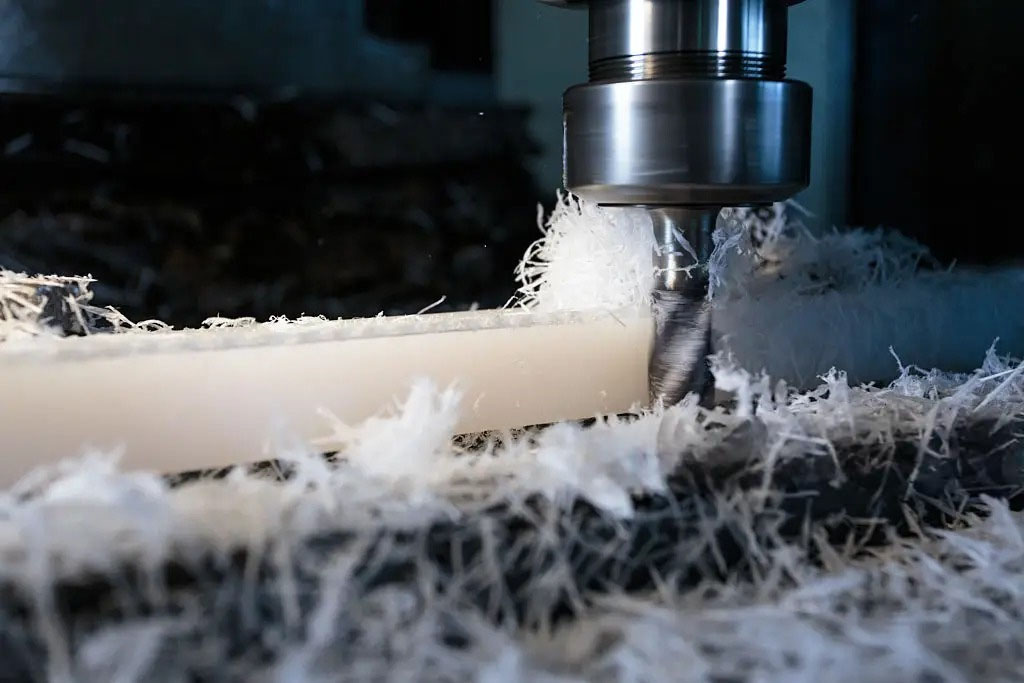
Achieving micro-scale tolerances on nylon requires customized tooling, optimized cut parameters, and advanced strategy. Standard metal-cutting inserts generate excessive friction, pushing material rather than shearing clean chips. High-tolerance plastic manufacturing utilizes razor-sharp carbide or single-crystal diamond tooling with polished rake faces. Single-point tooling minimizes cutting friction and reduces heat generation at the contact point.
Machinists utilize elevated spindle speeds alongside high feed rates to clear chips instantly. Rapid chip evacuation prevents re-welding melted plastic back onto the finished part surface. High-pressure air blasts clear debris effectively while avoiding liquid coolant contamination when required.
Multi-axis CNC milling centers produce intricate geometric features in a single operational setup. Eliminating secondary fixture setups prevents cumulative alignment errors across complex geometric profiles. Precision turning centers utilize custom live tooling to complete intricate axial features with micron-level repeatability.
Material Selection: Cast versus Extruded Nylon Solutions
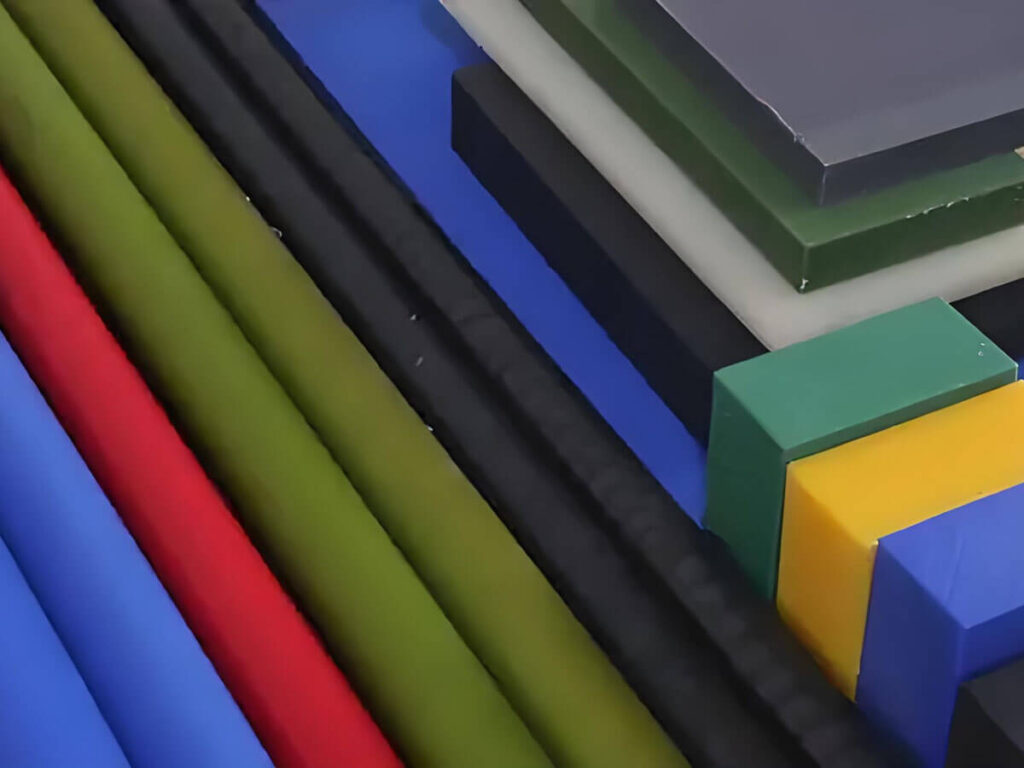
Selecting the appropriate material grade directly impacts part stability and final machining tolerances. Manufacturing engineers primarily select between extruded nylon and cast nylon variants based on application demands.
| Property / Feature | Extruded Nylon (Nylon 6/6) | Cast Nylon (Nylon 6) |
| Manufacturing Process | Continuous profile extrusion | Liquid monomer casting |
| Internal Stress | Higher baseline internal stress | Lower baseline internal stress |
| Machining Stability | Excellent for small, thin parts | Superior for large, thick sections |
| Resistenza alla trazione | High tensile yield strength | High compressive strength |
| Resistenza all'usura | Excellent sliding wear resistance | Outstanding heavy-load wear |
| Typical Size Range | Small to medium rod and sheet | Large block, thick plate, thick tube |
Extruded nylon 6/6 delivers high mechanical stiffness and excellent dielectric properties. However, extrusion processes introduce higher internal residual stresses within the raw stock. Unrelieved stresses can warp parts during aggressive material removal sequences. Pre-machining stress relief annealing ensures long-term dimensional stability for tight-tolerance designs.
Cast nylon offers lower internal stress and superior dimensional stability in massive wall thicknesses. Cast materials accept solid lubricants like molybdenum disulfide, oil, or graphite during monomer synthesis. Internal lubricants lower friction coefficients further and extend operational service life in unlubricated assemblies.
Strict Quality Assurance and Measurement Protocols
Maintaining strict tolerances requires continuous quality control throughout the manufacturing lifecycle. Flexible materials deform easily under standard tactile measurement tool pressures. Quality control teams rely heavily on non-contact optical inspection systems and high-precision coordinate measuring machines.
Laser measurement systems measure delicate profiles without applying mechanical physical force. Optical comparators verify complex radii, chamfers, and thread geometry at high magnification levels. Coordinate measuring machines operate in climate-controlled quality laboratories kept at fixed standard temperatures.
Part inspection occurs only after components reach thermal equilibrium with the inspection laboratory environment. Documented material traceability, batch lot tracking, and full dimensional inspection certificates guarantee consistent production quality.
Key Industrial Applications for Machined Nylon Parts
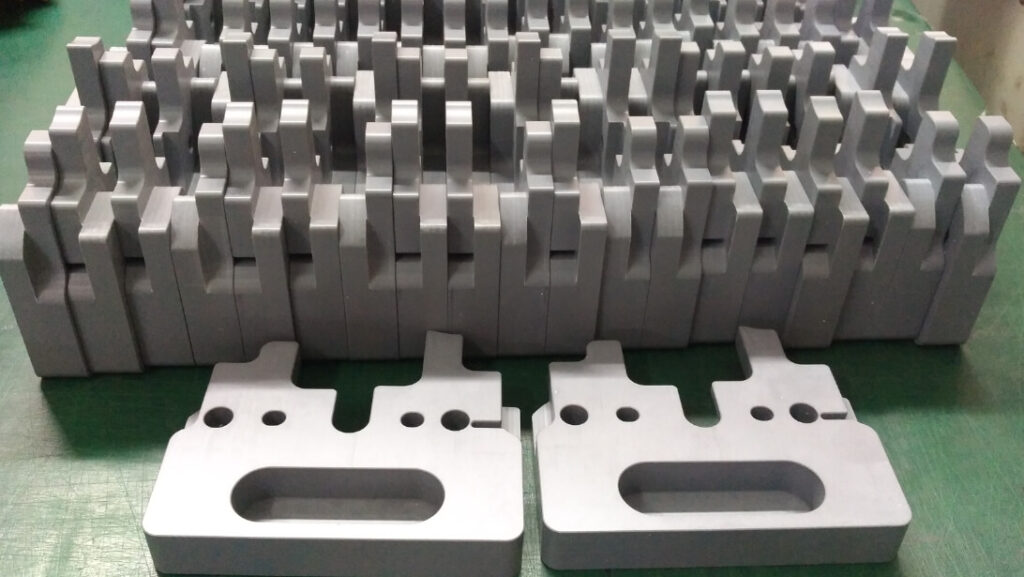
High-tolerance nylon components power critical systems across diverse manufacturing and technology sectors. Outstanding versatility allows engineers to solve complex design problems with custom plastic parts.
- Aerospace and Defense: Lightweight bushings, cable guides, fuel system seals, and structural wear pads.
- Apparecchiature mediche: Biocompatible instrument housings, manifold plates, smooth sliding bearings, and wear rings.
- Food and Beverage Processing: FDA-compliant star wheels, timing screws, conveyor wear strips, and custom guides.
- Industrial Automation: High-load drive sprockets, precision gears, custom grippers, and linear sliding blocks.
- Automotive Engineering: Prototype engine components, specialized shift lever bushings, and dynamic cable sheaves.
Machined nylon parts excel where quiet operation, zero lubrication, and weight reduction remain priority design goals.
Elevate Your Polymer Projects with SYM Machining
Achieving consistent micron-level precision in engineering plastics requires specialized machinery and deep material expertise. Standard machine shops often struggle with polymer thermal management, workpiece deflection, and burr control. Partnering with an experienced plastic machining specialist ensures every part meets your exact technical specifications.
Lavorazione SYM delivers industry-leading high-tolerance CNC nylon machining services for complex global applications. Our state-of-the-art facility features advanced multi-axis machining technology and climate-controlled quality verification systems. We process various custom engineering polymers, including cast nylon, extruded nylon 6/6, and lubricant-filled custom grades.
Our expert engineering team assists you through every manufacturing phase, from prototype development through full-scale production runs. We optimize tool paths, implement custom workholding, and maintain strict quality standards to ensure flawless part performance. Eliminate production delays, lower assembly costs, and secure superior plastic components for your operations. Contact the precision engineering team at Lavorazione SYM today to request a quote for your next project.
Articoli correlati:
Precision Acrylic and PC Machining Service – CNC Solutions for Clear Plastic Components
7 Key Advantages of Teflon CNC Machining Services for Precision Custom Parts