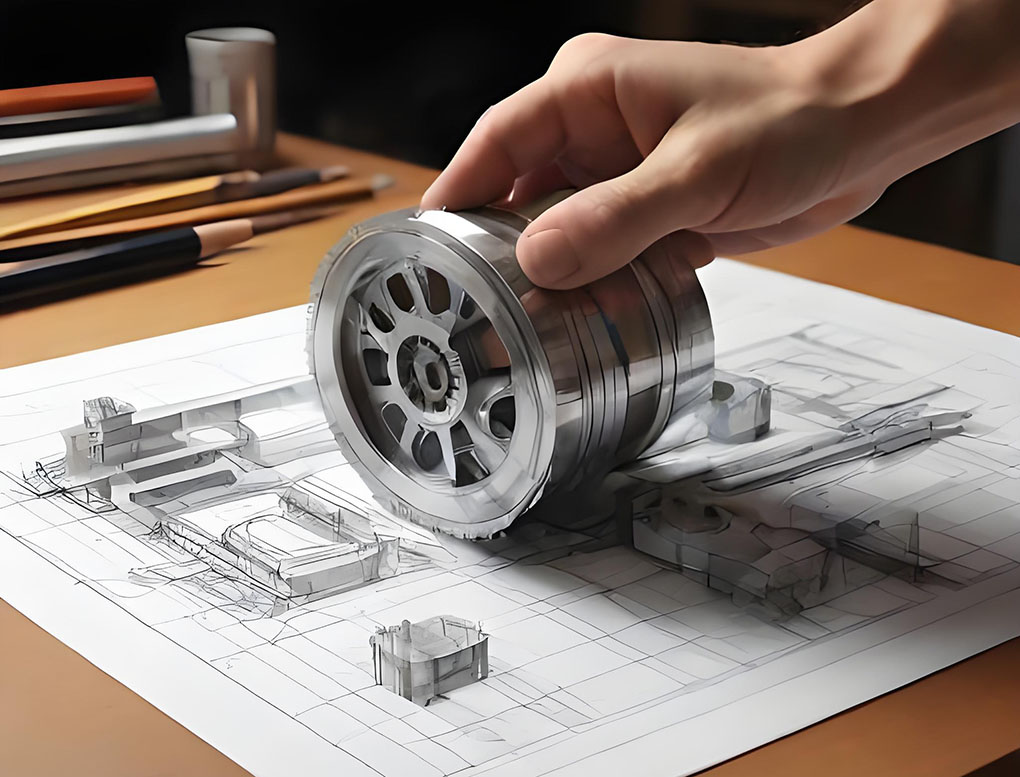
Learn more about designguidelines for defense iIndustry precision components. Designing components for the defense sector requires a balance of performance, safety, cost, and manufacturability. Engineers must plan for extreme conditions such as heat, pressure, vibration, and corrosion while ensuring every part can be manufactured within strict tolerances. Below are key design guidelines:
Define Performance Requirements Clearly
Before creating a design, the function of the component must be fully understood:
- Load-Bearing Parts (e.g., landing gear, suspension arms) must prioritize strength and fatigue resistance.
- High-Temperature Parts (e.g., jet engine turbines, missile nozzles) must resist heat creep and oxidation.
- Electronic Housings must provide electromagnetic shielding and survive harsh environments.
👉 Rule: Always start with a functional requirement matrix that maps out stress loads, temperature range, expected lifespan, and safety margins.
Select the Right Material for the Application
Material selection is one of the most important design decisions. For example:
- Titanium for aircraft and missiles (lightweight + strong).
- Stainless Steel for submarines and naval equipment (corrosion resistance).
- Nickel Alloys for high-heat aerospace environments.
- Carbon Fiber Composites for stealth aircraft (lightweight + radar-absorbing).
👉 Rule: Choose materials that match both the operating environment and the machining capability.
| Application | Recommended Material | Reason |
| Fighter Jet Frames | Titanium alloys | Lightweight + high fatigue resistance |
| Submarine Propellers | Nickel-aluminum bronze | Corrosion resistance in seawater |
| Missile Heat Shields | Ceramic composites | High-temperature endurance |
| Armored Vehicle Hulls | Hardened steel | Strength + impact resistance |
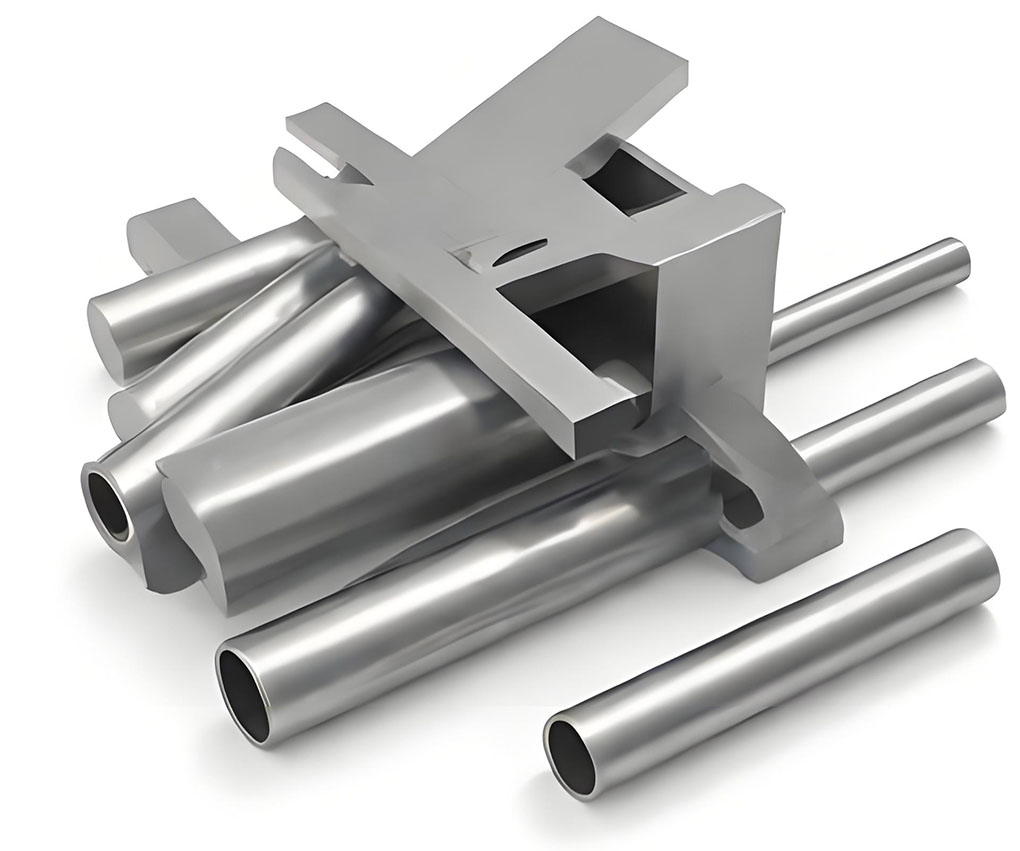
Precision Tolerances and GD&T (Geometric Dimensioning & Tolerance)
Defense parts often require micron-level tolerances (±0.001 mm). However, designing every dimension to ultra-tight tolerances is not cost-effective.
👉 Guideline:
- Critical functional areas (like mating surfaces, bearings, or seal interfaces) require ultra-tight tolerances.
- Non-functional areas (outer covers, housings) can allow looser tolerances.
- Use GD&T symbols to define flatness, roundness, concentricity, and perpendicularity.
This approach saves cost while ensuring performance where it matters most.
Design for Manufacturability (DFM)
Defense components must not only perform but also be manufacturable at scale. Engineers should avoid unnecessary complexity.
Good DFM Practices:
- Minimize undercuts and deep cavities (harder to machine).
- Use standard hole sizes for easier drilling.
- Allow sufficient wall thickness to prevent distortion.
- Avoid sharp corners (introduce fillets to reduce stress).
👉 Example: A bracket for a tank’s suspension system may look stronger with sharp corners, but filleted edges prevent cracks under vibration.
Surface Finish and Coating Requirements
The surface condition of a part can affect durability and performance.
- Ra (Roughness Average) < 0.8 µm for moving parts like shafts and bearings.
- Anodizing for aluminum to prevent corrosion.
- Nickel plating for conductivity in electronic housings.
- Ceramic coating for heat-resistant aerospace components.
👉 Guideline: Always specify surface finish values and coatings early in the design to avoid rework later.

Weight Optimization Without Compromising Strength
In aerospace and missile systems, every gram matters. Designers use:
- Finite Element Analysis (FEA) to simulate stress and reduce excess material.
- Topology Optimization to design lightweight structures.
- Composite layering techniques to strengthen without adding mass.
👉 Example: F-35 fighter jet parts use honeycomb structures to reduce weight while maintaining stiffness.
Environmental and Operational Considerations
Defense components face unique conditions:
- Naval systems → saltwater corrosion.
- Aerospace systems → extreme heat and pressure changes.
- Ground vehicles → dust, mud, shock loads.
👉 Rule: Design with protective seals, corrosion coatings, and redundant safety factors.
Integration with Other Systems
Defense components rarely work alone. They must fit into larger assemblies such as engines, radar systems, or missile guidance units.
- Use modular design where possible.
- Ensure tight tolerance stack-up control across assemblies.
- Consider ease of maintenance and replacement in the field.
👉 Example: Submarine valve assemblies are designed for quick replacement without dismantling the entire system.
Testing and Validation During Design
A design is only successful if it passes strict validation.
- Non-Destructive Testing (NDT) → checks flaws without damaging parts.
- Vibration & Fatigue Testing → simulates real-world battlefield conditions.
- Thermal Testing → ensures stability at high and low temperatures.
👉 Guideline: Plan for testing at the design stage so parts include measurement points, sensors, and access panels.
Compliance with Defense Standards
Designers must always follow defense regulations such as:
- MIL-SPEC → U.S. military material and design specifications.
- ITAR → Export compliance for defense technology.
- NATO STANAG → Standardization agreements for interoperability.
👉Failure to meet these standards can result in disqualification, delays, or safety risks.