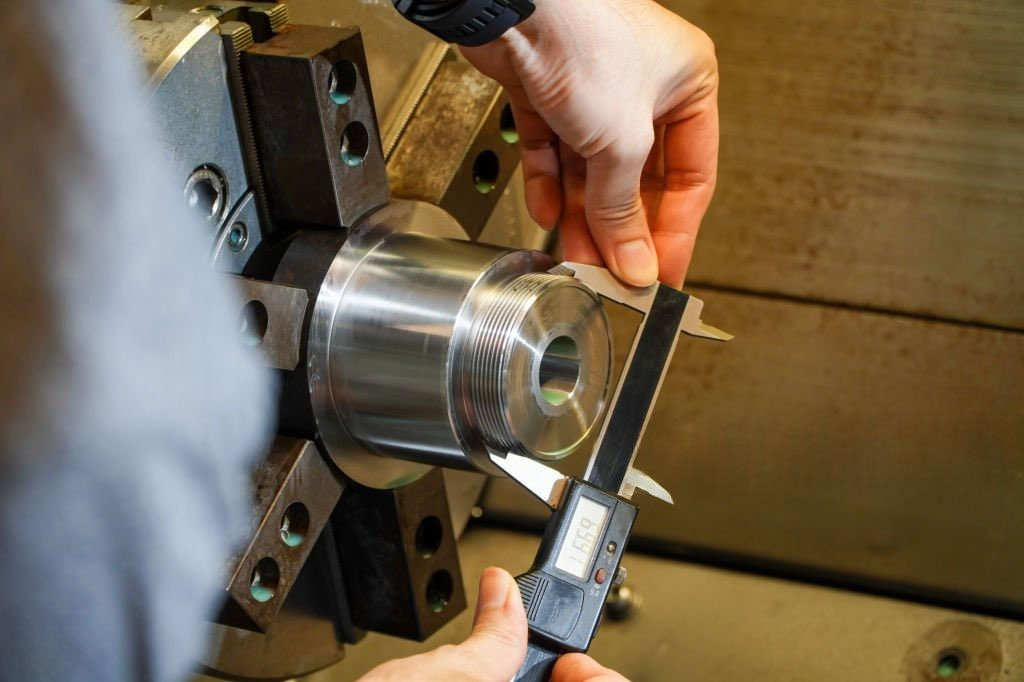
In precision manufacturing, waiting until a part finishes to check quality is a high-stakes gamble. Finding a dimensional deviation only at final inspection means the damage is already done. Raw materials become wasted, expensive machine hours disappear, and your delivery schedule suffers. Modern engineering teams can no longer rely on this reactive quality control approach.
Forward-thinking manufacturers use in-process inspection to remain competitive. They minimize waste and guarantee flawless precision. This method embeds quality checkpoints directly into the manufacturing cycle. Machine shops can then catch microscopic variances before they cause catastrophic failures. This guide explores how in-process inspection prevents operational waste. It also shows how this method slashes production costs. Ultimately, it is the definitive benchmark of a world-class machining partner.
What Is In-Process Inspection in CNC Machining?
In-process inspection verifies a component’s accuracy during actual manufacturing. It checks dimensional precision, surface finish, and structural integrity in real time. Qualitätskontrolle becomes a woven part of the machining cycle, not an isolated ritual. This process occurs between operations on a multi-axis CNC machine. It also happens during tool changes or at set intervals in high-volume runs.
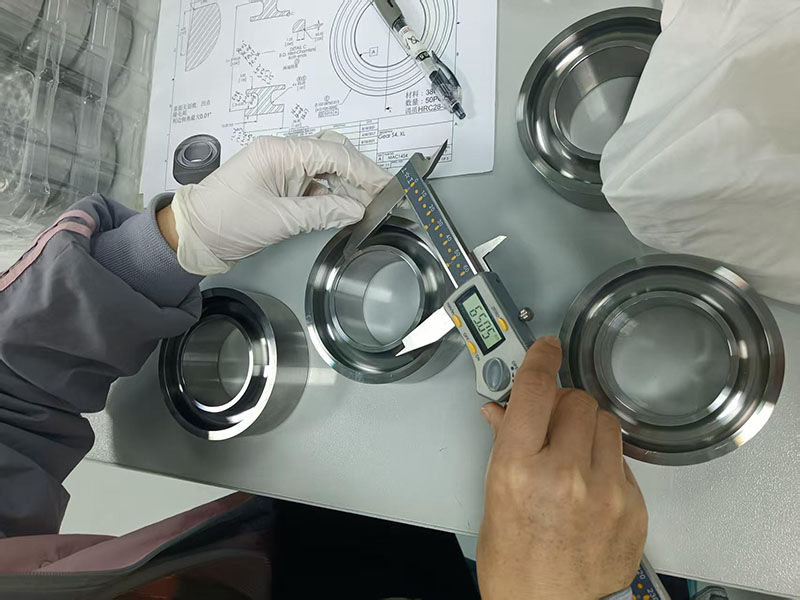
This methodology uses advanced technologies like automated probing systems. These systems measure a feature while the workpiece remains clamped. They instantly adjust tool offsets to compensate for microscopic wear. Operators also use digital micrometers and go/no-go gauges right at the workstation. Real-time data transforms quality control into an active, self-correcting strategy.
Lower Scrap Rates and Optimize Material Margins
Mid-production inspection dramatically reduces scrap and rework costs. Aerospace-grade titanium and medical-grade stainless steel represent major project expenses. An early drilling error can scrap a part at final inspection. You then lose both the expensive material and all subsequent machining overhead.
In-process inspection stops this financial loss immediately. A CNC probe detects a critical bore drifting toward its tolerance limit. The system then halts production or adjusts parameters before generating any defect. A broken tool mid-cycle triggers an immediate flag. This prevents ruining an entire batch of expensive material. Manufacturers maximize material yield by isolating variances right when they occur. They lower their cost-per-part metrics substantially. These savings then pass directly to their clients.
Stop Defect Propagation Across Complex Assemblies
Defects in manufacturing behave like a virus. An undetected angular error during rough milling will throw off a precision tapped hole later. A tiny error snowballs into a major structural flaw by the time finishing occurs. The entire piece then becomes useless.
In-process inspection creates isolated firewalls throughout production. Each critical milestone requires a quality sign-off before the component advances. This prevents a flawed part from absorbing more machine time or expensive surface treatments. Ensuring every operational input is mathematically perfect guarantees flawless assembly. This eliminates hidden costs from field failures and assembly-line bottlenecks.
Boost Machine Efficiency and Extend Tool Life
In-process inspection provides valuable diagnostic insights beyond dimensional verification. Thermal expansion and machine vibration constantly threaten tight tolerances. Regular mid-process checks audit both the machine’s performance and the cutting tool’s health.
Analyzing probing data lets engineers track tool degradation accurately. Machinists can then optimize tool changes based on real-time drift. They avoid replacing expensive tools prematurely on arbitrary schedules. Catching thermal expansion trends early allows precise machine offsets. This maintains a stable ecosystem that runs faster and longer. It maximizes overall equipment effectiveness (OEE).
Ensure Transparency and Traceability for Regulated Industries
Component failure is not an option for medical, aerospace, or defense applications. These regulated industries demand exhaustive documentation. They need proof that every lifecycle stage met the print exactly. Post-production inspection only offers a snapshot of the finished product. It fails to capture the step-by-step narrative required for modern audits.
In-process inspection creates a digital blueprint of the entire production journey. Advanced software captures data for every cut, bore, and profile. It compiles a comprehensive statistical profile of the run. This rich data stream fuels Statistical Process Control (SPC) software. Partnering with a shop using these methodologies delivers more than physical parts. You receive ironclad compliance, security, and absolute peace of mind.
Streamline Lead Times and Ensure On-Time Delivery
Delivery speed is just as critical as dimensional accuracy in today’s supply chains. Traditional quality control creates massive production bottlenecks. Parts pile up at final inspection waiting for a CMM. Discovering a systemic defect at this phase collapses the entire schedule.
In-process inspection distributes the quality workload across the whole process. Workstation verifications make final inspection a swift formality. Production errors resolve in minutes instead of days. This proactive velocity ensures large-scale projects deliver precisely on schedule. It shields clients from costly downstream disruptions and line downs.
Choose the Right Partner for a Competitive Advantage
Not every machine shop treats quality with proactive rigor. Many still rely on outdated “inspect-at-the-end” mentalities. They absorb high scrap losses by inflating their initial pricing. Partnering with a firm using advanced in-process inspection shows true commitment. It proves a dedication to lean manufacturing and transparent communication.
Always look beneath the surface when evaluating a vendor. Ask about their automated probing and workstation protocols. Ask how they use real-time SPC data to manage tool wear. A shop with a fully digitized mid-production framework can handle ultra-tight tolerances. They also manage volatile geometries and complex schedules with absolute consistency.
Elevate Your Standards with SYM Machining
Your engineering designs demand uncompromising accuracy. You need a partner who builds quality directly into the process. SYM Machining engineers its entire precision CNC infrastructure around advanced in-process inspection. We use cutting-edge on-machine probing and real-time tool monitoring. Our operator-led workstation verifications eliminate defects before they ever manifest.
Our proactive quality assurance lowers your manufacturing costs. It also delivers lightning-fast lead times and flawless dimensional repeatability. Whether you need high-volume automotive runs or complex aerospace prototypes, SYM Machining gewährleistet perfection from the very first cut. Do not let hidden defects disrupt your supply chain. Contact SYM Machining today to discuss your project. Request a quote and discover how our mid-production quality frameworks can optimize your next manufacturing cycle.
Verwandte Artikel:
Why Aerospace-grade Machined Components Are Critical to Modern Flight?
Discover the advantages of Swiss screw machining parts for high-precision industries.