Discover how custom machining fixtures can revolutionize your CNC production process by improving accuracy, reducing setup time, and ensuring consistent quality across every part.
Introduction to Custom Machining Fixtures
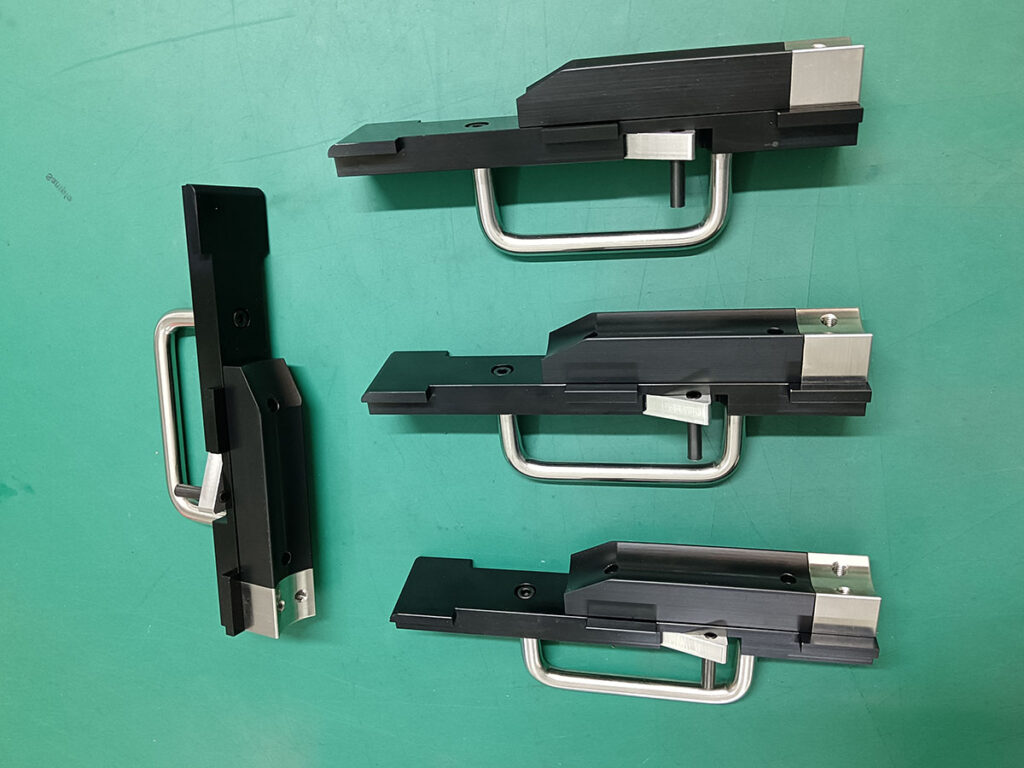
In modern CNC manufacturing, accuracy is everything. Custom machining fixtures are specialized tools designed to hold, locate, and support a workpiece during the machining process. Unlike standard fixtures, custom ones are built to meet specific project requirements, ensuring maximum precision and repeatability.
Imagine trying to carve a perfect shape while holding the material by hand—it’s nearly impossible. Fixtures act as the “extra hands” of a CNC machine, maintaining part stability and positioning during cutting, milling, or drilling operations.
Custom fixtures reduce human error, cut production time, and make it easier to produce identical parts every time.
Types of Machining Fixtures Used in CNC Manufacturing
Every machining project has unique needs, and so do its fixtures. The most common types include:
| Fixture Type | Main Function |
| Workholding Fixtures | Securely hold the part in place during machining. |
| Modular Fixtures | Allow flexible setup for multiple part designs. |
| Assembly Jigs & Inspection Fixtures | Used for post-machining inspection or assembly alignment. |
| Hydraulic & Pneumatic Fixtures | Automate clamping for high-speed production. |
Using the right type ensures accuracy, safety, and efficiency, especially when producing high-volume components with tight tolerances.
Key Components of a High-Quality Custom Fixture
A high-quality fixture is not just about solid construction—it’s about thoughtful engineering.
The main components include:
- Base plates for stability and accuracy.
- Locating pins to position the workpiece precisely.
- Clamps to hold parts securely under machining forces.
- Support structures to reduce vibration and distortion.
The choice of material also plays a big role. Steel provides strength and durability, while aluminum offers lightweight flexibility. Some advanced designs use composites to reduce thermal expansion and maintain dimensional accuracy.
The Design Process of Custom Machining Fixtures
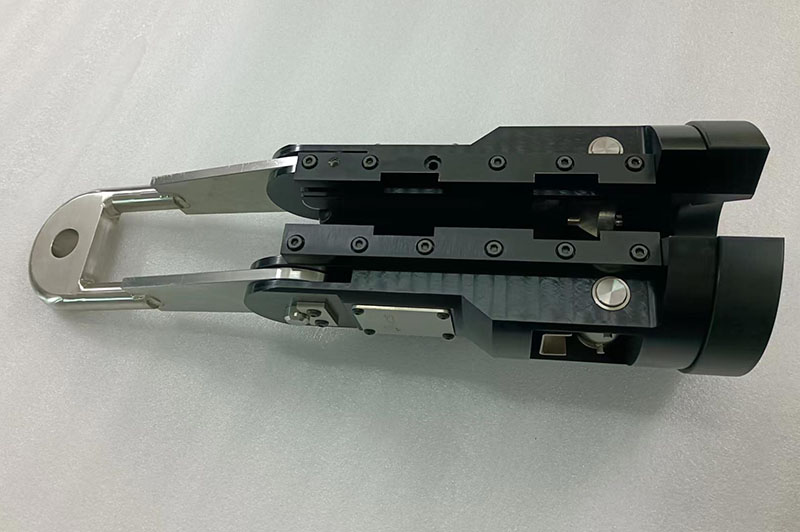
Designing a custom fixture starts with CAD modeling of the workpiece and machining path. Engineers simulate forces, tool access, and clamping pressure. The process usually involves:
- Conceptual design and analysis
- 3D modeling and simulation
- Prototype testing
- Final machining and assembly
The goal is to balance stiffness, accessibility, and cost. A well-designed fixture reduces setup time and ensures consistent machining, even under heavy load or high-speed conditions.
Precision Engineering: How Custom Fixtures Improve Machining Accuracy
Custom fixtures are built with one goal—to make precision repeatable.
They help:
- Reduce vibration and maintain surface finish.
- Eliminate misalignment, even in multi-axis operations.
- Shorten setup times, as operators don’t have to adjust standard clamps for each job.
In industries like aerospace and automotive, where tolerances are within microns, custom fixtures are essential to achieving perfection.
Advanced Technologies in Fixture Design and Fabrication
The world of fixture design is evolving rapidly. Engineers now use CAD/CAM, finite element analysis (FEA), and even 3D printing to develop lightweight yet strong fixtures.
Smart technologies like IoT sensors monitor clamping pressure and detect alignment shifts in real time.
Automation is also changing the game. With robotic loading and automated fixtures, manufacturers can run production 24/7 with minimal downtime.
Material Selection for Custom Machining Fixtures
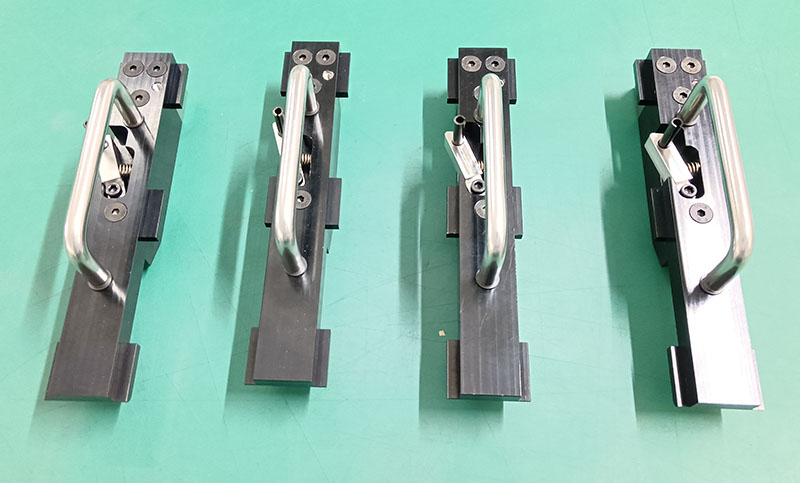
The material you choose for your fixture affects everything—accuracy, longevity, and cost.
- Steel: High strength and rigidity for heavy-duty applications.
- Aluminum: Lightweight and corrosion-resistant, great for smaller parts.
- Composite materials: Ideal for precision work due to low thermal expansion.
A good engineer always considers temperature stability, wear resistance, and ease of machining when choosing fixture materials.
Cost Factors and ROI of Investing in Custom Fixtures
While custom fixtures require an initial investment, the long-term benefits often outweigh the cost. They reduce setup times, minimize waste, and ensure higher throughput.
Example ROI Table:
| Factor | Before Custom Fixture | After Custom Fixture |
| Setup Time per Part | 30 mins | 8 mins |
| Scrap Rate | 5% | 1% |
| Operator Efficiency | 70% | 95% |
This efficiency can translate into 30–40% cost savings in high-volume production.
10 Tips for Custom Machining Fixtures
- Always design for repeatability, not just precision.
- Keep fixtures modular to adapt to design changes.
- Use simulation software before manufacturing.
- Choose lightweight materials for easy handling.
- Avoid over-clamping to prevent part distortion.
- Plan for tool clearance during machining.
- Test with a prototype before full-scale production.
- Maintain tight tolerances in locating features.
- Use anti-vibration supports for smoother finishes.
- Regularly inspect fixtures for wear and tear.
Future Trends in Custom Fixture Design
Tomorrow’s fixtures will be smarter and lighter. Using AI-driven optimization and digital twins, engineers can predict tool wear, analyze stress, and even adjust clamping automatically.
Sustainability is another trend—recyclable materials and energy-efficient fabrication methods are becoming standard in modern fixture design.
FAQs about Custom Machining Fixtures
Q1. What is a custom machining fixture?
A fixture designed for a specific part or process to ensure accuracy, stability, and repeatability during machining.
Q2. How are custom fixtures made?
They are designed using CAD software, simulated for performance, and then manufactured through CNC machining or 3D printing.
Q3. Can custom fixtures reduce setup time?
Yes, they minimize manual adjustments and speed up workholding processes.
Q4. What materials are best for fixtures?
Steel for strength, aluminum for lightness, and composites for precision.
Q5. Are custom fixtures expensive?
Initial costs are higher, but they deliver excellent ROI by improving productivity.
Q6. How do fixtures affect machining quality?
They reduce vibration and ensure consistent tool paths for better surface finish.
Q7. Can one fixture be used for multiple parts?
Yes, modular designs can adapt to different workpieces.
Q8. What industries use custom fixtures?
Aerospace, automotive, defense, and electronics.
Q9. Do I need software for fixture design?
Yes, CAD and CAM tools help optimize geometry and clamping.
Q10. How long do fixtures last?
With proper maintenance, many last for years even under continuous operation.
Conclusion: Building Efficiency and Precision with Custom Fixtures
Custom machining fixtures are the unsung heroes of manufacturing. They hold every component in perfect position, ensuring each cut is precise and every product meets its quality standard.
By investing in custom fixture design, manufacturers gain better efficiency, accuracy, and long-term cost savings. As technologies advance, fixtures will only get smarter—bringing us closer to a fully automated, precision-driven future