Explore our detailed guide on automotive fuel injection components. Learn about precision machining, the importance of tight tolerance for high quality machined parts, and how customized components drive engine performance, efficiency, and reliability.
Introduction
Have you ever stopped to think about what happens when you press your car’s accelerator? In a fraction of a second, a complex, perfectly timed ballet of metal components takes place deep within your engine. This isn’t the era of simple carburetors. Today, the heart of your vehicle’s power and efficiency lies in its automotive fuel injection components.
These aren’t just random parts; they are marvels of modern engineering, where precision machining and tight tolerance are not just ideals but absolute necessities. Every spray of fuel, every burst of power, and every mile of clean emissions depends on the flawless operation of these high quality machined parts. Whether you’re a car enthusiast curious about how your vehicle breathes, a professional in the automotive industry, or someone who simply appreciates the engineering behind reliable transportation, understanding these components is key.
The Critical Role of Fuel Injection in Modern Vehicles
To understand why the components are so vital, we must first grasp the monumental shift fuel injection caused in the automotive world. For decades, carburetors were the standard, using air pressure and vacuum to draw fuel into the engine. While they worked, they were imprecise, inefficient, and struggled to adapt to different conditions like altitude or temperature.
The introduction of electronic fuel injection (EFI) was a revolution. Instead of relying on mechanical processes, EFI uses a computer (the Engine Control Unit or ECU) to precisely meter and deliver fuel. This is a game-changer for three core reasons:
- Unmatched Precision:The ECU receives data from dozens of sensors (monitoring air flow, engine temperature, throttle position, oxygen in the exhaust, etc.). In real-time, it calculates the exact amount of fuel needed for the perfect air-fuel mixture. This level of control was impossible with a carburetor.
- Dramatically Improved Efficiency:A perfect air-fuel mixture means almost all the fuel is burned completely during combustion. This translates directly to more power from less fuel (better fuel economy) and fewer unburned hydrocarbons exiting the exhaust.
- Enhanced Reliability and Performance:EFI systems are less prone to icing, vapor lock, and need far less adjustment than carburetors. They also enable advanced features like direct injection and turbocharging, which are central to today’s high-performance and high-efficiency engines.
The entire promise of this electronic control rests on the physical components that carry out the ECU’s commands. If those components are not machined to perfection, the system’s intelligence is wasted. This is where the demand for precision machining and tight tolerance becomes the cornerstone of modern automotive manufacturing.
Anatomy of a System: Key Automotive Fuel Injection Components
A fuel injection system is an orchestra of parts, each playing a specific, critical role. Let’s break down the major metal components and their functions.
| Component Category | Primary Parts | Core Function | Critical Manufacturing Requirement |
| Fuel Delivery & Pressure | Fuel Pump, Fuel Lines, Pressure Regulator | Deliver fuel from tank to injectors at a consistent, high pressure. | Durability, leak-proof integrity, consistent performance. |
| Fuel Metering & Injection | Fuel Injectors | Precisely atomize and spray fuel into the intake manifold or cylinder. | Ultra-tight tolerance on orifices and moving parts, material stability. |
| Air Management | Throttle Body, Mass Air Flow (MAF) Sensor | Control the volume of air entering the engine and measure it for the ECU. | Smooth airflow surfaces, sensor accuracy. |
| Electronic Control | Engine Control Unit (ECU), Various Sensors (O2, throttle position, etc.) | The “brain” that processes sensor data and commands the injectors. | N/A (Primarily electronic). |
| Fuel Preparation | Fuel Rail | Distributes pressurized fuel evenly to all injectors. | Robust construction to handle pressure, precision inlet/outlet ports. |
Fuel Injectors: The Heart of the System
The fuel injector is arguably the star of the show. It is a small, solenoid-operated valve. When the ECU sends an electrical pulse, the injector’s pintle or needle lifts, and high-pressure fuel is forced through a tiny nozzle, emerging as a fine, atomized mist. The speed of this operation is breathtaking—a typical injector can open and close hundreds of times per second. The precision of the nozzle holes (their size, shape, and number) and the sealing surfaces inside the injector are what make high quality machined parts essential. Even a variance of a few microns can disrupt the spray pattern, leading to poor combustion.
The Fuel Rail: The Distributor
Think of the fuel rail as the main artery. It’s a manifold, typically a solid block of aluminum or steel, that receives pressurized fuel from the pump and distributes it to each injector via individual ports. It must be incredibly strong to handle constant pressure (often 40-80 PSI for port injection and over 2,000 PSI for direct injection) without deformation or leaks. The machining of its internal passages and the sealing surfaces for the injectors and pressure sensor require extreme accuracy.
Pressure Regulators and Sensors: The Guardians of Consistency
The system’s pressure must be stable. A pressure regulator ensures this by bleeding off excess fuel back to the tank. Sensors, like the fuel pressure sensor and the manifold absolute pressure (MAP) sensor, provide constant feedback to the ECU. The diaphragms, valves, and housings in these units are small, complex metal components that must perform reliably for tens of thousands of cycles.
Why Precision Machining is Non-Negotiable?
Precision machining is the set of advanced manufacturing processes—like CNC (Computer Numerical Control) turning, milling, and grinding—used to create parts with dimensions that are exact, often measured in thousandths of a millimeter (microns). In the context of automotive fuel injection components, this isn’t about being “good enough”; it’s about survival and performance.
Consider the fuel injector nozzle. Its design dictates the fuel spray pattern—whether it’s a wide cone, a narrow stream, or multiple targeted jets. This pattern must be perfectly consistent from injector to injector and from one engine cycle to the next. Precision machining ensures that:
- Every nozzle hole is identical in diameter and has a smooth, burr-free interior.
- The sealing surface where the injector mates with the fuel rail or cylinder head is perfectly flat.
- The tiny solenoid components inside the injector move with frictionless consistency.
The consequence of imprecision is severe. A poorly machined injector can dribble instead of spray, causing:
- Reduced Fuel Economy: Un-optimized combustion wastes fuel.
- Increased Emissions: Incomplete burning creates more harmful pollutants (hydrocarbons, carbon monoxide).
- Engine Performance Issues: Rough idling, hesitation, loss of power, and misfires.
- Component Failure: Leaks, clogging, or complete injector seizure.
For manufacturers, investing in precision machining is an investment in the vehicle’s core promise: reliability, efficiency, and compliance with ever-stricter global emissions standards. It transforms a design on a computer into a physical part that performs flawlessly under extreme conditions.
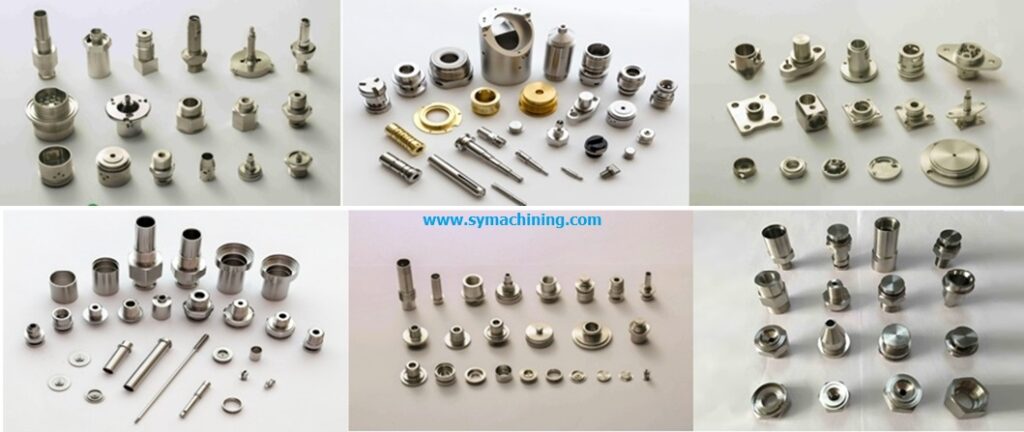
The Imperative of Tight Tolerance in Component Manufacturing
If precision machining is the process, then tight tolerance is the goal or the measurable outcome. Tolerance is the permissible limit of variation in a physical dimension. A “tight” tolerance means that limit is extremely small.
For a fuel injector’s critical dimensions, tolerances can be as strict as ± 0.001 mm or even less. This is finer than a human hair. Why such an unforgiving standard?
- Sealing Perfection: Fuel systems operate under high pressure. Any gap larger than a few microns between a fuel injector and its seat in the fuel rail or cylinder head will result in a dangerous high-pressure fuel leak. Tight tolerance machining ensures these mating surfaces create a perfect metal-to-metal or metal-to-seal contact.
- Flow Consistency: The amount of fuel an injector delivers is a function of how long it’s open and the size of its orifice. If the orifice diameters vary between injectors in the same engine, one cylinder will get more fuel than another. This leads to unbalanced engine operation, vibration, and inefficiency. Consistent flow requires identical geometries, enforced by tight tolerance.
- Durability and Longevity: Parts that fit together precisely experience less wear and stress. A precisely machined piston inside a fuel pump will have a longer service life than one with sloppy tolerances. This reduces the risk of premature failure, which is critical for safety and customer satisfaction.
Achieving these tolerances consistently across millions of parts requires more than just advanced machines. It requires a culture of quality control, using tools like coordinate measuring machines (CMM) and vision systems to verify every critical dimension on a statistical sample, if not every single part. This relentless focus on tight tolerance is what separates high quality machined parts from mediocre ones.

From Raw Metal to High Quality Machined Parts
The journey of a customized component, like a fuel rail, from a concept to a part in your car is a fascinating blend of technology and expertise.
Design & Engineering
It starts with 3D CAD models, where engineers design the part, specifying every dimension, radius, and tolerance. They also select the material—often aluminum for its light weight and good strength, or specific grades of steel for ultra-high-pressure applications.
Programming
CNC programmers translate the 3D model into code (G-code) that instructs the machining tools on every movement—where to cut, how deep, how fast, and with which tool.
The Machining Process
A solid block of metal (the “workpiece”) is secured in the CNC machine.
-
- CNC Milling:Rotary cutting tools remove material to create the external shape, mounting brackets, and complex internal fuel passages of a fuel rail.
- CNC Turning:For cylindrical parts like injector bodies or pressure regulator housings, the workpiece rotates while a cutting tool shapes it.
- Drilling & Tapping:Precise holes are drilled for injector ports, sensor mounts, and inlet/outlet lines. Threads are cut (tapped) for screws and fittings.
- Grinding & Honing:For the finest surface finishes and the tightest tolerances on sealing surfaces or moving parts, abrasive processes like grinding are used.
Secondary Operations
Parts may be washed, deburred (have sharp edges removed), and treated with surface finishes like anodizing (for aluminum) to resist corrosion.
Relentless Quality Assurance (QA)
This is the step that defines high quality machined parts. Parts are measured against the original CAD specifications using precision instruments. Key dimensions on a fuel injector body, for example, might be 100% inspected. This ensures that every batch shipped meets the tight tolerance requirements without exception.
This entire workflow is built on a foundation of expertise. Skilled machinists, programmers, and QA technicians are essential to oversee the process, troubleshoot issues, and guarantee the final product’s integrity.
The Growing Demand for Customized Components
While mass-produced, standard parts serve much of the market, there is a significant and growing demand for customized components. This trend is driven by several factors:
- Performance and Racing Applications: High-performance engines, whether in sports cars or racing vehicles, often have unique requirements. They might need a fuel rail that accommodates larger injectors, or one with an integrated pressure sensor in a specific location. Customized components allow engineers to tailor the fuel system to extract maximum power and response.
- Legacy and Classic Vehicle Restoration: Keeping a classic car on the road often means finding parts that are no longer made by the original manufacturer. Specialist shops use modern precision machining to recreate exact replicas of obsolete fuel injection components, preserving automotive history.
- Prototyping and Niche Manufacturing: Companies developing new engine technologies or low-volume specialty vehicles (like hypercars or certain industrial engines) cannot use off-the-shelf parts. They need partners who can take their unique designs and turn them into functional, reliable customized components.
- Optimization for Alternative Fuels: Engines designed for ethanol (E85), racing fuel, or even hydrogen may require components with different material properties or flow characteristics. Customization allows for this adaptation.
Creating these customized components requires a manufacturer to be agile, highly communicative, and exceptionally skilled. It moves beyond following a standard blueprint to collaborating with the client, understanding their unique application, and applying deep knowledge of materials and mechanics to solve their specific challenge. This represents the high-end application of precision machining expertise.
Conclusion
Our journey through the world of automotive fuel injection components reveals a universe where microscopic precision has macroscopic impacts. These are not mere accessories; they are the fundamental translators of energy in our vehicles, turning the potential energy in gasoline into the kinetic energy that moves us forward.
The relentless pursuit of precision machining and tight tolerance in creating these metal components is what makes modern cars so remarkably efficient, powerful, and clean compared to their predecessors. Whether they are mass-produced for millions of family sedans or customized components for a championship-winning race car, the principles of quality remain the same.
Read More: 10 Essential Tips for Specifying and Sourcing Fuel Injection Components.