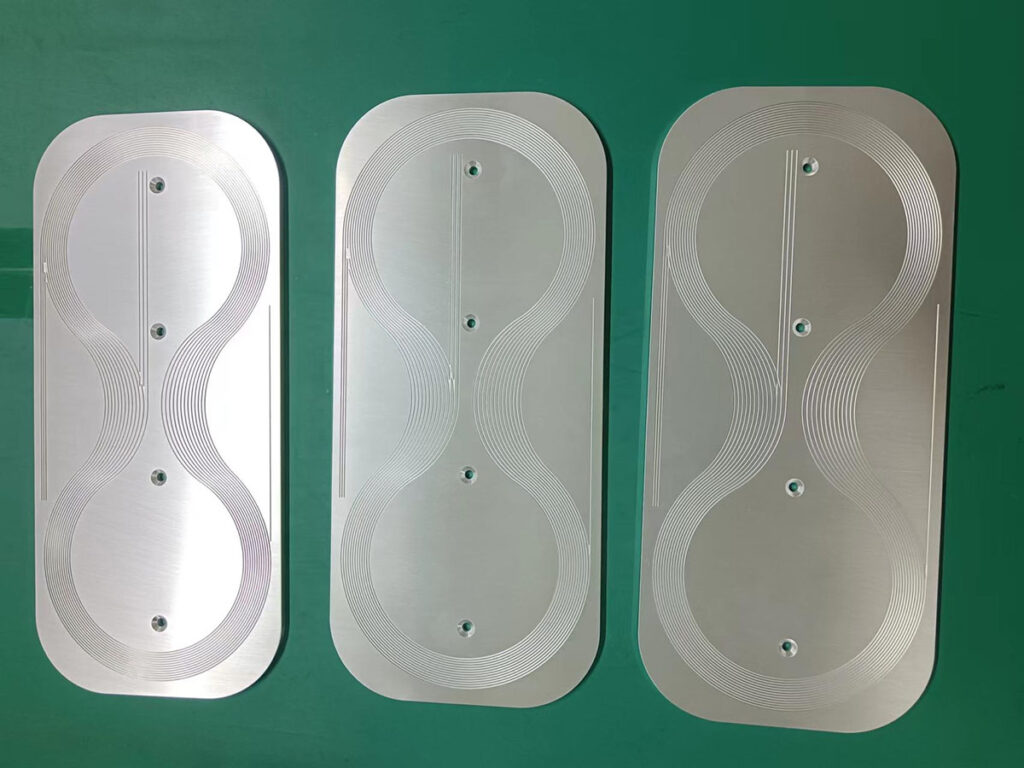
Introduction
In modern manufacturing, the demand for materials that offer both lightweight properties and exceptional structural integrity has never been higher. Among the vast array of aluminum alloys available to engineers and CNC machinists, one grade stands out for its superior balance of strength, workability, and durability: AL6082. This alloy has become a cornerstone of structural engineering, particularly in regions where high-performance components are required for demanding industrial environments.
AL6082 CNC Machining represents a specialized field of precision manufacturing that focuses on transforming this high-strength aluminum alloy into complex, load-bearing components. Unlike decorative or general-purpose aluminum grades, engineers design AL6082 for applications where failure is not an option. From heavy machinery frames to automotive safety components, manufacturers trust parts produced through AL6082 CNC Machining to perform under extreme conditions.
This article provides an exhaustive exploration of AL6082, covering its origins, chemical composition, mechanical behavior, machining characteristics, and widespread industrial adoption. Whether you are a design engineer, a procurement specialist, or a machining professional, understanding the nuances of this alloy is essential for successful project execution.
Different names fro AL6082 in the world
One of the most important aspects of working with AL6082 CNC Machining is understanding how this alloy is identified across different countries and regions. The same material may be referred to by entirely different designations depending on the national or international standard being applied. For global manufacturers engaged in Aluminum machining mass production, familiarity with these various naming conventions is essential to avoid costly material specification errors.
Understanding the Naming Variations
The table above reveals an important reality for professionals involved in CNC Aluminum Machining: the same material can be ordered under multiple names. This diversity stems from the historical development of independent national standards bodies, each creating their own classification systems before international harmonization efforts began.
Below is a comprehensive comparative graph showing how AL6082 is designated in the world’s major industrial economies:
| Country / Region | Standard | Alloy Designation | Alternative Names / Notes |
| European Union | EN 573 / EN 755 | EN AW-6082 | Also written as AlSi1MgMn (chemical symbol); material number 3.2315 is widely used in Germany and other DIN-influenced markets |
| Germany | DIN (Deutsches Institut für Normung) | 3.2315 | Often referred to in German industry as AlMgSi1 (older DIN designation); this name remains common in technical documentation and legacy drawings |
| China | GB / YS (Chinese National Standards) | 6A02 (GB/T 3191) | Also known as LD30 in older Chinese industry practice; chemical name AlMgSi1 is frequently used in technical specifications |
| United States | AA (Aluminum Association) | 6082 | While 6061 is more common domestically, AA6082 is the recognized designation for this alloy in U.S. standards |
| Japan | JIS (Japanese Industrial Standards) | A6061 (approximate) | Japan does not have a direct JIS equivalent to 6082; A6061 is the closest comparable grade, though its mechanical properties differ |
| United Kingdom | BS (British Standards) | 6082 (BS EN) | Historically designated as HE30 or H30 in older British standards; these designations still appear in some legacy specifications |
| France | NF (Normes Françaises) | A-GS (older) | Modern practice follows EN standards, but A-GS may be encountered in older French technical documents |
| Italy | UNI (Ente Nazionale Italiano di Unificazione) | 6082 (following EN) | Older Italian standards may reference 3560 as a former designation |
| International | ISO (International Organization for Standardization) | AlSi1MgMn | The ISO chemical designation is universally recognized and appears on material test certificates worldwide |
Why Multiple Designations Matter for CNC Machining
For professionals responsible for AL6082 CNC Machining, the existence of multiple designations creates both challenges and opportunities. On the challenge side, misinterpreting a material specification can result in using the wrong alloy, leading to component failure or non-conformance. On the opportunity side, understanding these equivalences allows manufacturers to source materials from the most cost-effective global suppliers while maintaining quality standards.
When issuing purchase orders or creating technical drawings, it is best practice to include multiple identifiers. For example, a specification might read: “Material: AL6082 (EN AW-6082 / 3.2315 / AlMgSi1 / GB 6A02).” This comprehensive approach ensures that suppliers in any country can identify the required material without ambiguity.
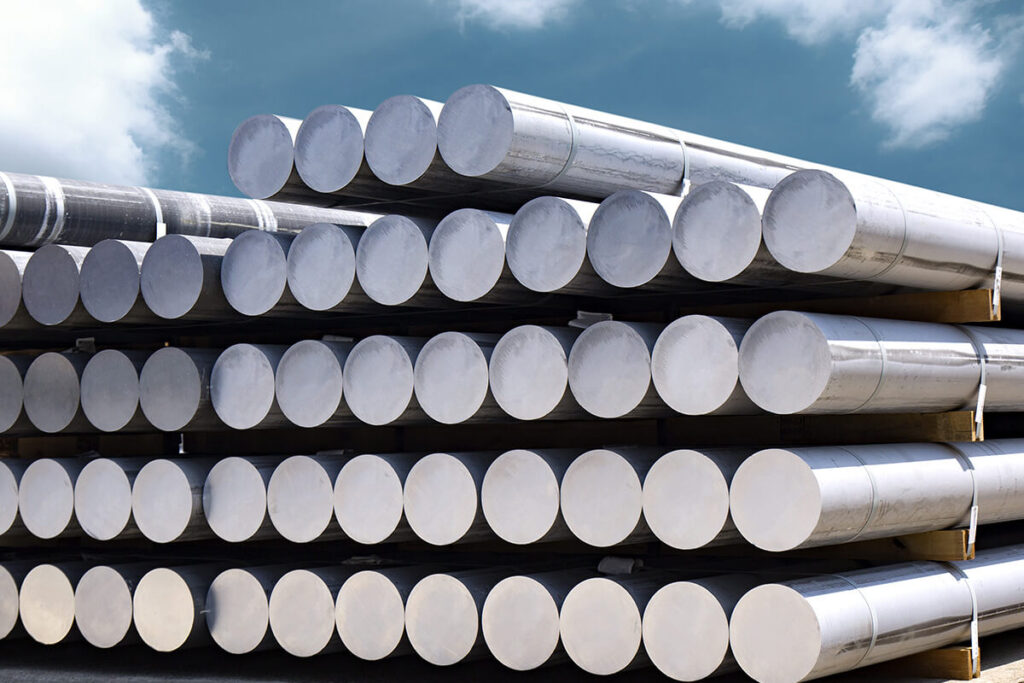
Chemical Composition and Its Significance
The exceptional properties of AL6082 are rooted in its carefully balanced chemical composition. As a member of the aluminum-magnesium-silicon family, this alloy derives its strength from the interaction between its primary alloying elements. Understanding this composition is fundamental to appreciating why AL6082 CNC Machining produces components with such reliable mechanical performance.
The principal elements in AL6082 and their typical percentage ranges are as follows:
| Element | Percentage Present | Role in the Alloy |
| Silicon (Si) | 0.70 – 1.30% | Forms magnesium silicide (Mg₂Si) with magnesium; enables age-hardening and contributes to strength |
| Magnesium (Mg) | 0.60 – 1.20% | Primary hardening agent; forms strengthening precipitates during artificial aging |
| Manganese (Mn) | 0.40 – 1.00% | Refines grain structure; increases strength and corrosion resistance; distinguishes 6082 from 6061 |
| Iron (Fe) | ≤ 0.50% | Controlled to minimum to prevent brittle intermetallic formation |
| Copper (Cu) | ≤ 0.10% | Restricted to preserve corrosion resistance |
| Chromium (Cr) | ≤ 0.25% | Contributes to grain control and toughness |
| Zinc (Zn) | ≤ 0.20% | Minor strengthening effect; controlled to maintain weldability |
| Titanium (Ti) | ≤ 0.10% | Grain refiner during casting |
| Aluminium (Al) | Remainder (Balance) | Provides lightweight base and corrosion resistance |
Mechanical Properties in the Heat-Treated Condition
The mechanical characteristics of AL6082 are most impressive when the alloy is processed in the T6 temper, which involves solution heat treatment followed by artificial aging. This thermal processing unlocks the full potential of the alloy, transforming it from a relatively soft, workable material into a high-strength structural alloy.
Key Mechanical Parameters
| Property | Value (T6 Temper) | Significance |
| Ultimate Tensile Strength | ≥ 310 MPa | Maximum stress before fracture; indicates overall load-carrying capacity |
| Yield Strength (0.2% Proof) | ≥ 260 MPa | Stress at which permanent deformation begins; critical for structural design |
| Elongation at Break | 8 – 10% | Ductility measure; indicates ability to deform before failure |
| Hardness (Brinell) | ~95 HB | Wear resistance and surface durability |
| Modulus of Elasticity | 69 – 70 GPa | Stiffness; determines deflection under load |
| Fatigue Strength | ~95 MPa (at 10⁷ cycles) | Resistance to cyclic loading; important for dynamic applications |
| Density | 2.70 g/cm³ | Lightweight property; one-third the density of steel |
Heat Treatment and Stress Relief Considerations
The heat treatment of AL6082 is a sophisticated process that directly influences the material’s final mechanical properties and machinability. The T6 temper, which is most commonly specified for machined components, involves several distinct stages.
The T6 Heat Treatment Process
Solution Heat Treatment is the first stage, during which the alloy is heated to an elevated temperature, typically around 525 to 535 degrees Celsius. At this temperature, the magnesium silicide precipitates dissolve into the aluminum matrix, creating a supersaturated solid solution. The material is then rapidly quenched, usually in water, to trap this supersaturated condition. The quenching process is critical, as it prevents the magnesium silicide from precipitating during cooling, which would reduce the strengthening effect of subsequent aging.
Natural Aging begins immediately after quenching and continues at room temperature. During natural aging, some precipitation occurs, but the full strength potential is not achieved. For this reason, most structural components are subjected to artificial aging.
Artificial Aging involves heating the alloy to a moderate temperature, typically between 150 and 180 degrees Celsius, for an extended period, usually 4 to 12 hours. During artificial aging, the magnesium silicide precipitates uniformly throughout the aluminum matrix, creating the fine particles that block dislocation movement and strengthen the material. This process is carefully controlled to achieve the optimal balance between strength and ductility.
Stress Relief for Machining
For components that will undergo extensive AL6082 CNC Machining, the T651 temper is often specified. The additional ‘1’ indicates that manufacturers stress-relieve the material by stretching it after the heat treatment process. This stretching operation reduces internal stresses that quenching introduces. The reduction in internal stresses minimizes distortion during machining, ensuring that the material can maintain tight dimensional tolerances.
The T651 temper plays a particularly important role in Aluminum machining mass production of large plates or bars where significant material removal is required. Without stress relief, the imbalance from removing material from one side of a component can cause warping or twisting, making the part unusable.
Suitability for CNC Machining
AL6082 CNC Machining is widely regarded as a straightforward and predictable process, provided that appropriate techniques are employed. The alloy’s machinability is rated as good to excellent, making it a preferred choice for both prototype development and Aluminum machining mass production.
Several factors contribute to the favorable machining characteristics of AL6082. The alloy produces well-broken chips under most cutting conditions, reducing the risk of chip tangling and facilitating efficient chip evacuation. This chip formation behavior is particularly valuable in automated machining cells where unattended operation is common.
The moderate hardness of AL6082 in the T6 temper allows for high cutting speeds while maintaining reasonable tool life. Carbide cutting tools, when properly selected and applied, can achieve exceptional surface finishes and dimensional accuracy. The alloy’s consistent microstructure ensures that machining forces remain predictable, enabling tight process control.
For Aluminum machining mass production, AL6082 offers several additional advantages. The alloy’s dimensional stability during machining reduces the need for multiple finishing passes, improving cycle times. Its excellent surface finish characteristics often eliminate the need for secondary finishing operations, reducing overall production costs.
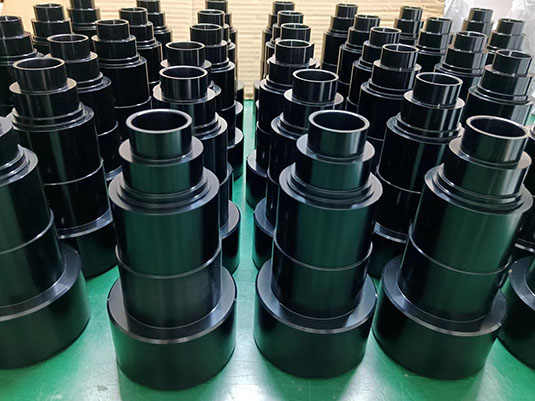
Industrial Applications Across Sectors
The versatility and performance of AL6082 have led to its adoption across a wide range of industrial sectors. In each application, the alloy’s unique combination of properties provides solutions to specific engineering challenges.
Structural Engineering and Construction
In structural engineering, AL6082 CNC Machining produces components for bridges, transmission towers, and heavy-duty frameworks. The alloy’s high strength-to-weight ratio allows engineers to design lighter structures without compromising load-carrying capacity. Its excellent corrosion resistance ensures that exposed structural components maintain their integrity over decades of service.
The construction industry also utilizes AL6082 for temporary works, including formwork systems, scaffolding components, and shoring equipment. The alloy’s durability and resistance to environmental degradation make it ideal for equipment that must withstand harsh job site conditions while remaining reusable.
Transportation and Automotive Industries
The transportation sector is perhaps the largest consumer of machined AL6082 components. In automotive applications, the alloy is used for chassis parts, suspension components, and structural reinforcements. The weight reduction achieved through Aluminum machining mass production of AL6082 components directly contributes to improved fuel efficiency and reduced emissions.
Electric vehicle manufacturers have increasingly turned to AL6082 for battery enclosure components. The combination of high strength, good thermal conductivity, and excellent crash energy absorption makes this alloy particularly suitable for protecting battery packs while contributing to overall vehicle structural integrity.
The railway industry relies on AL6082 for train body structures, interior fittings, and mechanical components. The alloy’s weldability, combined with its machinability, facilitates the production of complex assemblies that meet stringent safety requirements.
Marine and Offshore Applications
Marine environments present some of the most demanding conditions for structural materials. The corrosion resistance of AL6082, particularly in seawater, makes it a preferred choice for shipbuilding and offshore structures. Components such as deck fittings, hatch covers, and structural supports benefit from the alloy’s ability to withstand saltwater exposure while maintaining mechanical properties.
Industrial Machinery and Equipment
Heavy machinery manufacturers specify AL6082 CNC Machining for components that experience high stresses and cyclic loading. Gear housings, hydraulic manifold blocks, and conveyor system components are typical examples of AL6082 usage in industrial equipment. The alloy’s wear resistance and dimensional stability ensure reliable operation over extended service intervals.
Aerospace and Defense
While higher-strength alloys such as 7075 are more common in primary aerospace structures, AL6082 finds application in secondary structures, ground support equipment, and components that require good weldability combined with moderate strength. Its corrosion resistance and fatigue performance make it suitable for various defense applications.
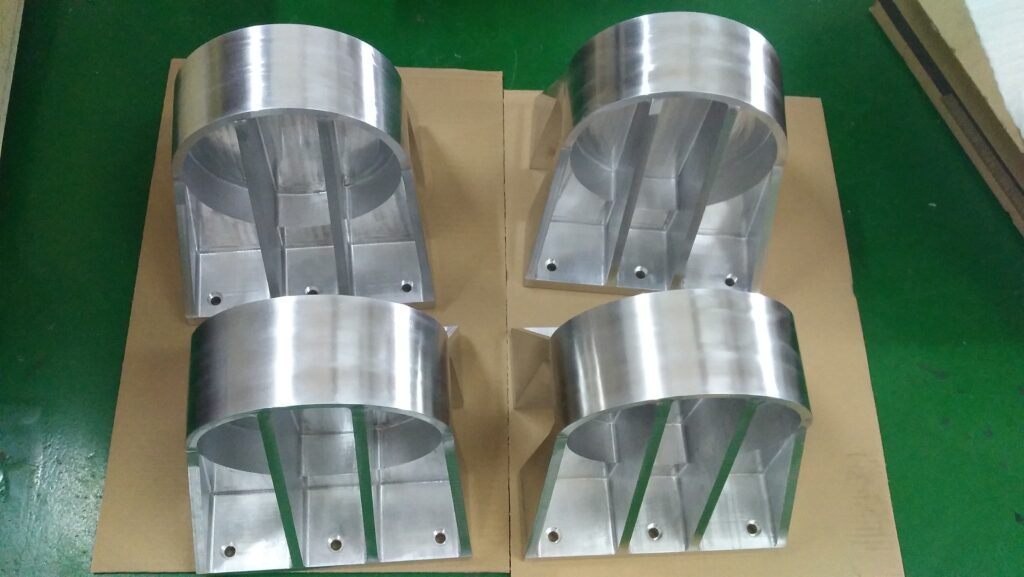
Post-Machining Surface Treatments
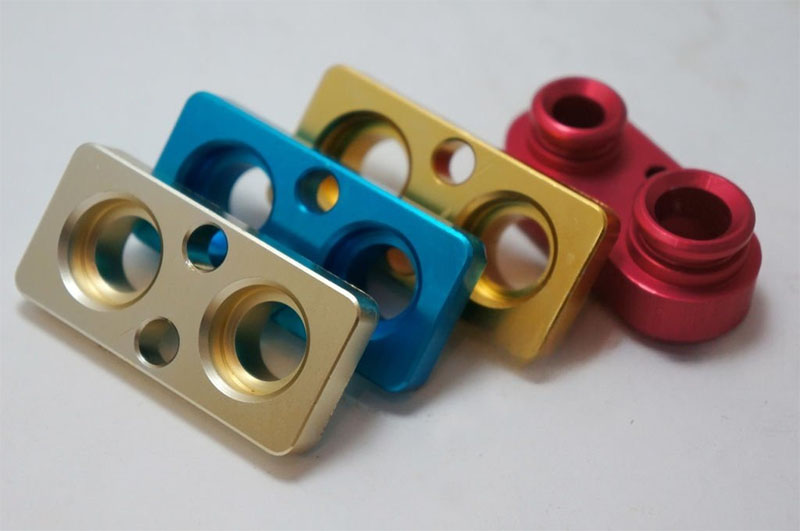
The surface of aluminum machined parts produced from AL6082 can be enhanced through various finishing processes. These treatments serve to improve corrosion resistance, wear resistance, appearance, or functional properties.
Anodizing
Anodizing is particularly common for AL6082, as it creates a hard, wear-resistant oxide layer while preserving the substrate’s mechanical properties. The anodic coating is integral to the aluminum surface, providing excellent adhesion and durability.
Type II (Decorative) Anodizing produces a clear or colored coating typically 5 to 25 micrometers thick. This treatment enhances corrosion resistance and provides an attractive appearance while maintaining the dimensional accuracy of machined features.
Type III (Hard) Anodizing produces a thicker coating, typically 25 to 100 micrometers or more. This treatment significantly increases surface hardness and wear resistance, making it suitable for components subjected to abrasive conditions. Hard anodizing is often specified for hydraulic components, wear plates, and sliding surfaces.
Chemical Conversion Coatings
Chemical conversion coatings, such as chromate or phosphate treatments, provide corrosion protection while maintaining electrical conductivity. These treatments are often specified for electronic enclosures and components that require grounding. The conversion coating is thinner than an anodic coating and does not significantly alter component dimensions.
Painting and Powder Coating
AL6082 provides an excellent substrate for organic coatings. The natural oxide layer promotes paint adhesion, and proper surface preparation ensures long-term coating durability. Powder coating is increasingly popular for its durability, environmental benefits, and wide range of available colors and textures.
Conclusion
AL6082 CNC Machining represents a convergence of advanced metallurgy and precision manufacturing that enables the production of components with exceptional structural performance. The alloy’s carefully balanced chemical composition, coupled with its response to heat treatment, results in mechanical properties that rival those of steel at a fraction of the weight.
Understanding the global designation systems for AL6082 is essential for manufacturers operating in international markets. Whether specified as EN AW-6082 in Europe, 3.2315 in Germany, AlMgSi1 in China, or AA6082 in the United States, the same high-strength alloy delivers consistent performance across all regions.
The industrial adoption of AL6082 across structural engineering, transportation, marine, and machinery sectors is a testament to its versatility and reliability. As manufacturing demands continue to evolve, this alloy will undoubtedly remain a cornerstone material for high-performance applications.
For professionals engaged in CNC Aluminum Machining, Aluminum machining mass production, or the production of precision aluminum machined parts, AL6082 offers an exceptional combination of strength, machinability, and corrosion resistance that is difficult to match with any other material. Its proven performance in demanding applications ensures that components machined from this alloy will meet the highest standards of quality and reliability.
Related articles:
AL7075 CNC Machining – High-Strength Alloy Guide