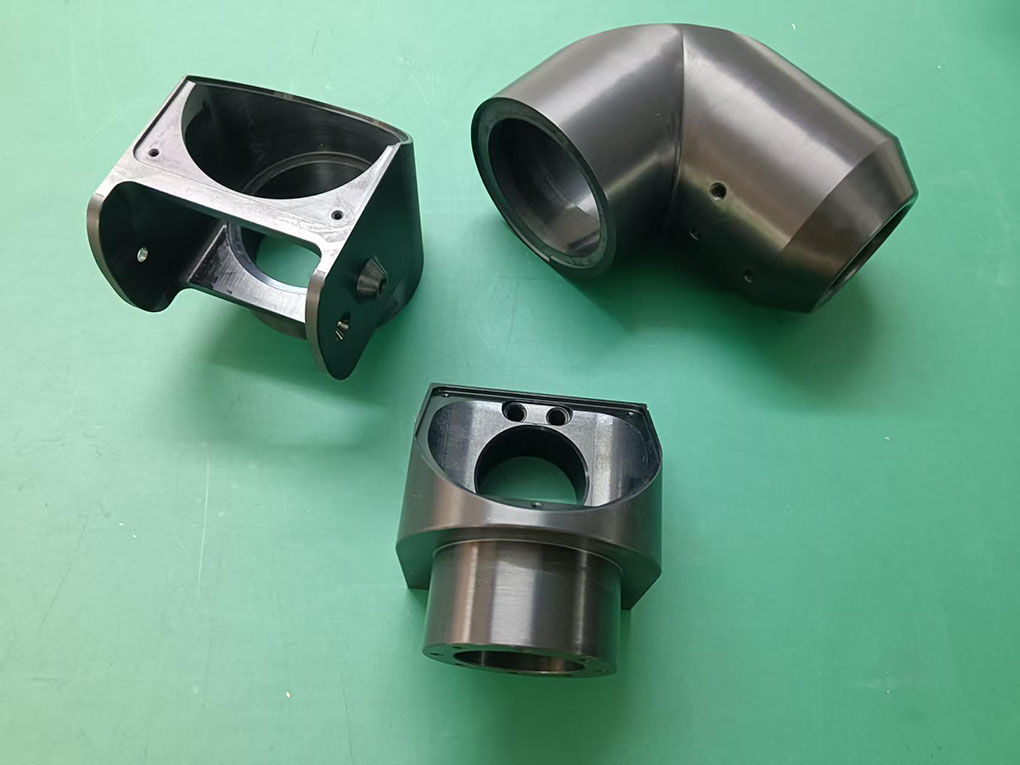
Imagine a master metalsmith, taking a straight bar of aluminum and gracefully curving it into a perfect arc. There’s no cracking, no warping—just a smooth, strong bend. In the world of CNC aluminum machining, achieving this perfect bend isn’t just an art; it’s a precise science of choosing the right material.
For engineers and designers creating complex aluminum alloy machined parts, the bendability of the material is often a critical but overlooked factor. Whether you’re designing an aerospace bracket, a sleek architectural trim, or a chassis for sensitive electronics, selecting the wrong alloy can lead to cracked parts, production delays, and costly waste.
So, let’s demystify the science and find the answer to the practical question: Which aluminum alloys are most bendable, and why does it matter for your next project?
The Science of the Bend: What Makes an Aluminum Alloy “Bendable”?
Before we list the alloys, we need to understand the “why.” Bendability, or formability, is primarily determined by two material properties:
- Ductility:This is the material’s ability to be stretched, pulled, or deformed without breaking. Think of it as the metal’s “stretchiness.” A highly ductile aluminum can undergo significant plastic deformation—the permanent change in shape—during bending.
- Yield Strength:This is the amount of stress the material can withstand before it begins to deform permanently. For bending, you want an alloy with a low yield strength relative to its ultimate strength. It needs to bend easily at the start (low force required) but still be strong enough not to fail once formed.
A critical, tangible concept here is the Minimum Bend Radius. This is the smallest inside radius to which a sheet or bar can be bent without cracking. As a rule of thumb: The more ductile the alloy and the softer its temper, the smaller the achievable bend radius.
Finally, we must talk about Temper. Aluminum temper (like O, H32, T6) describes its hardness and strength after heat treatment or work-hardening. For bending, the Annealed “O” temper is almost always the best choice. It is the softest, most ductile state of the alloy. A material like AL6061 alloy parts are often bent in the T4 or O temper and then heat-treated to T6 for final strength.
The Bendability Champions: Top Aluminum Alloys for Forming
Here is a breakdown of the most common aluminum alloys used for bending and forming, ranked by their suitability.
AL5052: The Undisputed Bending Champion
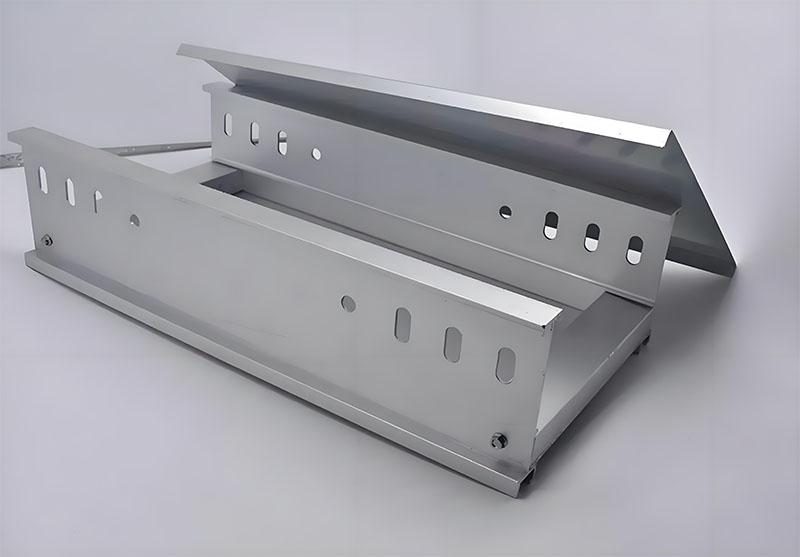
If your primary requirement is exceptional bendability, look no further. AL5052 bending parts are the industry standard for complex forming.
- Why it’s so bendable:AL5052 is from the non-heat-treatable 5xxx series, alloyed primarily with magnesium. This gives it excellent corrosion resistance, good weldability, and most importantly, superb ductility and fatigue strength.
- Key Properties:
- Excellent formability, even in harder H32 tempers.
- Very high fatigue strength.
- Outstanding resistance to saltwater corrosion.
- Minimum Bend Radius:Can achieve very tight bends, often as low as 0.5 times the material thickness (for “O” temper).
- Ideal For:Marine components, fuel tanks, electronic chassis, hydraulic tubes, and any part requiring complex shapes and high corrosion resistance. When you see a complex, seamless aluminum enclosure, it’s likely AL5052 alloy machining made it possible.
AL6061: The Versatile All-Rounder
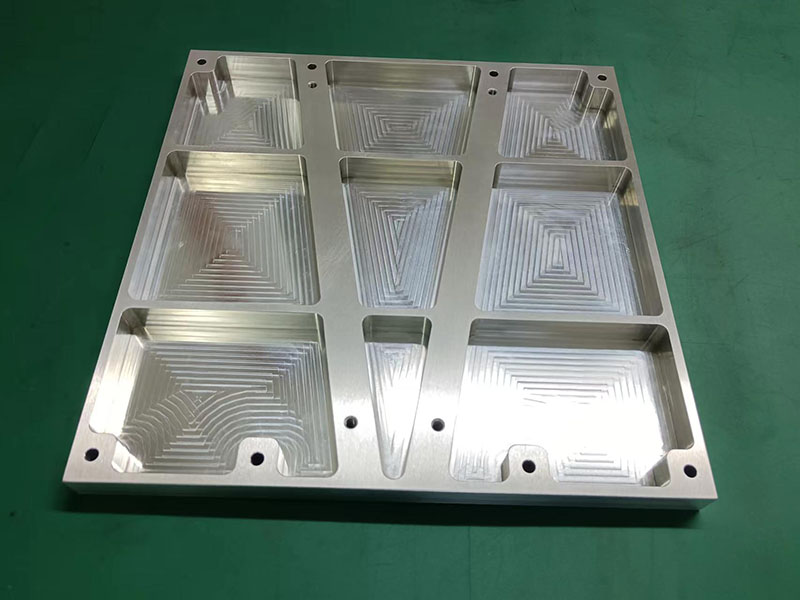
AL6061 alloy parts are the most common in general CNC aluminum machining. It’s a heat-treatable alloy with a great balance of strength, weldability, machinability, and good bendability in the right temper.
- A Critical Note on Temper: Never attempt to bend AL6061 in the T6 temper. It is strong but brittle and will almost certainly crack. For bending, you must use AL6061 in the O (annealed) or T4 temper. Parts can be formed in T4, then artificially aged to T6 for final strength.
- Key Properties: Good overall formability (in O/T4), excellent machinability, good strength-to-weight ratio, and good corrosion resistance.
- Minimum Bend Radius: Typically around 1-2 times material thickness for T4 temper.
- Ideal For: General-purpose brackets, frames, prototypes, and structural components where a combination of machined features and bends are needed. It’s the “go-to” for a reason, but temper discipline is key.
AL5083: The Strong, Corrosion-Resistant Formers
These are the heavy-duty cousins of AL5052, also from the magnesium-alloyed 5xxx series. They prioritize higher strength while retaining very good formability.
- Why they bend well:Like AL5052, they are non-heat-treatable and derive strength from magnesium and work-hardening. They maintain excellent ductility.
- Key Properties:Higher strength than AL5052, exceptional corrosion resistance (especially in marine/chemical environments), and good weldability.
- Minimum Bend Radius:Slightly larger than AL5052 but still very good.
- Ideal For: Marine superstructures, chemical tankers, pressure vessels, and military applications. AL5083 alloy machining is common where high strength and seawater corrosion resistance cannot be compromised, yet complex forming is required.
The Challengers: High-Strength Alloys Where Bending is a Challenge
These alloys are fantastic for other reasons, but bending requires extreme caution, specialized processes, or is simply not recommended.
AL7075: The Strong but Brittle
AL7075 alloy machining produces the strongest commonly available aluminum parts. It’s the choice for aerospace frames and high-stress components. However, it is notoriously poor for bending.
- Why it’s difficult: AL7075 is a zinc-based, heat-treatable alloy (typically in T6 temper) with very high strength but low ductility. Its formability is very low.
- Can it be bent? Only with great difficulty, large bend radii, and often only across the grain direction. It is highly prone to cracking. For any part requiring a bend, a different alloy should be strongly considered. If you must, use it in an O temper and heat treat after bending—consult an expert.
AL2024 & AL2014: The Aerospace Strengths with Formability Limits
AL2014 machining and AL2024 are classic high-strength aerospace alloys, primarily used for their excellent strength-to-weight ratio and fatigue performance.
- Bendability:They have fair formability in their annealed (O) or T3 tempers but are far less ductile than the 5xxx or 6xxx series. Bend radii must be generous.
- Key Consideration:They have lower corrosion resistance than other series and are often clad for protection. AL2014 machining is particularly prized for its high strength and is used in heavy-duty structures, but bending is a secondary operation that requires careful planning.
AL6082: The European Counterpart
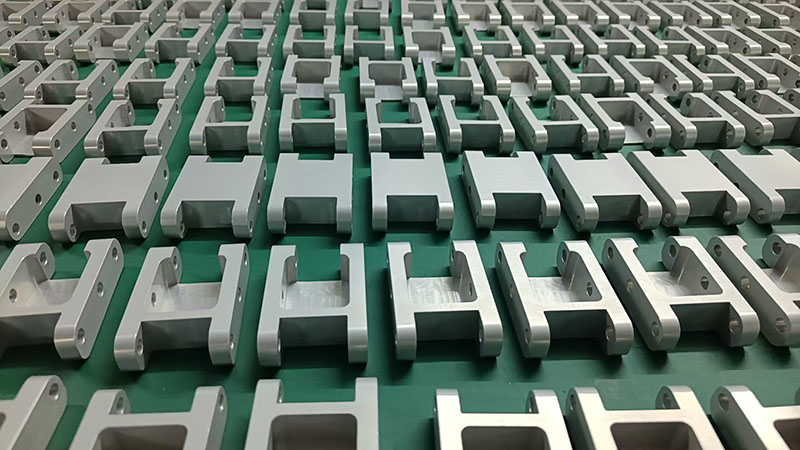
AL6082 machining is very similar to AL6061 and is extremely popular in Europe. Its properties and behavior are nearly identical.
Bendability: Treat it like AL6061. It has good formability in the O or T4 temper but becomes brittle in T6. It’s an excellent all-purpose choice where bending is required, provided the correct temper is specified.
The Machinist’s Guide: Best Practices for Bending Aluminum Alloy Parts
Choosing the right alloy is 80% of the battle. The final 20% is in the execution. Here’s what happens on the shop floor during CNC aluminum machining projects that include bending:
- Grain Direction Matters: Aluminum sheet and plate have a grain direction from rolling. Always bend perpendicular to the grain (across the grain). Bending parallel to the grain increases the risk of cracking.
- Temper is Everything (Again): Double-check the material certification. Is that AL6061 in the needed O temper, or did someone send T6 by mistake? This verification is crucial.
- Tooling and Lubrication: Use polished, radiused tooling to prevent surface marring. Lubrication can help the material flow smoothly around the die, reducing stress and improving the bend quality.
- Springback Calculation: All bent aluminum parts will “spring back” slightly after the bending force is released. Experienced machinists and CNC press brakes account for this by over-bending to a calculated degree, so the part springs back to the desired angle.
- Deburr First: Any sharp edges or burrs from prior CNC aluminum machining operations (like cutting or drilling) act as stress concentrators and can initiate a crack during bending. Always deburr the edges along the bend line.
Conclusion: Making the Right Choice for Your Project
Selecting the perfect aluminum alloy is a balancing act between formability, final strength, corrosion resistance, weldability, and cost.
- For maximum bendability and corrosion resistance:Choose AL5052 .
- For a balance of bendability, machinability, and good strength:Choose AL6061 or AL6082 in the O or T4 temper.
- For high-strength, corrosion-resistant bends:Choose AL5083.
- For maximum strength where bending is minimal or absent:Choose AL7075 or AL2014.
The story of the cracked aluminum pipe from our Swiss customer? It was likely a mismatch between the alloy temper and the type of aluminum alloy. This painful lesson reinforced that successful precision engineering isn’t just about cutting metal—it’s about deeply understanding it.
Always consult with your machining partner during the design phase. A seasoned engineer in aluminum alloy machined parts can guide you on the optimal material, temper, and bend radius for your design, transforming a potential failure into a flawlessly formed, functional part. By mastering the science of bendability, you unlock new levels of design freedom and manufacturing reliability.