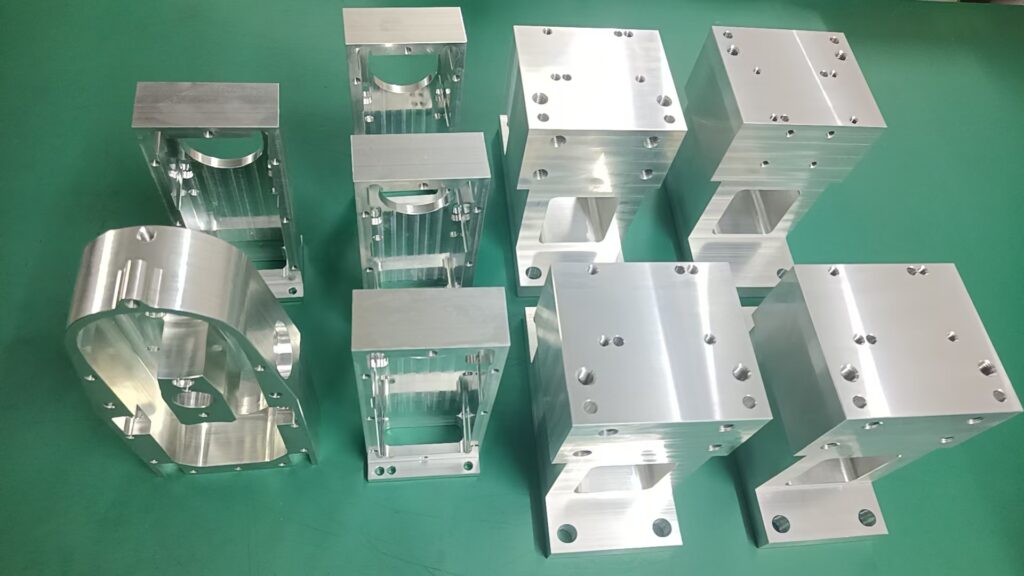
In today’s fast-moving manufacturing world, rapid prototyping has become the key to faster innovation and product development. As technology advances, new tools like 3D printing have become popular for building prototypes quickly and cheaply. However, despite the growth of additive manufacturing, CNC machining remains a cornerstone of rapid prototyping — especially for companies that need precision, durability, and production-ready results.
In this article, we’ll explore why CNC machining continues to play a vital role in rapid prototyping — and how it complements, rather than competes with, 3D printing.
Understanding Rapid Prototyping
Rapid prototyping is the process of quickly fabricating a model or part to test a design before moving to full-scale production. It helps engineers, designers, and manufacturers visualize their ideas, check for errors, and validate functionality.
Prototypes serve many purposes:
- Testing form and fit
- Checking mechanical or thermal properties
- Demonstrating concepts to clients or investors
- Reducing development risks and costs
There are several ways to make prototypes today, including 3D printing, injection molding, vacuum casting, and CNC machining. Each method has its strengths. However, when it comes to precision, material flexibility, and production readiness, CNC machining continues to stand out.
CNC Machining vs. 3D Printing: A Quick Comparison
| Feature | CNC Machining | 3D Printing |
| Process Type | Subtractive (cuts material away) | Additive (builds up layers) |
| Materials | Metals, plastics, composites | Mostly plastics, some metals |
| Surface Finish | Excellent, smooth finish | Often rough, needs post-processing |
| Accuracy | High precision (±0.01 mm) | Moderate precision |
| Strength | Full material strength | Layer bonding may weaken parts |
| Production Readiness | Ready for real-world testing | Often for design validation only |
Both methods have unique advantages. But for industries that demand tight tolerances, functional prototypes, and real material properties, CNC machining still leads the way.
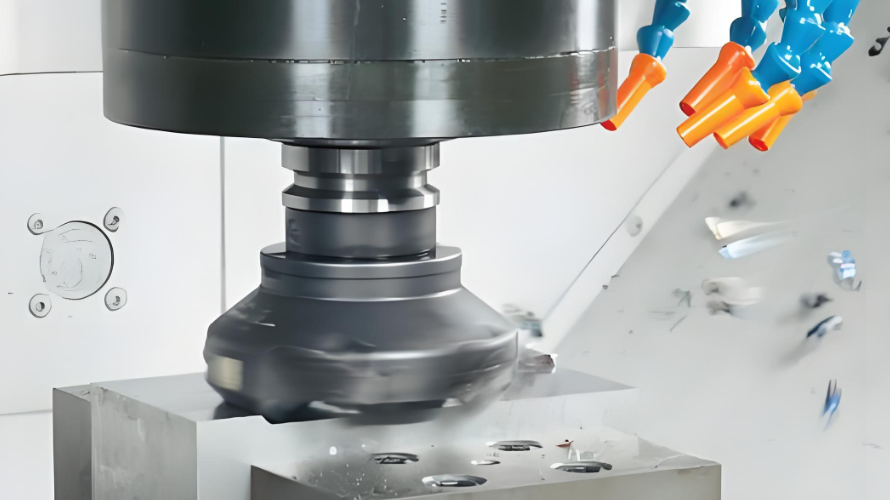
The Strength of CNC Machining in Rapid Prototyping
a. Superior Precision and Tolerance
CNC machining is unmatched in accuracy. It can produce complex geometries with tolerances as tight as ±0.01 mm. This level of precision is critical for industries like aerospace, automotive, and robotics — where even a small error can affect the entire assembly.
At SYM Machining, our advanced 3-axis, 4-axis, and 5-axis CNC machines ensure that every prototype matches your design exactly. This allows engineers to test fit and performance with production-level precision.
b. Wide Range of Materials
While 3D printing is limited to certain plastics and metal powders, CNC machining can handle a broad variety of materials, including:
- Aluminum
- Stainless steel
- Brass
- Copper
- Titanium
- ABS, PEEK, Delrin, and other engineering plastics
This flexibility allows designers to create prototypes using the same materials as the final product, leading to more accurate performance testing.
c. Functional and Durable Prototypes
3D printed parts are often used for visual models or light-duty testing. However, CNC-machined parts are strong enough for functional testing and real-world use. Because CNC machining cuts from solid blocks of material, the resulting parts maintain consistent density and mechanical strength.
This makes CNC machining the best choice for prototypes that will undergo:
- Stress testing
- Thermal or chemical exposure
- Structural load analysis
- Assembly fit checks
At SYM Machining, our prototypes are built for both testing and validation, bridging the gap between prototype and production
d. Excellent Surface Finish and Dimensional Accuracy
One of the most noticeable advantages of CNC machining is the smooth surface finish it can achieve directly off the machine. Unlike 3D printing, which often requires sanding or coating, CNC machining produces production-quality finishes suitable for both visual models and functional components.
This is especially important for prototypes that must:
- Fit into existing assemblies
- Be used for client presentations
- Require coating, anodizing, or polishing
SYM Machining’s surface treatment options — including anodizing, bead blasting, polishing, and powder coating — help make prototypes look and perform like final products.
e. Scalability from Prototype to Production
CNC machining is not only for prototypes — it’s also ideal for low-volume production. Once a prototype design is approved, the same CNC setup can produce small batches with consistent quality and minimal lead time.
This seamless transition reduces time-to-market and ensures that the production process begins with a proven design. SYM Machining specializes in low-volume, high-precision manufacturing, helping clients move from prototype to production efficiently.
CNC Machining as a Partner to 3D Printing
Rather than competing, CNC machining and 3D printing complement each other in modern prototyping workflows. Here’s how:
- Early-stage concepts: 3D printing helps designers quickly create models to visualize shape and ergonomics.
- Mid-stage testing: CNC machining provides accurate, strong parts for performance and functionality testing.
- Final-stage validation: CNC-machined prototypes simulate real production parts and can transition easily to mass manufacturing.
By combining both technologies, engineers can speed up development cycles while ensuring functional accuracy.
SYM Machining frequently works with clients who start with 3D-printed models and then move to CNC-machined prototypes for final validation. This hybrid approach offers the fastest route from design to market.
Cost and Time Considerations
While CNC machining can be more expensive than 3D printing for very simple parts, the value it delivers in accuracy, durability, and production readiness often outweighs the cost.
SYM Machining’s experience in rapid tooling and efficient fixture design allows us to reduce setup times and keep machining costs competitive. For many projects, CNC machining offers:
- Short lead times (as fast as 1–3 days)
- No need for expensive molds or dies
- Reusable setups for low-volume runs
This makes CNC machining an economical and time-efficient choice for many types of rapid prototypes — especially those that need to perform under real conditions.
SYM Machining’s Expertise in Rapid Prototyping
At SYM Machining, we take pride in being a trusted partner for precision CNC prototyping and production. Our state-of-the-art equipment, skilled technicians, and strict quality control ensure that every prototype meets your exact requirements.
Our CNC Prototyping Capabilities Include:
- 3-axis, 4-axis, and 5-axis CNC milling
- CNC turning and lathe machining
- High-precision EDM and wire cutting
- Surface finishing and anodizing
- Tolerance control up to ±0.01 mm
- Full inspection reports upon request
Industries We Serve:
- Robotics and automation
- Medical devices
- Aerospace components
- Automotive engineering
- Industrial equipment
- Electronics housings
Each prototype we deliver is backed by our ISO 9001 quality system and detailed inspection documentation. Whether you need a single prototype or a small production run, SYM Machining ensures speed, quality, and reliability at every step.
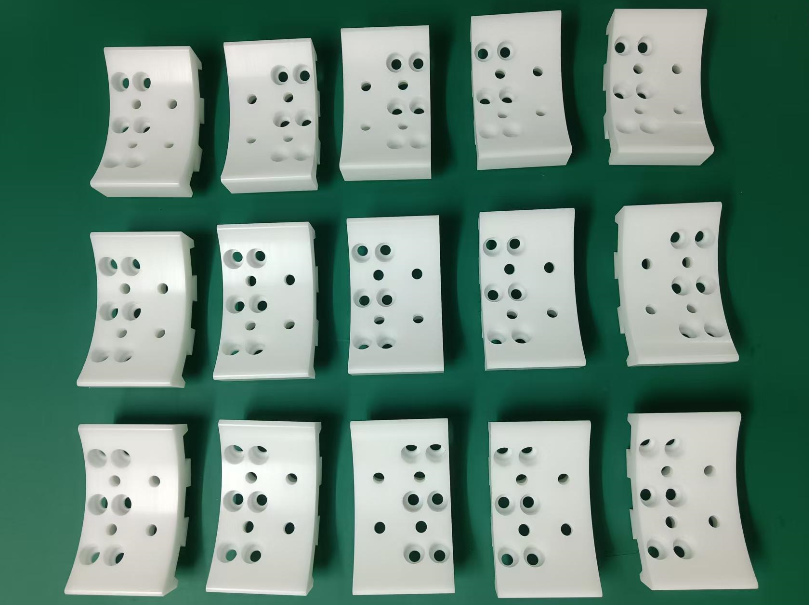
Real-World Applications of CNC Prototyping
CNC machining plays a key role across many industries. Here are a few examples:
Robotics
Precision-machined actuator housings, brackets, and gears are essential for smooth robotic motion. SYM Machining produces components with tight tolerances and high surface quality for robotic assemblies.
Medical Devices
When creating prototypes for surgical tools or diagnostic instruments, biocompatible materials and perfect finishes are critical. CNC machining ensures safety and precision.
Automotive
From engine parts to suspension components, CNC prototypes allow engineers to test fit, heat resistance, and durability before full-scale production.
Aerospace
CNC machining provides the precision and reliability needed for complex aircraft components, using lightweight yet strong materials like titanium and aluminum alloys.
The Future: CNC Machining and Digital Manufacturing Integration
As digital manufacturing evolves, CNC machining continues to play a major role in the Industry 4.0 revolution. Integration with CAD/CAM software, AI-based optimization, and real-time monitoring makes CNC prototyping faster and more intelligent.
At SYM Machining, we use advanced digital workflows to:
- Speed up quoting and design review
- Optimize toolpaths for efficiency
- Track quality through digital inspection reports
This integration ensures that our CNC machining remains at the cutting edge of rapid prototyping technology.
Conclusion: The Enduring Value of CNC Machining
While 3D printing continues to change the landscape of design and prototyping, CNC machining remains the foundation of precision manufacturing. It offers accuracy, strength, material flexibility, and real-world performance that no other process can fully replace.
For engineers, designers, and innovators who need prototypes that look, feel, and perform like final products, CNC machining is still the best choice.
At SYM Machining, we combine advanced CNC technology with expert craftsmanship to deliver fast, precise, and reliable prototypes — helping our clients move from concept to market with confidence.
Related articles:
From Prototype to Production: Your Seamless CNC Machining Partner