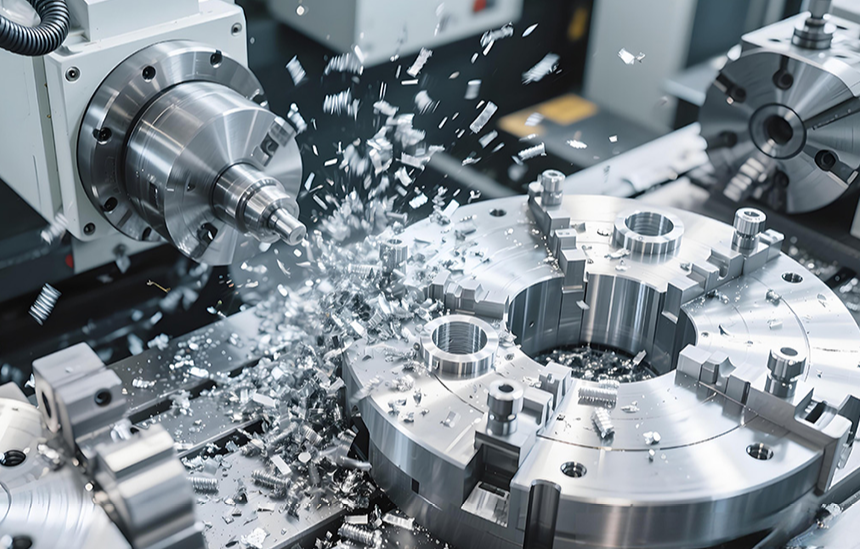
Discover how AS9100 certified precision machining ensures aerospace-grade quality, reliability, and compliance with global manufacturing standards.
AS9100 Certified Precision Machining
In the world of high-stakes industries such as aerospace and defense, one phrase stands tall above the rest: AS9100 certified precision machining. This certification isn’t just a fancy stamp of approval. It’s a globally recognized benchmark that ensures suppliers meet the most rigorous quality and safety requirements.
From the wing of a commercial jet to the smallest titanium fastener inside a spacecraft, every part must meet exacting tolerances. Inaccuracies—even the size of a human hair—can spell disaster. That’s why AS9100 has become the trusted backbone of aerospace supply chains. It guarantees not only that the machining processes deliver flawless parts, but also that every supplier follows strict documentation, traceability, and quality-control measures.
But here’s the interesting twist: while the certification was born in aerospace, its influence now stretches across defense, automotive, medical devices, and even space exploration. Customers in these industries demand more than just parts—they demand confidence. And confidence comes from a supplier who can consistently prove they’re operating at the highest possible level of excellence.
The Importance of AS9100 Certification
Why does AS9100 certification matter so much? Well, think of it this way: when a plane takes off, hundreds of thousands of machined components work together in perfect harmony. There’s zero room for error.
Certification ensures that the manufacturer has a robust quality management system in place. This means customers don’t have to cross their fingers and hope the supplier gets it right—they know the supplier will. Some of the most important reasons include:
- Global recognition: Accepted by aerospace giants like Boeing, Airbus, and Lockheed Martin.
- Customer confidence: Proof that every step of the process is tightly controlled.
- Consistency: A guarantee that parts meet the same high standard every single time.
- Supplier approval: Many OEMs won’t even consider a shop that isn’t certified.
In short, certification acts as the golden ticket. Without it, a machining company may never even make it into the room where high-level aerospace contracts are discussed.
Understanding Precision Machining in Aerospace and Defense
Precision machining is exactly what it sounds like: the art and science of creating parts with extraordinary accuracy. We’re talking tolerances measured in microns, complex shapes carved out of stubborn alloys, and surfaces polished until they gleam like glass.
In aerospace, precision machining is used for:
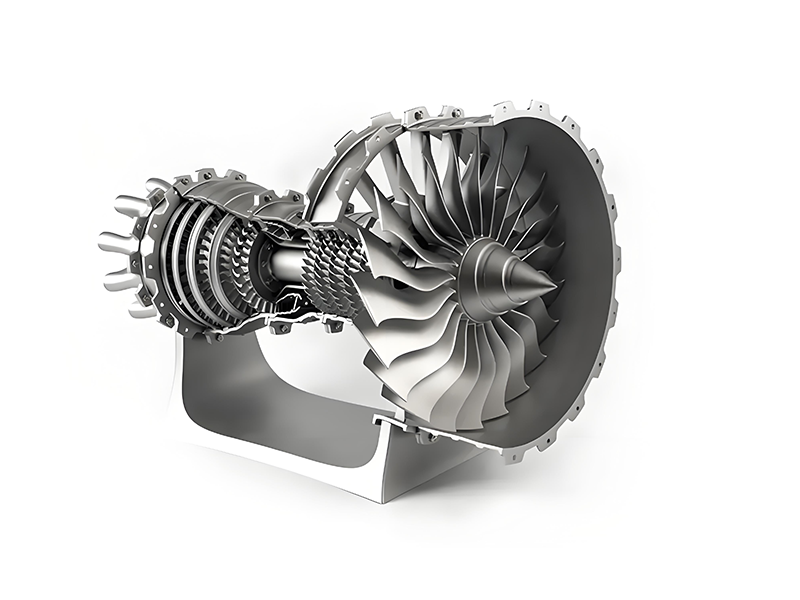
- Engine components like turbine blades and housings.
- Landing gear parts where strength and fatigue resistance are critical.
- Structural brackets designed to hold up under vibration and stress.
- Avionics housings protecting sensitive electronic systems.
Defense follows the same playbook but adds components like weapon systems, armored vehicle parts, and satellite components. In both industries, the margin for error is razor-thin.
Without precise machining, an aircraft couldn’t fly safely. A spacecraft couldn’t survive re-entry. And a defense system couldn’t perform in the field.
How AS9100 Elevates Precision Machining Quality
Plenty of shops can cut metal. But only AS9100 certified suppliers can prove, beyond a shadow of a doubt, that their quality processes stand up to the highest level of scrutiny.
This certification pushes precision machining to a whole new level by requiring:
- Process control: Every stage of machining is documented and repeatable.
- Risk management: Potential failures are identified and eliminated before they occur.
- Traceability: Every material, batch, and part can be tracked back to its source.
- Continuous improvement: Shops must prove they’re getting better all the time.
When these elements come together, the result isn’t just a part that meets specifications—it’s a part that customers can trust to perform flawlessly in the most demanding conditions.
AS9100 vs ISO 9001: What’s the Difference?
At first glance, AS9100 and ISO 9001 seem similar. Both are quality management system (QMS) standards, and both focus on consistency, efficiency, and customer satisfaction. But here’s the catch: while ISO 9001 is a broad standard used across industries, AS9100 is aerospace-specific and much more stringent.
ISO 9001 provides a strong foundation, covering areas like:
- Customer focus and satisfaction.
- Leadership and planning.
- Continuous improvement.
- Evidence-based decision-making.
AS9100, on the other hand, takes all of that and layers in additional aerospace requirements. These extras make the difference between a part that works in a car engine and a part that can survive the crushing forces of space flight.
Some of the biggest differences include:
- Product safety: AS9100 requires deeper analysis of risks that could affect safety-critical aerospace parts.
- Configuration management: Every drawing, revision, and update must be tightly controlled to avoid mistakes.
- Counterfeit prevention: Suppliers must prove materials are genuine and sourced from approved channels.
- Special processes: Treatments like welding, heat treating, or coating must be validated and tracked.
Comparison Table
| Feature | ISO 9001 | AS9100 |
| Industry Scope | All industries | Aerospace, defense, and aviation |
| Risk Management | General | Focused on safety-critical parts |
| Traceability | Encouraged | Mandatory and highly detailed |
| Counterfeit Prevention | Not required | Strict requirements |
| Configuration Management | Basic | Advanced with full documentation |
| OEM Approval | Optional | Essential for aerospace suppliers |
In short, ISO 9001 is the minimum, while AS9100 is the gold standard. Aerospace primes won’t even look at a supplier unless they can prove compliance with AS9100.
Benefits of Partnering with an AS9100 Certified Precision Machining Supplier
So, what’s in it for the customer? Why go out of your way to partner with an AS9100 certified precision machining supplier instead of any local machine shop? The benefits stretch far beyond a logo on a certificate.
Reduced Risk
Certification means processes are tested and verified. You’re not gambling with quality—you’re assured of it.
Consistency Across Projects
Whether it’s the first prototype or the thousandth production part, you’ll see the same high standard every time.
Cost Savings
Yes, certified suppliers may charge more upfront. But fewer rejections, faster approvals, and smoother audits save customers far more in the long run.
Compliance with Aerospace Giants
If you’re working with Boeing, Airbus, Raytheon, or Lockheed Martin, AS9100 compliance isn’t optional—it’s a requirement.
Confidence in Supply Chains
In an era of global supply chains, documentation and traceability reduce the chance of counterfeit or substandard parts slipping through.
It boils down to this: choosing a certified supplier is like choosing a surgeon with board certification. Sure, you could go with someone else, but would you really risk it?
AS9100 Certified Precision Machining Processes
When people hear the phrase AS9100 certified precision machining, they often imagine futuristic machines humming away in spotless factories. And, to be honest, that’s not far from reality. But what processes actually fall under this umbrella?
- CNC Milling – Complex 3D shapes, turbine housings, avionics casings.
- CNC Turning – Cylindrical parts like shafts and hydraulic components.
- 5-Axis Machining – Intricate geometries, lightweight structures.
- EDM (Electrical Discharge Machining) – Ultra-hard metals like titanium and Inconel.
- Grinding – Micron-level tolerances and superior surface finishes.
- Surface Finishing & Coating – Anodizing, plating, passivation for durability.
The magic of AS9100 is that each of these processes must be controlled, documented, and repeatable. A part produced on Monday must match the part produced six months later with no loss of quality. That’s the level of trust aerospace demands.
Challenges in Aerospace Machining and How AS9100 Addresses Them
Machining for aerospace isn’t for the faint of heart. The industry demands perfection, but achieving that perfection often feels like threading a needle in a hurricane. That’s where AS9100 certified precision machining provides both structure and confidence.
Challenges include:
- Ultra-tight tolerances.
- Lightweight yet strong materials.
- Heat and stress resistance.
- Complex geometries.
- Strict traceability requirements.
Each of these pain points is addressed through AS9100’s focus on process monitoring, validation, and documentation. The certification doesn’t eliminate challenges, but it transforms them into manageable risks.
Choosing the Right AS9100 Certified Precision Machining Partner
Not all suppliers are created equal. Even among certified shops, expertise and service vary widely. Look for:
- Capability and advanced equipment.
- Aerospace project experience.
- Material expertise (e.g., titanium, Inconel).
- After-sales service and responsiveness.
- Flexibility in scaling from prototype to production.
- Documentation reliability and clear communication.
Choosing the right partner is like choosing a co-pilot—you need someone reliable, skilled, and calm under pressure. SYM Precision Machining has always been your reliable partner.
Conclusion: Why AS9100 Certified Precision Machining Matters More Than Ever
As aerospace technology advances, the need for AS9100 certified precision machining grows stronger. From lighter, fuel-efficient aircraft to spacecraft exploring the edges of our solar system, every part must meet uncompromising standards.
Certification isn’t just paperwork—it’s trust. It ensures every fastener, bracket, or housing is crafted with precision, inspected with care, and backed by full traceability.
For customers, it means fewer risks, smoother audits, and stronger supply chain confidence. For suppliers, it means global opportunities and long-term partnerships with industry leaders.
In an industry where failure is not an option, AS9100 certification remains the ultimate mark of excellence. And for companies ready to reach new heights—whether in aerospace, defense, or beyond—it’s not just a standard. It’s a necessity.
Related Article:
Defense Industry Precision Components
Advanced Aerospace Machining Services in China