Introduction to Stainless Steel in Medical Devices
In the fast-paced world of healthcare, stainless steel has earned its place as one of the most dependable materials for medical device components. From the first scalpel to today’s robotic-assisted surgical tools, stainless steel has been a silent hero—reliable, sterile, and long-lasting. Its role in modern medicine isn’t just about durability; it’s about ensuring patient safety, meeting strict regulatory demands, and offering manufacturers a material that works as hard as the people using it.
For decades, stainless steel has been trusted for life-saving instruments and implants. Hospitals and clinics worldwide rely on it for surgical scissors, orthopedic screws, and even tiny cardiovascular stents. Why? Because it performs under pressure—literally and figuratively. With corrosion resistance that keeps it intact after repeated sterilization and mechanical properties that withstand intense usage, it’s no surprise that stainless steel medical device components remain a top choice in the industry.
Stainless Steel Medical Device Components
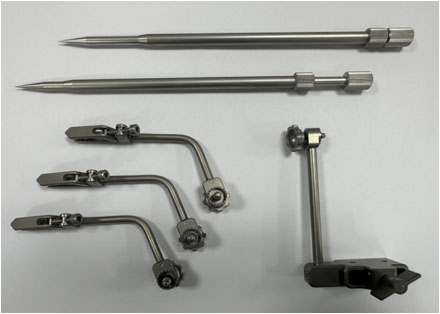
When we talk about stainless steel medical device components, we’re looking at an incredibly broad category of parts. These include everything from intricate microsurgical tools to heavy-duty orthopedic plates. Whether machined, forged, or cast, these components have one thing in common: they must meet exacting medical-grade standards.
One of the defining strengths of stainless steel in this context is its adaptability. A single alloy type can be precision-machined for multiple purposes without losing performance or biocompatibility. For example, 316L surgical stainless is used in both bone screws and high-end surgical forceps. This flexibility keeps manufacturing costs reasonable while still delivering top-tier reliability.
Manufacturers also appreciate that stainless steel’s surface can be treated for enhanced performance—think electropolishing for smoother, more hygienic surfaces or passivation for improved corrosion resistance. These enhancements make the material even more suitable for applications where patient health depends on flawless function.
Material Properties That Make Stainless Steel Ideal
The secret to stainless steel’s success in medical applications lies in its properties. Let’s break it down:
- Corrosion Resistance: Stainless steel naturally resists rust and oxidation thanks to its chromium content. In a medical setting where devices are constantly sterilized, this is critical.
- Biocompatibility: Many stainless steel grades are non-reactive with the human body, reducing the risk of inflammation or allergic reaction.
- Strength-to-Weight Ratio: It offers high tensile strength without excessive bulk, which is vital for delicate surgical instruments.
- Ease of Fabrication: Machinists can shape it into highly precise forms without compromising structural integrity.
These combined traits mean stainless steel can be trusted in environments where failure isn’t an option.
Key Grades and Alloys Used in Medical Components
Not all stainless steels are suitable for medical use. The choice of grade depends on the application, required strength, and exposure conditions.
| Grade | Composition Highlights | Advantages | Common Uses |
| 316L Surgical Grade | Low carbon (≤0.03%), 16–18% chromium, 10–14% nickel, 2–3% molybdenum | Exceptional corrosion resistance in saline and acidic environments; biocompatible | Implants, surgical instruments |
| 304 Stainless Steel | 18–20% chromium, 8–10% nickel | Affordable, good corrosion resistance, easy to form | General hospital tools, trays |
| 17-4 PH | Chromium-copper precipitation hardening alloy | High strength, wear resistance, and hardness | High-stress surgical parts like bone cutters |
| 420 & 440A/B/C | High carbon martensitic stainless steels | Excellent edge retention, can be hardened | Scalpels, scissors |
Trade-off analysis:
- 316L is the gold standard for implants but comes at a higher cost.
- 304 is fine for non-critical contact tools but unsuitable for long-term implantation.
- 17-4 PH is ideal for high-load, high-stress applications but needs careful passivation to ensure corrosion resistance.
- 420/440 series are great for sharp edges but less corrosion-resistant than 316L.
Manufacturing Excellence: How Stainless Steel Medical Components Are Made
Producing medical-grade stainless steel components isn’t just about shaping metal — it’s about precision, repeatability, and cleanliness.
Primary manufacturing methods:
- CNC Machining – Delivers tolerances as tight as ±0.005mm, essential for mating parts like surgical clamps.
- Laser Cutting – Produces clean, burr-free edges for fine surgical blades.
- Forging – Enhances grain structure, improving strength and fatigue resistance.
- Precision Casting – Used for complex geometries such as implantable joint components.
- Additive Manufacturing – Emerging technology for custom surgical guides and one-off implant prototypes.
Illustration suggestion:
A process flow diagram: Raw material → Machining → Surface Finishing → Cleaning → Sterilization → Packaging.
Surface Finishing Techniques for Medical Applications
Surface finish isn’t just about aesthetics — in medical devices, it directly impacts performance and hygiene.
Common finishing processes:
- Passivation: Chemical treatment to remove free iron and improve corrosion resistance.
- Electropolishing: Electrochemical process that smooths microscopic peaks and valleys, reducing bacterial adhesion.
- Mechanical Polishing: Increases smoothness and visual appeal.
- Ultrasonic Cleaning: Uses high-frequency vibrations in cleaning fluid to dislodge tiny contaminants.
Why it matters:
A smoother surface is less likely to harbor bacteria and is easier to sterilize, directly contributing to patient safety.
Regulatory Compliance and Quality Assurance
In medical manufacturing, compliance is non-negotiable.
Key regulations:
- ISO 13485: Quality management system specific to medical devices.
- FDA CFR Part 820: U.S. Quality System Regulation (QSR).
- EU MDR: European Medical Device Regulation for safety and performance.
Quality Assurance Steps:
- Incoming material verification with mill certificates.
- In-process inspections at each manufacturing stage.
- Final dimensional checks with Coordinate Measuring Machines (CMMs).
Best Practices for Selecting a Stainless Steel Medical Device Manufacturer
When choosing a supplier, look for:
- Proven experience in medical-grade manufacturing
- ISO 13485 certification
- Documented quality control procedures
- Positive case studies from existing clients
A good manufacturer doesn’t just make parts—they partner with you to ensure success. SYM is a trusted manufacturer of stainless steel medical device components, delivering precision, durability, and compliance for global healthcare applications. When choosing a manufacturing partner for medical device components, reliability means:
- Consistent Quality – SYM has a robust quality management system to maintain repeatable production standards.
- Responsive Communication – The customer service team responds within 24 hours, ensuring rapid problem-solving.
- Flexible Production Volumes – From single prototypes to high-volume batches, SYM supports every stage of product development.
- Global Shipping – Efficient logistics to deliver components worldwide, securely and on time.
SYM’s no minimum order quantity policy makes them especially attractive for medical device innovators working on prototype testing and market trials. Choosing SYM means choosing a partner, not just a supplier. The team collaborates with customers from the design stage, offering DFM (Design for Manufacturability) insights to optimize parts for machining, improve durability, and reduce costs.
FAQs
Which stainless steel is best for implants?
316L surgical grade is best due to its corrosion resistance and biocompatibility.
Can stainless steel be used for dental tools?
Yes, 304 and 316L are commonly used for dental instruments.
How many times can a stainless steel instrument be sterilized?
With proper care, thousands of cycles are possible.
Why not use titanium instead?
Titanium is lighter and highly biocompatible but more expensive and harder to machine.
Do all stainless steels resist corrosion equally?
No, corrosion resistance varies by grade and surface finish.
Are stainless steel implants magnetic?
Austenitic grades like 316L are generally non-magnetic.
What’s the most common failure mode?
Surface pitting from improper cleaning or passivation.
Is stainless steel recyclable?
Yes, medical-grade stainless steel is fully recyclable.
Does electropolishing improve lifespan?
Yes, it enhances corrosion resistance and ease of cleaning.
Conclusion
Stainless steel medical device components have stood the test of time, delivering unmatched reliability in critical healthcare applications. With ongoing innovations in manufacturing and surface science, their role in the medical field will only grow stronger. For manufacturers, healthcare providers, and patients alike, stainless steel remains a material you can trust.
Related articles:
Learn more about ISO 13485 medical device manufacturing here.
Why Stainless Steel is the Material of Choice for Medical Device Components