Discover top-tier Aerospace Machining Services in China, comparing them with Southern California’s capabilities and advantages.
In this comprehensive guide, we’ll explore why global aerospace manufacturers are turning eastward, how Chinese firms compare to their American counterparts, and what makes China such a strategic choice for sourcing precision components for aircraft, satellites, and space exploration vehicles.
Advanced Aerospace Machining Services in China
In today’s ever-evolving aerospace industry, precision is not just a requirement—it’s a mandate. And that’s where Advanced Aerospace Machining Services in China are stepping up to meet the challenge. As global aviation and space exploration continue to grow at an astounding pace, Chinese machining firms are rising in tandem—blending technical sophistication with cost-effective execution.
From state-of-the-art facilities in cities like Suzhou and Chongqing to AS9100D-certified operations in Shenzhen and Dongguan, the country’s aerospace machining ecosystem is more than just functional—it’s flourishing. From titanium turbine blades to ultra-lightweight aluminum airframe parts, Chinese manufacturers are now delivering at levels once thought exclusive to the Western world. Whether it’s the tolerances of ±0.002mm, traceability from billet to box, or production runs in the tens of thousands, China’s machining shops are delivering world-class results.
The ecosystem supporting this transformation is multilayered. Government support for aerospace innovation, public-private partnerships, and relentless investments in machining technology have made a real difference. The Chinese supply chain—famous for electronics and automotive—is now pivoting toward aerospace-grade specialization.
What Makes Aerospace Machining “Advanced”?
Aerospace machining isn’t your everyday metal cutting. It’s a realm where failure is not an option, and precision means safety. Here’s what elevates machining to an “advanced” level:
- Extreme Tolerances: Aircraft components often require micron-level tolerances.
- Exotic Materials: Titanium alloys, Inconel, and aerospace-grade aluminum are notoriously difficult to machine.
- Compliance-Driven Fabrication: Adherence to AS9100, NADCAP, and other global standards is a non-negotiable.
- Digital Twin Manufacturing: Integration of digital models into machining setups for real-time error detection.
- 5-Axis and Beyond: Capability to mill complex geometries in a single setup boosts consistency and speed.
Chinese manufacturers have invested heavily in these capabilities, often using German, Swiss, and Japanese CNC systems to meet global aerospace needs.
CNC Technology Driving Aerospace Innovation
Computer Numerical Control (CNC) machining is the technological backbone of modern aerospace manufacturing. Without it, the industry would be stuck in the propeller age.
In China, 5-axis CNC machines from Mazak, DMG Mori, and Haas are increasingly common—even in mid-tier facilities. What’s more, automation and robotics are being paired with CNC centers to enhance throughput and reduce human error. Machine shops now use:
- Multi-tasking lathes with live tooling
- High-speed spindles reaching 20,000 RPM
- Coordinate Measuring Machines (CMMs) for dimensional verification
- AI-powered tool wear detection systems
China’s high adoption of smart manufacturing is accelerating its role in global aerospace machining.
China’s Competitive Edge in Aerospace Machining
So, why are companies like Boeing, Airbus, and COMAC working with Chinese aerospace machining shops?
Here’s what’s tipping the scales:
| Factor | China | Southern California |
| Labor Costs | Significantly lower | Much higher |
| Production Speed | Fast ramp-up | Slower |
| Equipment Modernity | Latest CNC systems | Legacy mix |
| Language & Tech Barriers | Improving rapidly | N/A |
| Cost-to-Quality Ratio | Very competitive | Higher per part |
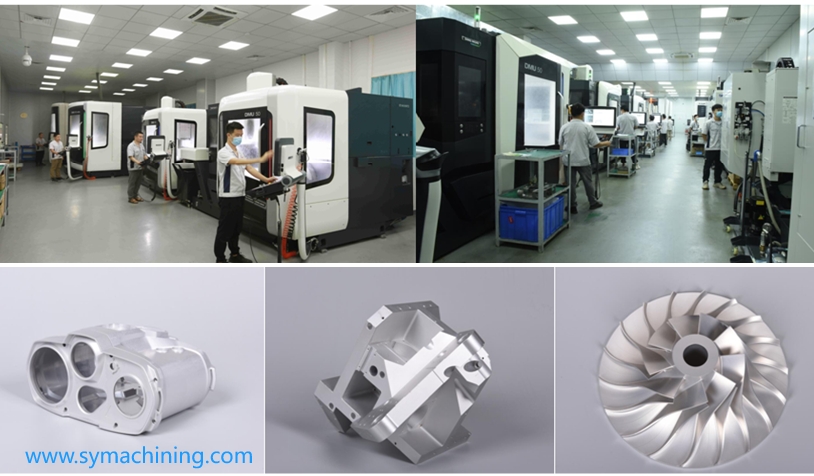
Chinese firms also benefit from regional clusters. For example, Shenzhen integrates aerospace machining with electronics assembly, creating synergistic benefits. Dongguan Sheng Yuan Machining have earned as much trust and repeat business from global aerospace OEMs, with the latest 5-axis CNC machining centers, high-speed milling machines, and automated tool changers, they provided a lot of high quality machined parts for customers in aerospace industry.
Top Aerospace Machining Hubs in China
Not all parts of China are created equal when it comes to aerospace machining. Here are three key regions leading the charge:
Shenzhen & Dongguan
A tech metropolis with unmatched access to CNC talent, electronics suppliers, and rapid prototyping.
Suzhou & Wuxi (Jiangsu Province)
Precision hubs with strong German engineering partnerships. Home to dozens of AS9100-certified factories.
Chongqing
Known for heavy manufacturing, now pivoting to aerospace-grade titanium machining with support from aviation universities.
Each of these cities offers a dense concentration of talent, machinery, and logistics that make them ideal for global sourcing.
Comparing Aerospace Machining in China vs. Southern California
While both regions have earned reputations for aerospace machining, they offer very different value propositions.
Aerospace Machining in Southern California:
- Strong legacy brands and defense contracts
- High labor costs and slower prototyping cycles
- Exceptional quality, often with built-in overhead
Aerospace Machining in China:
- Lower cost, faster delivery, modern equipment
- Increasing compliance with AS9100 and ITAR-equivalent protocols
- Sometimes faces trust or transparency concerns, though rapidly improving
If you’re sourcing for cost-sensitive, high-quality components with aggressive lead times, Advanced Aerospace Machining Services in China might just outshine its Western rival.
Certifications and Quality Control in Chinese Aerospace Shops
Chinese aerospace machining providers are aggressively pursuing international certifications, including:
- AS9100D – For aerospace quality management
- ISO 9001 – For general industrial quality systems
- RoHS & REACH – For environmental and material safety
Most leading firms integrate SPC (Statistical Process Control), real-time production dashboards, and traceability protocols to ensure every nut and bolt meets spec. Many also welcome third-party audits, especially from Western clients.
Materials Expertise and Component Types in Aerospace Machining
From lightweight alloys to exotic metals, Chinese shops are machining:
| Material | Common Use |
| Titanium (Ti-6Al-4V) | Engine mounts, brackets |
| Aluminum 7075 | Wing spars, fuselage |
| Inconel 718 | Turbine blades |
| Stainless Steel 17-4PH | Landing gear components |
Component types include:
- Turbine casings
- Fuel system valves
- Structural fasteners
- Avionics enclosures
These parts undergo rigorous NDT (non-destructive testing), often on-site.
Challenges Facing Aerospace Machining Services in China
While the story is largely positive, there are hurdles:
- Intellectual Property Protection – Though improving, some firms still struggle with data handling protocols.
- Language Barriers – Though many staff are English-speaking, technical discussions can sometimes be lost in translation.
- Perception Lag – Despite having equal or better capabilities, Western companies are sometimes hesitant to commit.
Yet, with each passing year, these concerns diminish as Chinese firms demonstrate world-class reliability.
Why Global OEMs Choose Chinese Aerospace Machining Partners
Global brands partner with Chinese aerospace machine shops because:
- Cost savings enable investment in other R&D efforts
- Scalability supports quick production ramps
- Modern quality systems ensure spec adherence
- Logistics networks can support Just-In-Time delivery globally
When done right, the result is a win-win for OEMs and Chinese suppliers alike. Such as the SYM Precision Machining, is a tursted machining supplier in Aerospace Machining Services.
Introduction to SYM Precision Machining
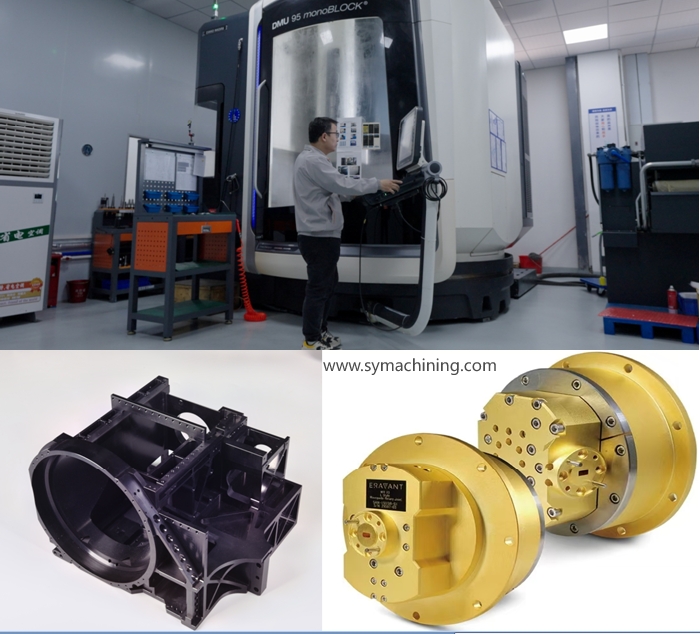
With over a decade of hands-on experience serving the aerospace, defense, and space sectors, SYM stands out as a supplier that combines technical precision with consistent reliability.
What makes SYM a dependable aerospace machining partner?
1.Certified Quality Assurance:
SYM Precision Machining operates under a stringent ISO 9001 and AS9100-certified quality management system, ensuring every aerospace part meets rigorous international standards. Their inspection protocols include 100% dimensional checks, real-time CMM reporting, and full traceability documentation.
2. Expertise in Aerospace-Grade Materials
From machining tough alloys like Inconel and titanium to aerospace-grade aluminum and stainless steels, SYM has a deep understanding of how different materials behave under tight tolerance demands. Their experience with thin-walled parts, weight-saving designs, and complex geometries makes them a go-to supplier for critical aerospace components.
3. Investment in Advanced Technology
SYM’s workshop is equipped with the latest 5-axis CNC machining centers, high-speed milling machines, and automated tool changers. Their use of Japanese and German equipment ensures parts are produced with micron-level accuracy and repeatability, even for the most demanding aerospace applications.
4. Customer-Centric Engineering Support
One of SYM’s greatest strengths is its engineering collaboration model. Their bilingual engineering team works closely with customers from DFM (Design for Manufacturability) analysis through final delivery. Whether it’s a one-off prototype or a high-volume production run, they provide transparent communication and proactive technical advice every step of the way.
5. Fast Turnarounds and Flexible MOQs
Unlike many aerospace suppliers that only focus on large-scale production, SYM offers flexibility with no minimum order quantities. This makes them ideal for prototyping, pilot runs, and spare part machining—while still capable of ramping up quickly for mass production when needed.
6. Proven Track Record
SYM has delivered aerospace components to customers across North America, Europe, and Southeast Asia. Their parts have been used in commercial aircraft systems, UAV platforms, and satellite components—testifying to their global reach and industry credibility.
SYM Precision Machining has earned its place as a dependable aerospace machining services supplier. Their blend of technological capability, hands-on expertise, and customer-first service model makes them not just a vendor—but a long-term partner for aerospace success.
FAQs About Aerospace Machining Services in China
1. What certifications do Chinese aerospace shops usually hold?
A: Most advanced shops have AS9100D and ISO 9001. Some also possess NADCAP or work with NADCAP-approved vendors.
2.Is communication with Chinese suppliers difficult?
A:Not really. Most use bilingual engineers and cloud-based project tracking tools to stay aligned.
3.How does the pricing compare to U.S. providers?
A:Chinese shops typically offer 30–50% savings on part production, with similar or better quality.
4.Are Chinese aerospace machining firms ITAR compliant?
A:They follow similar standards, though official ITAR certification is typically limited to U.S.-based shops.
5.Can small or prototype runs be done in China?
A:Yes! Many shops specialize in low-volume precision runs before scaling up.
6.What if I need onsite audits or inspections?
A:Leading firms welcome third-party inspections and will share full CMM reports, videos, and samples upon request.
Conclusion: Future of Advanced Aerospace Machining in China
As the skies open wider for aerospace innovation, so too does the global sourcing map. With Advanced Aerospace Machining Services in China proving their mettle in both quality and reliability, the world is finally noticing. Backed by powerful CNC technologies, an unrelenting work ethic, and a hunger for international credibility, China is no longer just catching up—it’s taking the lead.
Related Article:
AS9100 Certified Precision Machining: 7 Powerful Benefits for Aerospace & Beyond
Ultra-Tight tolerance machining (±0.001mm) | Expert Guide