Introduzione
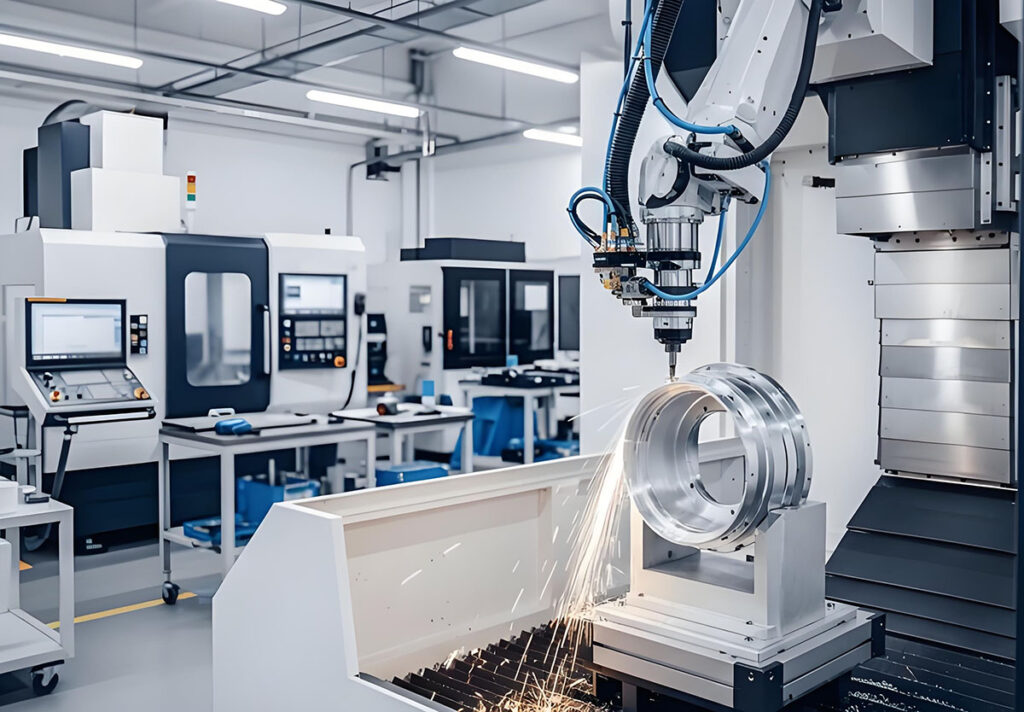
In the world of manufacturing, material selection is often the deciding factor between a product that endures and one that fails prematurely. For engineers and procurement specialists designing components for harsh environments, AL5083 CNC Machining has emerged as a gold standard. This aluminum-magnesium alloy is renowned not just for its strength, but for its exceptional resistance to the most corrosive element on earth: saltwater.
When we talk about aluminium CNC machining, many think of standard 6061 aluminum. However, AL5083 sits in a different league. It is the go-to material for the marine industry, chemical processing, and even cryogenic applications.
This article delves deep into the specifics of AL5083 CNC machining, exploring why it is considered a “marine-grade anti-rust alloy,” the challenges it presents to machinists, and how to find a reliable aluminum machining service to produce high-quality aluminum precision parts.
What is AL5083 Aluminum?
AL5083 is a non-heat-treatable alloy belonging to the 5xxx series of aluminum. Its primary alloying element is magnesium (typically 4.0% to 4.9%), combined with manganese and chromium. This specific composition gives it a unique set of properties that distinguish it from other popular grades like 6061.
Chemical Composition Highlights
| Element | Percentage | Function |
| Magnesium (Mg) | 4.0 – 4.9% | Provides high strength and superior corrosion resistance, especially in seawater |
| Manganese (Mn) | 0.4 – 1.0% | Improves toughness and fatigue strength |
| Chromium (Cr) | 0.05 – 0.25% | Enhances corrosion resistance and stabilizes grain structure |
| Iron (Fe) | ≤ 0.40% | Controlled impurity |
| Silicon (Si) | ≤ 0.40% | Controlled impurity |
The “Marine-Grade” Advantage: Unmatched Corrosion Resistance
The most compelling reason to choose AL5083 over other alloys is its “marine-grade” status. In environments exposed to seawater, salt spray, or aggressive chemicals, AL5083 outperforms many of its counterparts.
Why is it so resistant?
- The Magnesium Effect: The high magnesium content allows AL5083 to form a highly stable and self-healing oxide layer on its surface. This layer acts as a barrier, preventing pitting and intergranular corrosion.
- Non-Heat Treatable Stability: Because it doesn’t rely on heat treatment for strength (it is strain-hardened), it avoids the micro-structural changes that can make other alloys susceptible to stress corrosion cracking (SCC) in marine environments.
- Resistance to Seawater: AL5083 has excellent resistance to seawater and marine atmospheres, making it ideal for shipbuilding and offshore structures.
Important Note: While Aluminum 6061 is often used in aluminum machining near me searches for general engineering, it cannot match the long-term performance of AL5083 in saltwater. If a component touches seawater or is subjected to high humidity and chemicals, substituting 6061 for 5083 is a high-risk decision.
Key Properties of AL5083 for Designers
Before sending your CAD files to an aluminum precision parts manufacturer, it is crucial to understand the mechanical behavior of this material.
Mechanical Properties Overview
| Proprietà | Value (Typical) |
| Densità | 2.65 g/cm³ |
| Ultimate Tensile Strength | 275 – 350 MPa |
| Yield Strength (0.2%) | 215 – 250 MPa (H321) |
| Elongation | 10 – 23% |
| Conduttività termica | 121 W/(m·K) |
| Conducibilità elettrica | ~29% IACS |
| Modulus of Elasticity | 71 GPa |
Key Performance Characteristics
- High Strength (Strain-Hardened): In tempers like H321 or H116, AL5083 offers high tensile and yield strength. It maintains its integrity under heavy loads, making it suitable for structural components in ships and offshore platforms.
- Excellent Weldability: Unlike heat-treatable alloys that lose strength in the heat-affected zone (HAZ), AL5083 retains a significant portion (over 90%) of its strength after welding. This is why it is preferred for fabricating large tanks and hulls.
- Cryogenic Performance: Many materials become brittle at low temperatures. AL5083, however, exhibits excellent ductility and toughness even in cryogenic conditions (below -200°C), making it ideal for LNG storage tanks and transport equipment.
- Non-Magnetic: It is non-magnetic, a useful property for electronic and defense applications.
- Good Fatigue Resistance: The alloy shows good resistance to cyclic loading, which is essential for components subjected to vibration and wave action.
The Challenges of AL5083 CNC Machining
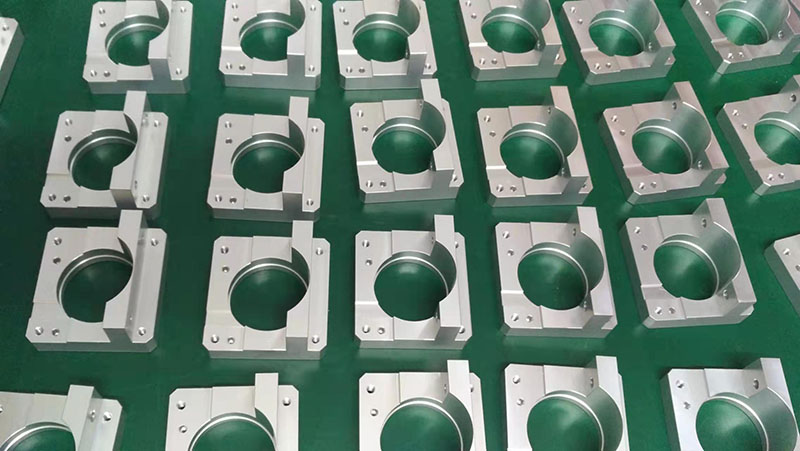
While AL5083 offers incredible benefits in service, it presents specific challenges in the workshop. For any aluminum machining service, understanding the “gummy” nature of this alloy is essential to achieving precision.
Challenge 1: The “Gummy” Factor and Built-Up Edge (BUE)
AL5083 is tough. Its high magnesium content makes it more ductile and “sticky” than 6061. If cut improperly, the material tends to adhere to the cutting edge of the tool, creating a Built-Up Edge (BUE). This can ruin the surface finish and drastically shorten tool life.
Consequences of BUE:
- Scarsa finitura superficiale
- Dimensional inaccuracies
- Premature tool failure
- Increased cutting forces
Challenge 2: Work Hardening
AL5083 can work-harden during machining if feeds and speeds are incorrectly balanced. The material becomes harder at the surface, making subsequent passes more difficult and leading to excessive burrs and tool wear.
Challenge 3: Chip Control
The chips produced during milling tend to be long and stringy rather than breaking cleanly. This requires careful selection of tool geometry (chip breakers) and the use of high-pressure coolant to flush them away efficiently.
Challenge 4: Dimensional Stability
Although AL5083 has minimal distortion during machining due to its stable internal structure, the forces involved require secure clamping to prevent workpiece deformation. Thin-walled sections are particularly susceptible to vibration and deflection.
Optimizing Your AL5083 CNC Machining Process
To produce high-quality aluminum precision parts from AL5083, you cannot simply apply the same parameters used for 6061. Here is how a top-tier aluminum machining service tackles this material.
Selezione dello strumento
| Tool Aspect | Recommendation |
| Tool Material | Carbide (preferred) or polycrystalline diamond (PCD) |
| Rivestimento | TiAlN or TiN to reduce friction and heat |
| Rake Angle | Positive rake angle (large) to reduce cutting forces |
| Chip Breakers | Essential for breaking long chips |
| Edge Preparation | Sharp, honed edges to prevent material adhesion |
Recommended Cutting Parameters
| Parameter | Roughing | Finitura |
| Cutting Speed | 200 – 300 m/min | 250 – 350 m/min |
| Feed Rate | 0.15 – 0.30 mm/rev | 0.08 – 0.15 mm/rev |
| Depth of Cut | 2.0 – 3.5 mm | 0.2 – 1.0 mm |
| Stepover | 50 – 70% of tool diameter | 10 – 30% of tool diameter |
Nota: High cutting speeds help prevent the material from “smearing” and sticking, but must be balanced to avoid excessive heat generation.
Coolant and Lubrication Strategy
- High-Pressure Flood Coolant: This is non-negotiable. High pressure (30–50 bar) is required to evacuate chips from the cutting zone and dissipate the heat generated.
- Coolant Type: Water-soluble oils or synthetic coolants with good lubricity.
- Through-Spindle Coolant: Recommended for deep-hole drilling and internal machining operations.
- Mist Cooling: May be used for light finishing operations but provides less cooling capacity.
Workholding Best Practices
| Workholding Method | Applicazione |
| Vise Clamping | For standard rectangular blocks |
| Vacuum Chuck | For thin, flat parts |
| Fixture Plates | For complex, multi-axis parts |
| Adhesive Workholding | For parts that cannot be clamped |
| Tombstone Fixtures | For high-volume production |
AL5083 vs. 6061: A Comprehensive Comparison
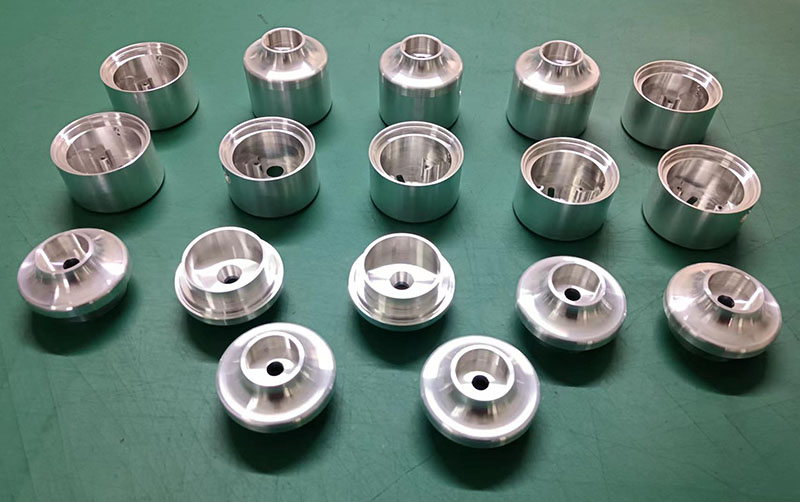
The debate between 5083 and 6061 is common in the industry. While 6061 is often a favorite for general aluminium CNC machining due to its ease of cuttability, 5083 is chosen for specific applications.
Tabella di confronto
| Caratteristica | AL5083 | AL6061 |
| Resistenza alla corrosione | Excellent (Marine-Grade) | Good (General Purpose) |
| Machinability Rating | ~30% (Fair) | ~80% (Excellent) |
| Heat Treatable | No (Work-Hardening) | Yes (T6 Heat-Treatable) |
| Saldabilità | Excellent (Retains strength in HAZ) | Good (Requires re-heat treatment) |
| Strength (Yield) | 215 – 250 MPa | 240 – 280 MPa (T6) |
| Costo | ~10-25% Higher | Più basso |
| Applicazioni tipiche | Marine, Cryogenic, Chemical | Structural, General Engineering |
When to Choose Each Alloy
Choose AL5083 when:
- Component will be exposed to seawater or salt spray
- Operating temperature is very low (cryogenic)
- Long-term corrosion resistance is critical
- Welding is required and strength retention is important
Choose AL6061 when:
- Cost is a primary concern
- Application is in dry, non-corrosive environments
- Heat-treat the alloy to achieve maximum strength
- You need high machinability and productivity
Quality Control in AL5083 CNC Machining
For any aluminum machining service producing aluminum precision parts, quality control is not a final step but a comprehensive system that begins with material verification and continues through every stage of manufacturing.
Incoming Material Inspection
| Inspection Aspect | Metodo |
| Composizione chimica | Spectrometer analysis |
| Proprietà meccaniche | Tensile testing |
| Durezza | Brinell or Rockwell test |
| Surface Condition | Visual inspection |
| Dimensions | Measurement with calibrated tools |
In-Process Inspection
- Ispezione del primo articolo (FAI): Complete verification of the first part against all drawing requirements.
- Statistical Process Control (SPC): Monitoring key dimensions during production.
- Probing Systems: In-machine verification of critical features.
- Surface Finish Measurement: Profilometer testing to verify Ra values.
Final Inspection Methods
| Metodo | Applicazione |
| Coordinate Measuring Machine (CMM) | Complex 3D geometries |
| Comparatori ottici | 2D profiles and contours |
| Surface Roughness Testers | Finish quality verification |
| Prove non distruttive (NDT) | Crack detection and porosity inspection |
Quality Documentation
- Material certificates
- Inspection reports
- Rapporti di ispezione del primo articolo (FAI)
- Certificate of Conformance (CoC)
- Dimensional inspection records
Applications of AL5083 CNC Machined Parts
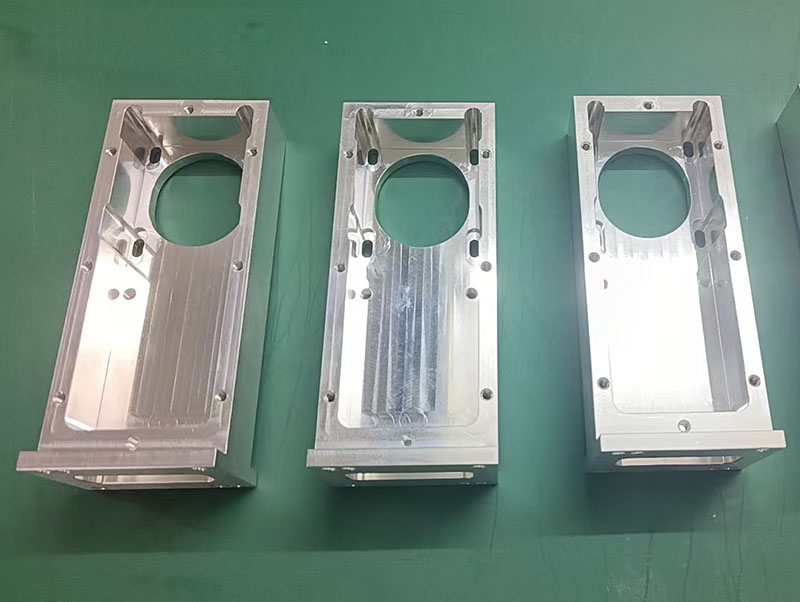
The unique combination of corrosion resistance and strength makes AL5083 the material of choice for demanding industries.
Marine & Offshore Industry
| Applicazione | Descrizione |
| Ship Hulls | Plating and structural components |
| Decks and Bulkheads | Load-bearing structural elements |
| Ballast Tanks | Corrosion-resistant tank components |
| Offshore Platforms | Structural members and fittings |
| Propeller Shafts | High-strength rotating components |
| Deck Machinery | Winches, capstans, and mooring equipment |
Cryogenic Systems
| Applicazione | Descrizione |
| LNG Storage Tanks | Large storage vessels for liquefied gas |
| Piping Flanges | Connectors for cryogenic piping |
| Cryogenic Valves | Flow control components |
| Support Structures | Framework for storage tanks |
| Transport Vessels | LNG transport ship components |
Chemical Processing
| Applicazione | Descrizione |
| Storage Tanks | Corrosion-resistant containment |
| Piping Systems | Chemical transfer lines |
| Reactor Vessels | Chemical processing equipment |
| Heat Exchangers | Thermal management components |
| Fittings and Couplings | Pipe connection hardware |
Defense and Aerospace
| Applicazione | Descrizione |
| Vehicle Armor | Lightweight protective panels |
| Naval Radar Housings | Corrosion-resistant enclosures |
| Aircraft Components | Structural elements |
| Military Equipment | Durable field equipment |
Transportation
| Applicazione | Descrizione |
| Trailer Bodies | Lightweight cargo structures |
| High-Speed Ferries | Marine vehicle construction |
| Railcar Undercarriages | Rail transportation components |
| Truck Components | Corrosion-resistant hardware |
Selecting the Right Aluminum Machining Service
For organizations searching for an aluminum machining service or “aluminum machining near me” to produce aluminum precision parts, selecting the right partner is essential.
Key Selection Criteria
| Criterion | What to Look For |
| Competenza sui materiali | Demonstrated experience with AL5083 specifically |
| Equipment Capabilities | Modern multi-axis CNC machines |
| Quality System | ISO 9001 or AS9100 certification |
| Tooling Knowledge | Understanding of specialized tooling for AL5083 |
| Lead Times | Realistic delivery commitments |
| Technical Support | Engineering assistance for manufacturability |
| Garanzia di qualità | Comprehensive inspection capability |
| References | Similar projects completed successfully |
Questions to Ask Potential Suppliers
- How much experience do you have specifically with AL5083 CNC machining?
- What cutting tools and parameters do you recommend for this material?
- How do you manage chip control and built-up edge issues?
- What quality control procedures do you follow?
- Do you have experience with parts similar to mine?
- What is your typical lead time for prototype and production orders?
- Can you provide references from marine or related industries?
Benefits of Local Suppliers
When searching for aluminum machining near me, consider these advantages:
| Advantage | Benefici |
| Reduced Shipping Costs | Lower logistics expenses |
| Faster Delivery | Shorter transit times |
| Easier Communication | Same time zone, easier visits |
| Collaborative Relationships | Face-to-face problem solving |
| Responsiveness | Quicker response to changes |
Cost Considerations in AL5083 CNC Machining
The cost of AL5083 CNC machining reflects the complexity of the process and the value of the material.
Cost Factors
| Fattore | Impatto sui costi |
| Costo del materiale | AL5083 is ~10-25% more expensive than 6061 |
| Tooling Cost | Specialized carbide tools with coatings |
| Cutting Time | Lower speeds and feeds increase machining time |
| Tool Life | Shorter tool life increases tooling costs |
| Quality Requirements | Tight tolerances require more inspection time |
| Volume | Higher volumes reduce per-part cost |
| Complexity | Complex geometries increase setup and programming time |
Cost-Saving Strategies
- Design for Manufacturability: Design parts for efficient machinability.
- Tolerance Management: Specify only critical tolerances
- Material Optimization: Use near-net shapes when possible
- Toolpath Optimization: Use CAM software to minimize cycle time
- Bulk Ordering: Combine multiple parts into one production run
Conclusione
AL5083 CNC Machining is a specialized process that yields some of the most durable and reliable aluminum precision parts available on the market. While it may not be as easy to machine as 6061, the investment in proper tooling and expertise pays dividends in the lifespan of the final product.
Its title as a “Marine-Grade Anti-Rust Alloy” is not just marketing; it is a testament to a material that resists the relentless attack of seawater and harsh chemicals. For engineers designing for the ocean or extreme environments, and for those seeking a partner in aluminium CNC machining, AL5083 represents the intersection of structural integrity and longevity.
Choose a capable aluminum machining service that understands the intricacies of this alloy, and it will build your components to last—even when the environment is against them. Whether you are searching for aluminum machining near me or evaluating suppliers globally, the principles outlined in this article will guide you toward successful AL5083 CNC machining outcomes.
Articoli correlati: articoli di riferimento
AL7075 CNC Machining – High-Strength Alloy Guide
AL6061 CNC Machining – Properties, Tips & Applications
Servizi di anodizzazione dell'alluminio | Anodizzazione a strato duro e a colori