Introduzione
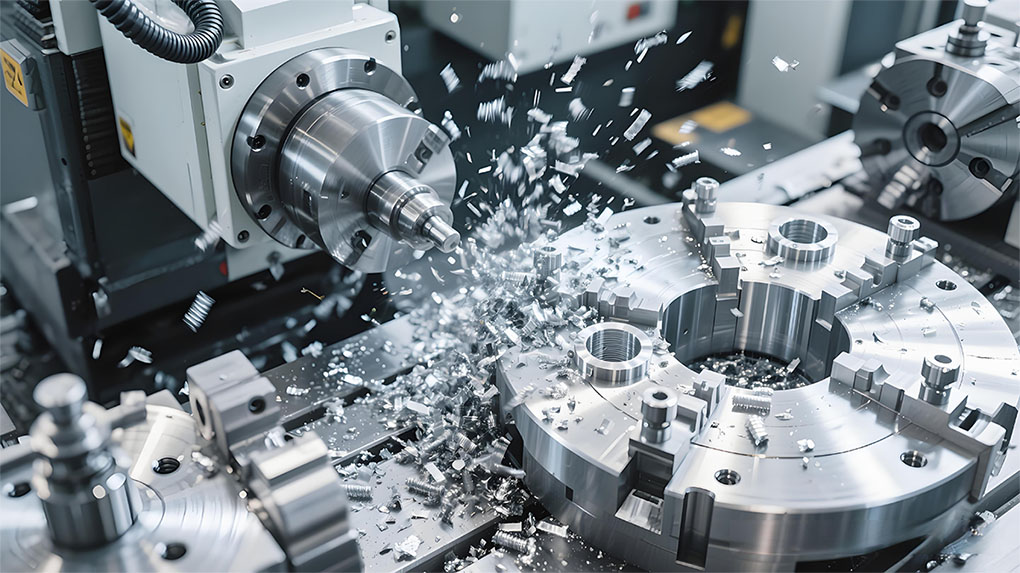
Walking into an aluminum selection problem? You’re not alone. With dozens of alloys available, each offering different trade-offs between strength, machinability, corrosion resistance, weldability, and finish quality, choosing the wrong one can cost you time, money, and performance. Whether you’re looking for aluminum cnc milling service, aluminum precision machining, o precision aluminum parts, this guide helps you narrow down the right aluminum alloy for your CNC machining project.
Aluminum is one of the most popular materials for CNC machining due to its low density, good mechanical properties, high thermal and electrical conductivity, and excellent corrosion resistance . Its machinability makes it a cost-effective choice for both prototypes and production runs. However, with so many aluminum alloys available, selecting the right one requires understanding their unique properties and trade-offs.
Why Aluminum for CNC Machining?
Aluminum alloys are widely favored in CNC machining for several compelling reasons:
- Excellent machinability– Aluminum can be machined 3–4 times faster than steel or titanium, significantly reducing cycle times .
- Good strength-to-weight ratio– Ideal for aerospace, automotive, and portable applications.
- Resistenza alla corrosione– Many aluminum alloys naturally form a protective oxide layer.
- Thermal and electrical conductivity– Suitable for heat sinks and electronic housings.
- Cost-effectiveness– Aluminum machining rates typically range from $0.50 to $3.00 per minute .
Il cost of machining aluminum is generally lower than steel or titanium due to faster cutting speeds, lower cutting forces, and longer tool life. Aluminum requires approximately 30% of the cutting force needed for steel, and its thermal conductivity (80–230 W/m·K) is significantly higher than steel’s (15–50 W/m·K), improving heat dissipation .
Quick Comparison Table
| Alloy | Il migliore per | La forza | Lavorabilità | Resistenza alla corrosione | Saldabilità | Finish Quality |
| AL6061 | General purpose | Medio | ⭐⭐⭐⭐ | Very good | Eccellente | Buono |
| AL7075 | High-stress / aerospace | Very high | ⭐⭐ | Fair | Povero | Fair |
| AL5083 | Marine / harsh environments | Medio | ⭐⭐ | Outstanding | Eccellente | Buono |
| AL2024 | Fatigue resistance | Alto | ⭐⭐⭐ | Poor (needs coating) | Povero | Fair |
| AL6082 | Structural / heavy duty | Medium-high | ⭐⭐⭐⭐ | Very good | Eccellente | Buono |
| AL5052 | Forming / electronics | Medium-low | ⭐⭐⭐ | Eccellente | Buono | Eccellente |
| AL6063 | Architectural / visible | Low-medium | ⭐⭐ | Very good | Buono | Eccellente |
| AL6060 | Extrusions / decorative | Basso | ⭐⭐ | Very good | Buono | Eccellente |
Decision Framework: How to Choose the Right Alloy
1️⃣ How Strong Does Your Part Need to Be?
Strength requirements should be your primary consideration when selecting an alloy for aluminum for cnc machining:
| Strength Level | Alluminio Alloy |
Ultimate Tensile Strength (ksi) | Yield Strength (ksi) | Hardness (HRB) | Applicazioni tipiche |
| Very high strength (near steel) | AL7075 | 67–78 | 54–73 | 150 | Aerospace fittings, missile parts, high-stress structural components, rock climbing equipment |
| High strength with fatigue resistance | AL2024 | 68 | 47 | 120 | Aircraft fuselage, wing tension members, transport vehicle parts, structural applications |
| Medium-high structural strength | AL6082 | 43–50 | 38–43 | 95-100 | Bridges, towers, trusses, heavy-duty structural components, marine construction |
| Medium strength (most common) | AL6061 | 45 | 40 | 95 | General-purpose parts, chassis, bicycle frames, valves, computer parts, automotive components |
| Low to medium strength | AL5052 | 33 | 28 | 70–75 | Sheet metal parts, electronic enclosures, automotive panels, marine hardware |
| Low to medium strength (decorative) | AL6063 | 27–35 | 21–31 | 74–80 | Architectural profiles, window frames, decorative visible components, furniture |
| Low to medium strength (extrusions) | AL6060 | 25–30 | 18–25 | 70–78 | Extruded profiles, decorative trim, architectural components, consumer products |
2️⃣ Will Your Part Be Exposed to Moisture, Salt, or Chemicals?
Corrosion resistance requirements significantly impact alloy selection:
| Exposure Condition | Alloy Recommendation |
| Marine or outdoor harsh environment | AL5083 or AL5052 |
| Mild outdoor exposure | AL6061 or AL6082 (with anodizing) |
| Indoor or coated environment | AL7075 or AL2024 (must coat AL2024) |
3️⃣ Does Your Part Need Welding?
Weldability is a critical factor in many applications:
| Welding Requirement | Alloy Recommendation |
| Extensive welding required | AL5083, AL6061, or AL6082 |
| Occasional welding | AL5052 or AL6063 |
| No welding needed | Any alloy works, including AL7075 and AL2024 |
4️⃣ Does Your Part Need a Beautiful Anodized Finish?
Finish quality requirements can narrow your choices:
| Finish Requirement | Alloy Recommendation |
| Decorative, architectural anodizing | AL6063 or AL6060 |
| Functional anodizing (Type III hardcoat) | AL7075 or AL6061 |
| No special finish needed | Any alloy works |
5️⃣ Does Your Part Require Complex Forming or Bending?
Formability requirements may eliminate certain alloys:
| Forming Requirement | Alloy Recommendation |
| Sheet metal forming, bending, drawing | AL5052 |
| Complex extrusions | AL6060 or AL6063 |
| Machined from solid block | Any alloy works |
Cost Implications of Machining Aluminum
Several factors influence the cost of machining aluminum:
- Selezione del materiale: Material cost typically accounts for 15–25% of total machining cost. 6061-T6 offers the best balance of price and machinability, while 7075-T6 costs more and increases tool wear .
- Parte Complessa: Part complexity is often the largest cost driver (30–50%). Tight tolerances, thin walls, and deep cavities increase machining time .
- Tempo di lavorazione: CNC machine hourly rates range from $30–$150/hour. High-precision parts require slower feed rates and additional inspection steps .
- Setup and Programming: Setup and CNC programming represent 10–30% of total cost and have the greatest impact on low-volume orders .
- Production Volume: Higher quantities spread setup costs and enable material discounts, significantly reducing per-part cost .
- Post-Machining Operations: Secondary processes like anodizing, sandblasting, and polishing add 5–20% to total cost .
Optimization Tips to Reduce Costs
- Choose 6061-T6 when possible– Offers the best balance of cost and machinability.
- Use 7075-T6 only when structurally necessary– Increases tool wear and machining time by 15–25% .
- Apply tight tolerances only to critical features– Typically only 20–30% of features require strict tolerances.
- Reduce setups and machining time– Design parts for fewer setups to save 10–20% of total cost .
- Strategically plan batch sizes– Moving from prototype to small-batch production can reduce unit cost by 30–70% .
Matching Alloys to CNC Processes
1.Aluminum CNC Milling
Aluminum CNC milling is versatile across all alloys, but some are better suited than others:
- 6061: Excellent for milling with high feed rates and good surface finish
- 7075: Good for milling but requires sharp tools and proper coolant
- 6082: Good for milling with high removal rates
- 5052: Good for milling but may require higher speeds
2.Aluminum CNC Turning Parts
Per aluminum CNC turning parts, machinability is paramount:
- 6061: Excellent for turning with good chip control
- 2024: Good for turned parts requiring high strength
- 6082: Good for structural turned components
3.Aluminum Precision Machining
Per aluminum precision machining requiring tight tolerances:
- 6061: Preferred for general precision work
- 7075: Suitable for high-strength precision parts
- MIC 6: Best for stable, high-tolerance plates
Expert Guidance at Symachining
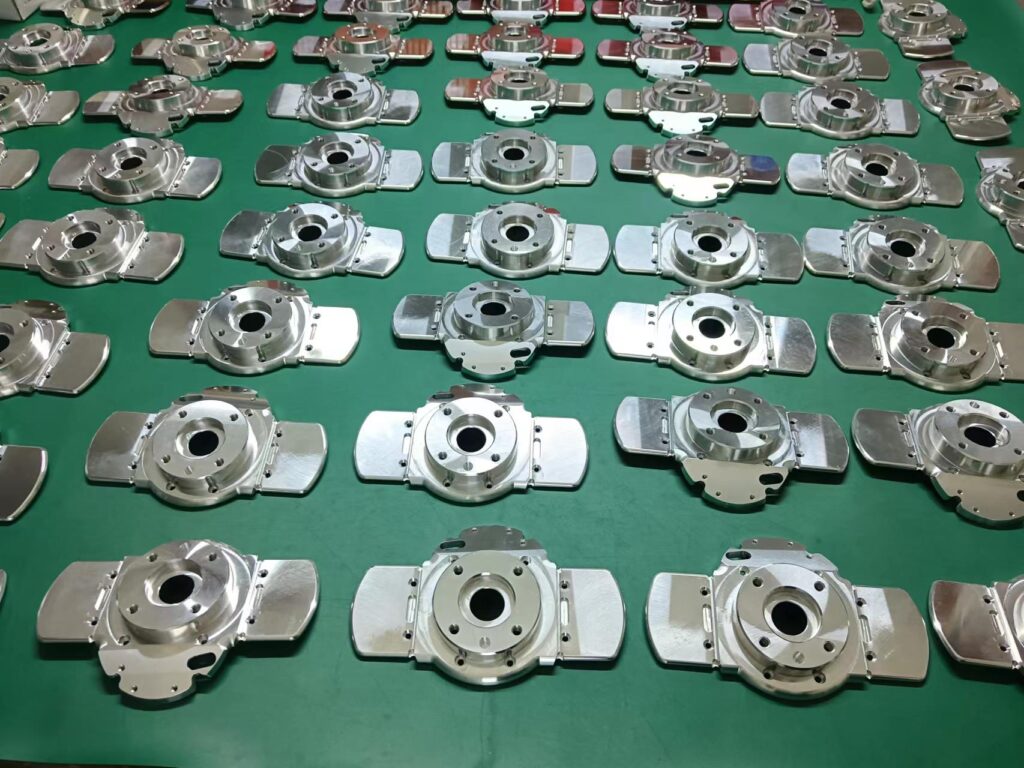
Choosing the right aluminum alloy is critical for project success. With our expertise in aluminum precision machining e aluminum machining service, Symachining.com can help you select the perfect alloy for your specific application.
Our comprehensive aluminum cnc milling service covers all major alloys, and our engineering team provides free DFM (Design for Manufacturing) analysis to optimize your parts for cost and performance. We offer transparent cost breakdowns and expert guidance to ensure your project succeeds.
Contact us today to discuss your aluminum parts cnc machining requirements and get expert recommendations tailored to your application.
Frequently Asked Questions
1. Is aluminum easy for CNC machining?
Yes, aluminum is one of the easiest metals for CNC machining. Its low hardness, excellent machinability, and high thermal conductivity allow cutting speeds 3–4 times faster than steel. Tool wear is typically 30–50% lower than with harder metals, and surface finishes are consistently high quality .
2.Which aluminum alloy is strongest?
AL7075-T6 is the strongest common aluminum alloy, with an ultimate tensile strength of 67–78 ksi. It is used in aerospace and high-stress applications where maximum strength is required .
3.Which aluminum alloy is most corrosion-resistant?
AL5083 and AL5052 offer the best corrosion resistance, making them ideal for marine and harsh environments .
4.Which aluminum alloy machines best?
AL6061 offers the best balance of machinability and strength, with a machinability rating of 170–300% . It produces consistent chips and excellent surface finishes.
5.What is the cheapest aluminum alloy to machine?
AL6061-T6 is generally the most cost-effective alloy for CNC machining due to its excellent machinability, lower material cost, and reduced tool wear .
6.Can aluminum be anodized after machining?
Yes, most aluminum alloys can be anodized. AL6063 and AL6060 offer the best anodizing quality for decorative finishes, while AL7075 and AL6061 are suitable for Type III hardcoat anodizing for functional applications.
Conclusione
Selecting the right aluminum alloy for CNC machining requires balancing strength, machinability, corrosion resistance, weldability, and finish requirements. While 6061 serves as an excellent general-purpose choice, specialized applications may require the high strength of 7075, the corrosion resistance of 5083, or the aesthetic finish of 6063.
Il cost of machining aluminum varies significantly based on alloy selection, part complexity, tolerances, and production volume. Understanding these factors can help you optimize your design for cost-effectiveness without compromising performance.
For expert guidance and professional aluminum cnc milling service, contact Symachining.com. Our experienced team can help you navigate alloy selection, optimize your designs, and deliver high-quality precision aluminum parts for your application.
Deep Dive into Each Alloy
Want to learn more? Check out our complete guides:
- AL6061 CNC Machining – Properties, Tips & Applications →
- AL7075 CNC Machining – High-Strength Alloy Guide →
- AL5083 CNC Machining – Marine-Grade Anti-Rust Alloy →
- AL2024 CNC Machining – High Fatigue Resistance Alloy →
- AL6082 CNC Machining – Structural High-Strength Alloy →
- AL5052 CNC Machining – Forming & Fatigue Resistance →
- AL6063 CNC Machining – Extrusion & Surface Finish Specialist →