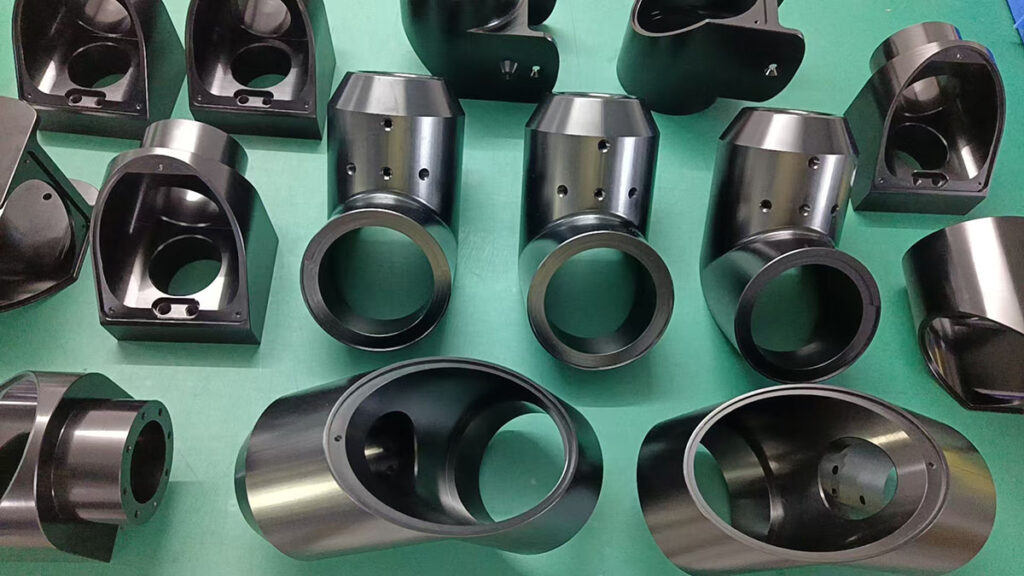
From the customer complaint about the first prototype machining set last year to the signing of a new order for 5 sets of machined parts in July this year, how did we provide our customers with satisfactory precision machining solution? Please let me explain in detail.
Receiving New Machining RFQ
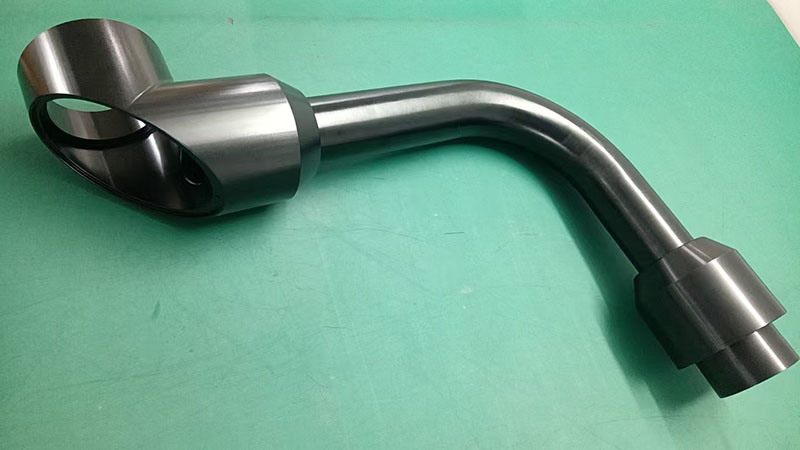
June 25, 2026. We received an inquiry from a Swiss customer regarding some precision parts we had made last year, including one aluminum bent tube product along with three other complex precision parts. If you have read our previous articles, you may recall that this bent tube had previously led to a customer complaint, and we even compensated the customer for the cost of the goods.
Now the customer has come back to us again, which shows a great deal of trust in us. No matter what, we must do our utmost to provide the customer with a high-quality solution.
Searching for a Smarter Precision Machining Solution
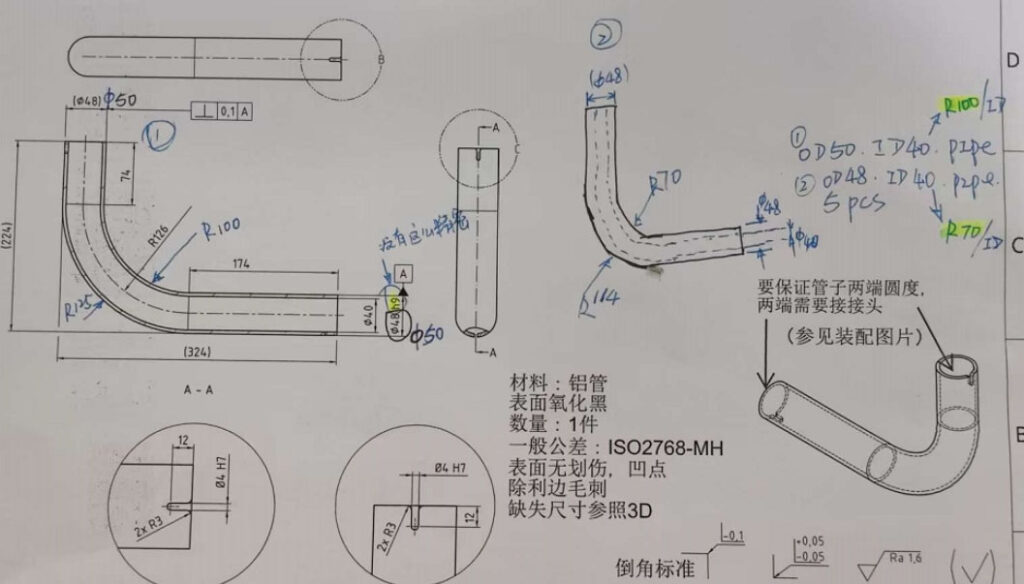
The Bent Tube
The first challenge was the bent tube.
Quantity: just 1 piece. Dimensions: completely non-standard. If we wanted to open a new mold, the cost would be sky-high—and worse, almost no factory would even take the job for a single piece.
I called around. A lot of tube bending shops. Most of them went silent the moment I said “one piece.”
But I didn’t give up. Through those conversations, I learned something useful: some shops had existing molds with specifications close to what we needed—though the bending radius and tube diameter weren’t an exact match.
So I sat down, drew two alternative sketches based on what I found, and sent them to the customer. I asked: Which option works better for your assembly? I also suggested increasing the order to 5 pieces to make the cost workable, and gave them a full breakdown of bending, machining, and surface treatment fees.
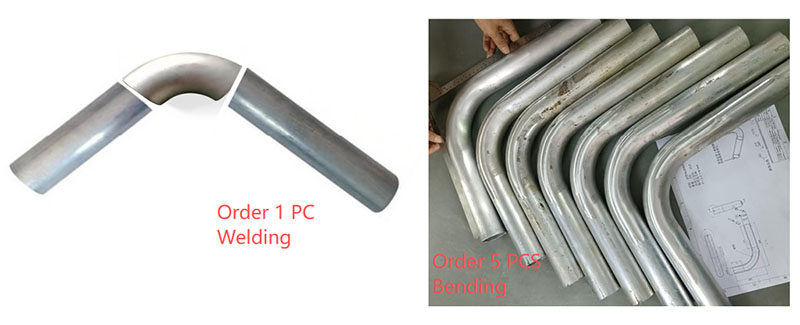
The two existing sizes of the bending pipe molds
The good news? The price per piece went up only 17% compared to last year’s single-piece run (welding+machining)—far cheaper than custom tooling.
The customer replied the very same day. They chose to keep the tube size as per their drawing, and allowed us to use the existing mold’s bending radius.
Just like that, the first hurdle was cleared.
The Three Complex Parts
Now came the other three parts. These were tricky.
Last time, we machined them with horizontal CNC milling and multiple clampings. The results weren’t great—one part even went out of tolerance, and we had to send a replacement. The customer accepted it, but I knew we could do better.
This time, I sat down with our engineering and production teams. We reviewed every angle—literally. And we made a decision: let’s use Servicios de mecanizado de precisión CNC de 5 ejes for these three parts.
Why?
- Fewer clampings means less room for error.
- Tighter geometric tolerances—critical for assembly.
- Better surface finish—no visible lines or mismatches.
We quoted both 1-piece and 5-piece options, giving the customer full flexibility. Then we waited.
Days passed. I kept busy with other work, but that project was always at the back of my mind.
Then, on July 15, 2026, the PO arrived. 5 sets. 26 drawings.
It wasn’t a huge order by volume, but to me, it was huge in meaning. Because it proved that trust, once broken, could be rebuilt—with honesty, hard work, and a better precision machining solution.
The Real Work Begins After the Order
En SYM Mecanizado de precisión, getting the order is not the finish line—it’s the starting point. As a project coordinator, my job is far from over.
Let me walk you through what really happens behind the scenes.
First, the drawings
Most of our production team doesn’t read English. So we personally go through every drawing—translate material specs, heat treatment, surface roughness, tolerance requirements, and any special technical notes. We also add extra instructions the customer mentioned during calls, like color consistency across all parts, assembly fit notes, and mating component details.
Only after everything is clearly annotated in Chinese do we pass it to production. This might seem like extra work, but it’s the only way to ensure everyone on the shop floor understands exactly what we’re making. I’ve been doing this for over 20 years, and I train every new team member to do the same.
Then, daily production follow-up
Every morning, after replying to customer emails, we check our production system to see where each part stands. Then we walk to the shop floor—actually look at the machines, talk to the operators, verify the progress.
If we see a delay, we talk to the production supervisor immediately. If a part shows a slight deviation during machining—detected by the operator or our IPQC—we stop, take photos, and email the customer right away. We don’t move forward without their approval. If they say no, we scrap it and start over.
This kind of transparency isn’t easy, but it’s what sets advance precision machining apart from the rest.
And our communication doesn’t stop there. We send progress reports, quality feedback, pre-shipment photos, packing lists, commercial invoices, tracking numbers—and after delivery, we follow up to make sure everything arrived safely (packaging effectively for precision machined parts) and works as expected.
That’s the daily reality of being a CNC machining shop that truly cares.
A Final Thought – From the Heart
I know this story isn’t glamorous. It’s about mistakes, late nights, phone calls that go nowhere, and drawings that take hours to translate. But it’s real. And that’s exactly why I’m sharing it.
We don’t just offer mecanizado de precisión a medida—we offer peace of mind. We offer honesty when something goes wrong, and we offer solutions that actually work.
Yes, we’ve had complaints. Yes, we’ve made mistakes. But every single one of them made us better.
So to the customer who came back after that complaint—thank you. And to every customer who challenges us, questions us, or pushes us to do better—thank you too. Your feedback is our fuel.
Because at SYM Precision Machining, we believe that advance precision machining isn’t just about tight tolerances or shiny surfaces. It’s about trust. It’s about follow-through. And it’s about never forgetting that behind every drawing is a person who depends on us.
If you’re looking for a reliable partner who treats your project like our own—whether it’s one piece or five sets—we’re here. Let’s talk. Let’s solve. Let’s grow together.
Artículos relacionados:
Análisis del mecanizado de aleaciones a alta temperatura
Por qué el acero inoxidable es el material preferido para los componentes de dispositivos médicos