Introduction: The Invisible Threat of Thermal Runaway
Modern battery packs store immense amounts of electrical energy in tight spaces. High energy density fuels rapid technical advancement across multiple industries. However, concentrated energy creates significant thermal management challenges for hardware engineers.
Thermal runaway represents one of the most critical threats to system stability. The phenomenon occurs when battery temperature increases beyond safe operational limits. Rising heat triggers exothermic internal chemical reactions within individual battery cells. These reactions release additional thermal energy into surrounding battery components. The self-reinforcing process quickly accelerates out of control without proper thermal mitigation.
A single cell failure can rapidly trigger sequential thermal cascading. Neighboring cells absorb excess heat and enter thermal runaway themselves. Destructive chain reactions destroy battery modules and compromise entire system enclosures. Equipment damage, costly operational downtime, and severe security risks follow rapidly.
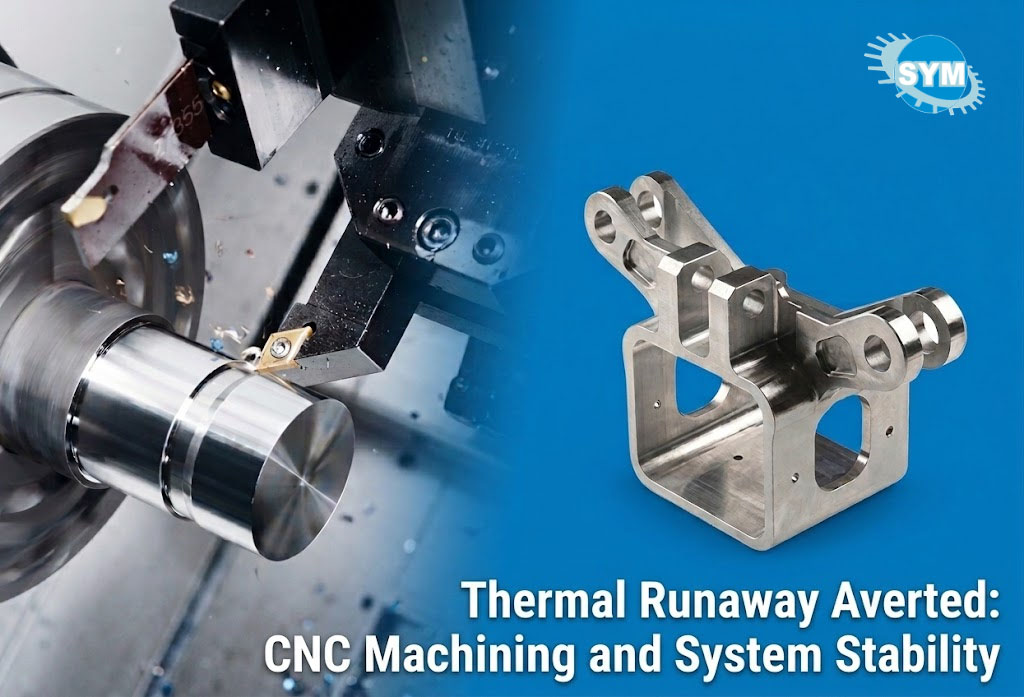
Preventing thermal runaway requires exceptional thermal management and structural design precision. Heat sinks, liquid cooling cold plates, and protective enclosures form critical lines of defense. These components depend heavily on precision manufacturing to function reliably under stress. Modern CNC machining techniques deliver the exact tolerances required for effective heat dissipation.
High-precision machining transforms raw metals into highly efficient thermal management hardware. Master machinists eliminate micro-gaps that disrupt essential conductive pathways. Custom cooling solutions protect high-density energy systems against catastrophic thermal failure.
Understanding the Mechanics of Thermal Runaway
Thermal runaway begins at microscopic contact surfaces within energy storage systems. Lithium-ion batteries function optimally within narrow, strictly controlled temperature ranges. Exceeding maximum operational temperatures destabilizes sensitive internal chemical components.
Microscopic Heat Generation and Chemical Breakdown
Excessive current draw or physical damage causes localized heat accumulation. High internal resistance converts electrical energy into unwanted thermal waste. Elevated temperatures compromise delicate internal separator membranes between active electrodes.
Chemical breakdown releases oxygen gas and flammable organic vapors inside cells. Gaseous expansion creates intense pressure within sealed battery cell housings. Accelerated chemical breakdown generates internal thermal energy faster than ambient surfaces dissipate heat.
The heat generation rate quickly exceeds overall component heat rejection capacity. Internal temperatures surge rapidly past critical thermal thresholds in seconds. Structural failure becomes inevitable when heat dissipation pathways prove inadequate or inconsistent.
Cascading Thermal Failure Across Adjacent Modules
Uncontrolled heat spreads rapidly to surrounding battery cell configurations. Metal structural frames and electrical busbars transfer excess heat into adjacent compartments. Rapid conductive transfer exposes neighboring healthy cells to dangerous operational temperatures.
Module failure propagates across the entire energy storage system housing. Thermal cascading transforms localized cell defects into massive structural events. High-capacity battery packs require robust physical barriers to prevent cross-module heat transfer.
Liquid cooling cold plates actively extract heat from critical surface areas. Precise surface alignment ensures rapid heat absorption before thermal threshold breach. Engineering excellence prevents minor thermal spikes from escalating into catastrophic loss.
Critical Thermal Management Strategies in High-Density Systems
Effective thermal management strategies balance active cooling with passive heat dissipation. Engineers implement multi-layered protection systems to maintain optimal operating temperatures. Modern enclosures combine fluid cooling channels, conductive heat sinks, and structural barriers.
Heat Sink Optimization and Surface Area Engineering
Heat sinks conduct excess thermal energy away from sensitive active electronics. High surface area designs maximize convective thermal transfer into surrounding fluids. Deep cooling fins and intricate pin arrays double available heat dissipation surfaces.
Machining intricate fin arrays requires exact tool positioning and material feed control. Sub-millimeter fin thickness optimizes surface area without adding unnecessary overall weight. Smooth surface finishing reduces micro-turbulences across fluid flow pathways.
Precise fin spacing prevents unwanted boundary layer build-up during fluid circulation. Enhanced convective heat transfer keeps power electronics operating at optimal temperatures. High-density heat sinks provide consistent protection against unexpected current spikes.
Liquid Cooling Cold Plate Technology
Liquid cooling cold plates handle intense heat fluxes in modern battery enclosures. Internal flow channels circulate coolant liquid directly beneath high-heat components. Dynamic fluid movement rapidly absorbs and removes excess heat from battery cells.
Cold plate design relies on complex internal fluid channel geometry. Micro-channel patterns increase fluid surface contact while maintaining low pump pressure drops. Precision manufacturing ensures leak-free internal channels under high dynamic fluid pressures.
Extensive channel surfaces eliminate localized hot spots across critical contact zones. Uniform surface cooling prevents unequal cell degradation across massive battery arrays. Cold plate efficiency depends directly on tight manufacturing tolerances and surface flatness.
Precision CNC Machining: The Key to System Stability
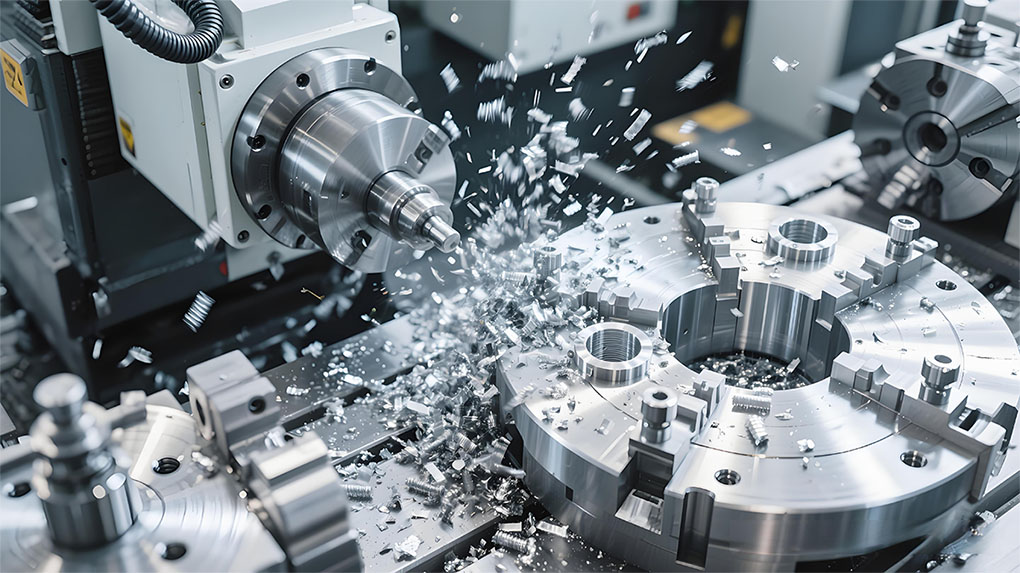
Thermal engineering designs require precise execution during physical production. Theoretical cooling models fail when manufactured parts deviate from strict design dimensions. CNC machining delivers the required accuracy for high-performance thermal components.
Eliminating Air Gaps Through Ultra-Precise Tolerances
Air acts as a thermal insulator that resists rapid conductive heat flow. Microscopic gaps between heat sources and cooling plates block heat transfer. Micro-gaps create localized thermal bottlenecks that accelerate chemical degradation within cells.
Precision CNC milling achieves extreme surface flatness across large component faces. Machining tolerances within microns ensure complete direct contact across mating surfaces. Minimal contact resistance allows seamless thermal transfer into cooling plate assemblies.
Flat surfaces optimize the performance of applied thermal interface materials. Thin thermal grease layers fill remaining micro-imperfections without creating thick insulating barriers. Eliminating air pockets ensures immediate thermal response during sudden temperature spikes.
Material Selection and Advanced Milling Dynamics
Copper and aluminum alloys represent the standard materials for thermal components. Copper offers superior thermal conductivity for high-heat extraction zones. Aluminum provides excellent thermal performance alongside high strength-to-weight performance ratios.
Machining soft thermal metals presents unique manufacturing challenges during dynamic cutting processes. Copper work-hardens quickly and requires precise cutting speeds and feed rates. Standard tools can distort thin cooling fins without dynamic vibration control.
Advanced CNC milling centers maintain precise cutting tool engagement during complex operations. High-speed spindles minimize tool deflection while cutting intricate internal coolant channels. Premium surface finishes eliminate stress concentration points across high-pressure cooling assemblies.
Advanced Machining Solutions for Complex Thermal Components
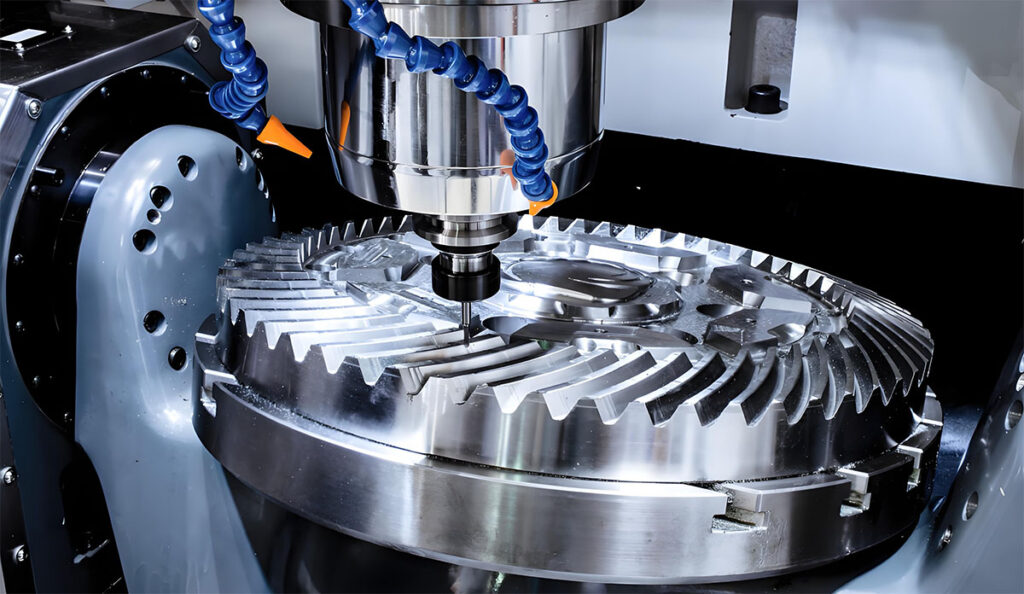
Next-generation energy systems require complex thermal management component designs. Traditional manufacturing methods cannot produce intricate internal cooling channels reliably. Multi-axis CNC machining solves complex geometric challenges with high repeatable accuracy.
5-Axis CNC Milling for Complex Internal Channels
Mecanizado CNC de 5 ejes enables simultaneous tool movement along five distinct motion axes. Cutting tools access complex three-dimensional angles without requiring multiple setup changes. Continuous machining ensures tight geometric alignment across complex liquid cooling channels.
Integrated coolant channels curve smoothly through solid metal block structures. Organic channel curves reduce fluid flow resistance and improve cooling fluid velocity. Smooth internal contours minimize fluid pressure drop across high-capacity cooling circuits.
5-axis machining creates single-piece cooling plates without structural weld joints. Monolithic cold plate construction eliminates potential fluid leak pathways inside sealed battery packs. Structural integrity remains uncompromised under extreme operational vibration and thermal stress.
Micro-Machining and Deep Channel Fin Arrays
Micro-machining technology produces ultra-fine cooling structures at microscopic scale levels. Specialized micro-milling tools create dense micro-channel arrays with microscopic wall thickness. High-aspect-ratio channels drastically expand thermal exchange surfaces within compact spaces.
Precise depth control prevents thin channel walls from collapsing during high-speed cutting operations. Specialized tool coatings minimize friction and prevent material buildup on cutting edges. Micro-machined cold plates deliver maximum cooling performance in space-constrained aerospace applications.
Tight quality control protocols verify micro-channel dimensions across entire production runs. Optical measuring systems confirm exact channel depth and surface roughness profiles. Superior dimensional control guarantees consistent thermal rejection across all production units.
Ensuring Long-Term Quality and Reliability in High-Stress Environments
Thermal management components must perform flawlessly throughout long operational lifespans. Enclosures endure continuous vibration, thermal expansion cycles, and harsh environmental exposure. Rigid quality control measures guarantee long-term component reliability under severe operating conditions.
Geometric Dimensioning and Tolerancing (GD&T) Rigor
Strict GD&T standards govern the manufacturing of critical thermal hardware. Flatness, parallelism, and position tolerances specify exact allowable geometric variance limits. Strict compliance ensures seamless integration during final system assembly operations.
Coordinate Measuring Machines (CMM) verify part geometry against exact 3D design models. Automated probe systems measure thousands of reference points across complex machined surfaces. Precision verification guarantees perfect fitment between heat sinks and battery cells.
Comprehensive dimensional reports track production consistency across high-volume manufacturing batches. Statistical process control identifies minor tool wear before dimensions drift out of tolerance. Rigorous quality oversight guarantees absolute reliability for mission-critical energy applications.
Surface Integrity and Corrosion Resistance
Surface texture directly impacts conductive heat transfer efficiency across contact interfaces. Precision surface grinding and mirror polishing eliminate micro-asperities that trap insulating air. Optimal surface roughness values ensure maximum direct metal-to-metal thermal contact.
Cooling plates require protective surface treatments to resist internal fluid corrosion. Anodizing aluminum surfaces creates thin protective oxide layers without compromising thermal performance. Chemical nickel plating protects copper cold plates against oxidation and aggressive coolant additives.
Flawless surface finishes ensure long-term protective coating adhesion across complex channel geometries. Corrosion protection prevents fluid leakage and internal blockage over thousands of operational hours. Quality surface finishing protects critical thermal systems against unexpected degradation.
How to realize Next-Level Thermal Engineering
Preventing thermal runaway demands absolute manufacturing excellence and deep technical expertise. Advanced thermal designs require precision execution to deliver reliable real-world heat dissipation performance. Modern energy storage systems leave no room for manufacturing flaws or thermal compromises.
SYM Machining brings 30 years of precision CNC machining mastery to high-stakes thermal management applications. Our state-of-the-art facility features advanced multi-axis CNC milling centers and high-precision inspection technology. We specialize in producing complex liquid cold plates, custom heat sinks.
Our experienced engineering team works directly with your technical designers from prototype through full-scale production. We maintain strict geometric tolerances, optimize surface finishes, and ensure total structural integrity across every component. We eliminate thermal bottlenecks and help you build safer, more reliable high-density energy systems.
Protect your critical battery storage installations against thermal runaway before heat issues emerge. Visit SYM Machining today to discuss your precision manufacturing requirements with our thermal machining specialists.
Artículos relacionados:
Servicios de mecanizado CNC de plástico PEEK | Piezas de precisión de alto rendimiento