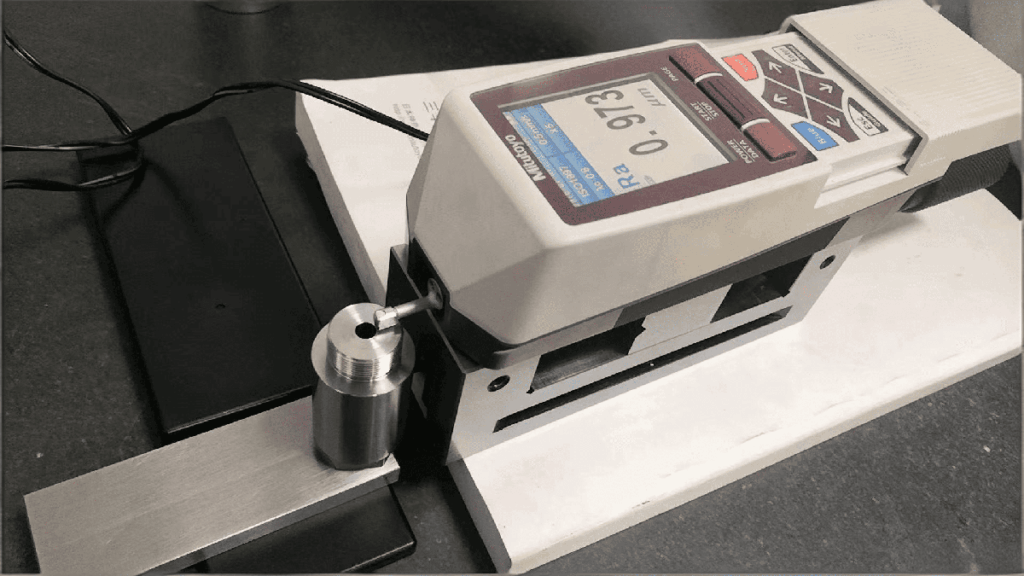
If you’ve ever run your fingers across a machined metal part and noticed that some feel silky smooth while others feel slightly textured, you’ve already experienced surface roughness in a very real way. It’s one of those details that often gets overlooked—until it suddenly becomes critical. Whether you’re designing a precision aerospace component, a medical device, or just trying to get a part to fit and function properly, surface roughness plays a much bigger role than most people expect.
Let’s break it down in a way that actually connects with real-world manufacturing, rather than just textbook definitions.
What Surface Roughness Really Means
At its core, surface roughness refers to the tiny, microscopic peaks and valleys left on a material after machining or processing. Even surfaces that look perfectly smooth to the naked eye are, under magnification, full of irregularities.
These imperfections come from the cutting tool geometry, feed rates, material properties, vibrations, and even environmental conditions during machining. So, surface roughness isn’t just a cosmetic issue—it’s a direct fingerprint of how a part was made.
The most commonly used parameter is Ra (average roughness), which gives a general idea of how smooth or rough a surface is. But in practice, relying only on Ra can sometimes be misleading. Two surfaces can have the same Ra value but behave very differently in terms of friction, wear, or sealing performance.
That’s why experienced engineers don’t just ask, “What’s the Ra?”—they ask, “What does this surface actually need to do?”
Surface Roughness Chart & Typical Values
To put these numbers into perspective, here is a standard surface roughness chart comparing Ra values to common manufacturing processes:
| Ra (µm) | Ra (µin) | Beschreibung | Common Processes |
| 0.025 – 0.05 | 1 – 2 | Mirror finish | Lapping, polishing |
| 0.1 – 0.4 | 4 – 16 | High-quality ground finish | Fine grinding, honing |
| 0.8 – 1.6 | 32 – 63 | Smooth machined finish | Milling, turning (finish pass) |
| 3.2 – 6.3 | 125 – 250 | Standard machined finish | Conventional turning, milling |
| 12.5 – 25 | 500 – 1000 | Rough cut | Sawing, rough machining |
Why Surface Roughness Matters in Real Applications
Surface roughness isn’t just about appearance—it directly affects how a part performs in the field.
Take sealing surfaces, for example. If the surface is too rough, fluid can leak through microscopic gaps. If it’s too smooth, it might not hold lubricant effectively. There’s always a balance.
In moving components like shafts and bearings, surface roughness impacts friction and wear. A rougher surface increases friction and accelerates wear, while an overly smooth surface can lead to poor lubrication retention, causing premature failure.
Then there’s fatigue strength. Small surface irregularities can act as stress concentrators, which means cracks are more likely to initiate under cyclic loading. In high-performance industries like aerospace or automotive, this can be the difference between long-term reliability and unexpected failure.
Even in something as simple as coating or plating, surface roughness matters. A slightly rough surface can improve adhesion, while a surface that’s too smooth may cause coatings to peel or delaminate over time.
How Surface Roughness Is Controlled in CNC Machining
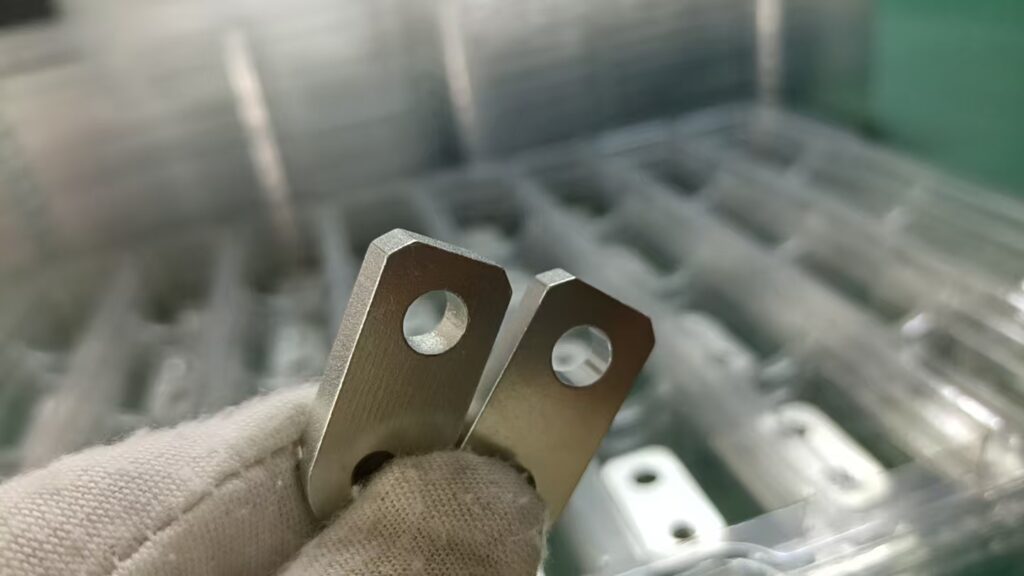
In CNC machining, surface roughness isn’t random—it’s engineered.
Several factors come into play:
Cutting parameters
Feed rate, spindle speed, and depth of cut all influence the final surface. Slower feed rates generally produce smoother finishes, but they also increase machining time and cost. It’s always a trade-off.
Tool geometry and condition
Sharp tools produce cleaner cuts. Worn tools, on the other hand, introduce chatter and irregularities. Even the tool nose radius plays a role in defining the surface profile.
Material properties
Different materials behave differently. Aluminum, for example, is prone to built-up edge, which can worsen surface finish if not controlled properly. Stainless steel can produce work hardening, affecting the cutting process and resulting surface.
Machine stability
Vibration is one of the biggest enemies of surface finish. A rigid setup and stable machine environment are essential for achieving consistent roughness.
Coolant and lubrication
Proper cooling reduces heat and prevents material from sticking to the tool, both of which directly impact surface quality.
In short, achieving the right surface roughness is less about one magic setting and more about balancing multiple variables.
Common Surface Roughness Values (and What They Mean)
If you’ve ever looked at a technical drawing, you’ve probably seen surface finish symbols with values like Ra 3.2 µm or Ra 0.8 µm. But what do these actually represent in practical terms?
- Ra 6.3 – 12.5 µm: Rough machining, typically from standard milling or turning. Suitable for non-critical surfaces.
- Ra 3.2 µm: General-purpose machining finish. Common for many functional parts.
- Ra 1.6 µm: Smooth finish, often used for parts with moderate contact or sealing requirements.
- Ra 0.8 µm and below: Fine finishing, typically achieved with precision machining, grinding, or polishing.
But here’s the key point: lower isn’t always better. Specifying an ultra-smooth finish when it’s not needed can significantly increase cost without adding value.
The Cost Side of machined parts surface roughness
This is where many projects go off track.
Tighter surface finish requirements usually mean:
- Slower machining speeds
- Additional finishing processes (grinding, polishing, lapping)
- Increased inspection and quality control
All of this adds cost—and sometimes a lot of it.
A common mistake is over-specifying surface roughness “just to be safe.” In reality, this can lead to unnecessary expenses and longer lead times.
A more effective approach is to define surface roughness based on function. Ask questions like:
- Does this surface need to seal?
- Is it involved in motion or friction?
- Will it be coated or treated?
If the answer is no, a standard machining finish is often more than sufficient.
Surface Roughness and Design Thinking
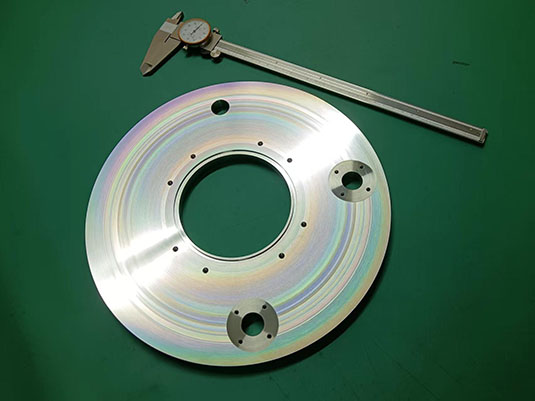
Good designers don’t treat surface roughness as an afterthought—they integrate it into the design from the beginning.
For example, if a part requires a very fine finish in a specific area, it’s often better to localize that requirement rather than applying it to the entire component. This reduces cost and simplifies manufacturing.
Another consideration is accessibility. Some geometries make it difficult to achieve fine finishes, especially in deep cavities or tight corners. Designing with manufacturability in mind ensures that the specified roughness is actually achievable.
There’s also a growing trend toward functional surface engineering—intentionally designing surface textures to achieve specific outcomes, like improved lubrication retention or reduced drag.
Measurement: How Roughness Is Verified
Specifying surface roughness is one thing—verifying it is another.
The most common method involves a contact profilometer, which uses a stylus that moves across the surface and records its profile. Non-contact methods, like optical measurement systems, are also becoming more common, especially for delicate or highly polished surfaces.
However, measurement isn’t always straightforward. Factors like sampling length, filtering, and measurement direction can all influence the results. That’s why clear communication between design, manufacturing, and quality teams is essential.
Why Choosing the Right Manufacturing Partner Matters
This is where the difference between a standard supplier and a specialized machining partner becomes clear.
Surface roughness isn’t just a number—it’s the result of process control, machining expertise, and attention to detail. A capable CNC machining provider understands how to translate design intent into real-world results.
At SYM Machining, surface finish isn’t treated as a checkbox—it’s part of a broader commitment to precision and performance. Whether it’s achieving tight Ra values for sealing surfaces or optimizing finishes for cost efficiency, the focus is always on delivering parts that function exactly as intended.
More importantly, a good partner will challenge specifications when necessary. If a surface finish requirement is overly strict or not aligned with the part’s function, they’ll tell you—and help you find a better solution.
Final Thoughts: Think Beyond the Numbers
Surface roughness is one of those topics that sits at the intersection of design, manufacturing, and real-world performance. It’s easy to reduce it to a number on a drawing, but that number carries a lot of implications.
The key takeaway is simple: don’t treat surface roughness as a default specification. Treat it as a functional requirement.
When you understand what the surface actually needs to do—whether it’s sealing, sliding, bonding, or simply existing—you can make smarter decisions that improve performance while controlling cost.
And if you’re not sure where to start, that’s exactly where an experienced machining partner can make all the difference.
Ready to Get It Right?
If you’re working on custom parts and want to ensure your surface finish requirements are both practical and performance-driven, SYM-Bearbeitung is here to help. From material selection to final inspection, the team focuses on delivering precision where it matters—and efficiency where it counts.
Reach out to SYM Machining today and turn your designs into high-quality, production-ready parts with the right surface finish from the start.
Verwandte Artikel:
How to Achieve the Perfect Surface Finish-Bead Blasting
How to Deal with Customer Complaints Regarding Custom Precision Parts? A True Story