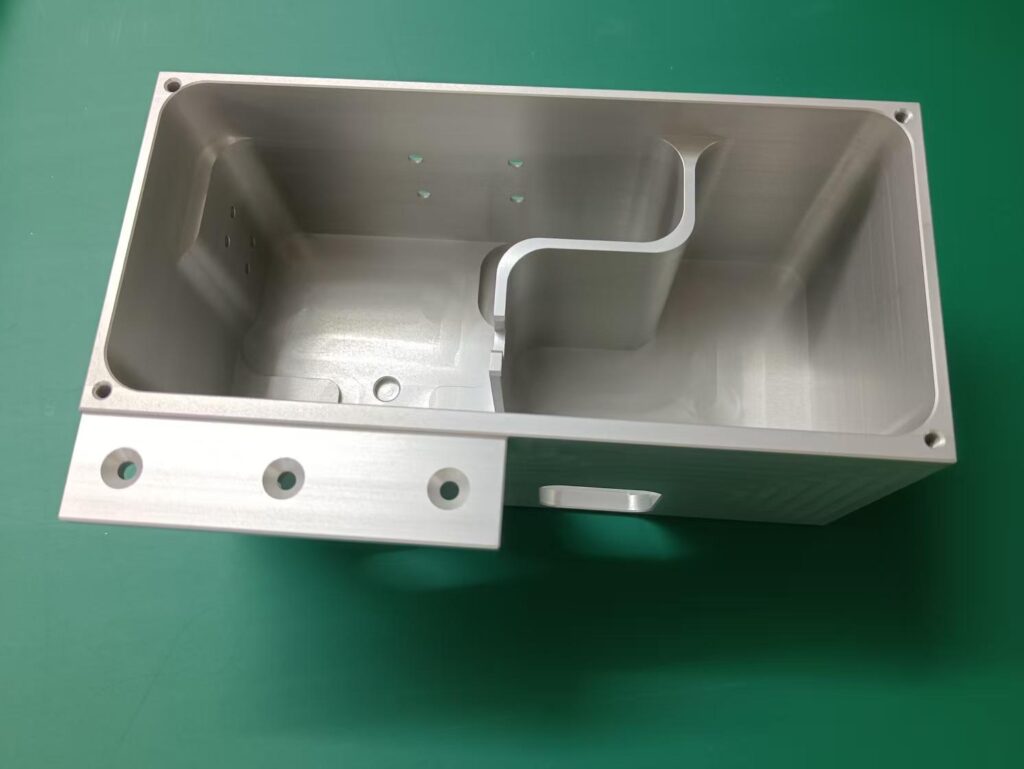
Moving from prototype to mass production is one of the most critical—and risky—phases in product development. It’s where ideas meet reality, and where small oversights can turn into large-scale manufacturing problems. A prototype might look impressive and function well in a controlled setting, but that doesn’t automatically mean it’s ready for production.
For engineers, product designers, and sourcing managers, the real question isn’t just “Does it work?” but “Will it work consistently, efficiently, and affordably at scale?”
In industries like precision CNC machining, custom metal parts manufacturing, and product development, thorough prototype testing is what separates a smooth production launch from costly delays and redesigns.
This article walks through eight essential prototype testing checkpoints to ensure your design is fully validated before moving into mass production.
1. Functional Testing: Validating Real-World Performance
The first and most fundamental step in prototype testing is confirming that the product performs as intended under real-world conditions. While CAD models and simulations provide valuable insights, they cannot fully replicate actual usage environments.
Functional testing goes beyond a simple “pass or fail.” It involves repeated operation, stress application, and real-use simulation to observe how the product behaves over time. For CNC machined parts, this might include load testing, motion cycles, or pressure resistance, depending on the application.
In many cases, prototypes reveal subtle flaws—components that bind under stress, slight misalignments, or performance inconsistencies that only appear after repeated use. Identifying these issues early allows engineers to refine the design before scaling production, where such problems would be far more expensive to correct.
2. Dimensional Accuracy and Tolerance Verification
In precision manufacturing, especially CNC machining, dimensional accuracy is everything. A prototype may visually match the design, but even minor deviations can lead to major issues during assembly or operation.
This stage involves verifying that all critical dimensions meet the required tolerances using inspection tools such as coordinate measuring machines (CMM), micrometers, and pin gauges. However, the goal isn’t just to confirm accuracy—it’s to evaluate whether those tolerances are realistically achievable in mass production.
Designs often include overly tight tolerances that increase machining complexity and cost without adding real functional value. During prototype testing, it’s important to identify opportunities to relax tolerances where possible, improving manufacturability while maintaining performance.
This balance between precision and practicality is key to successful production scaling.
3. Material Performance and Suitability Testing
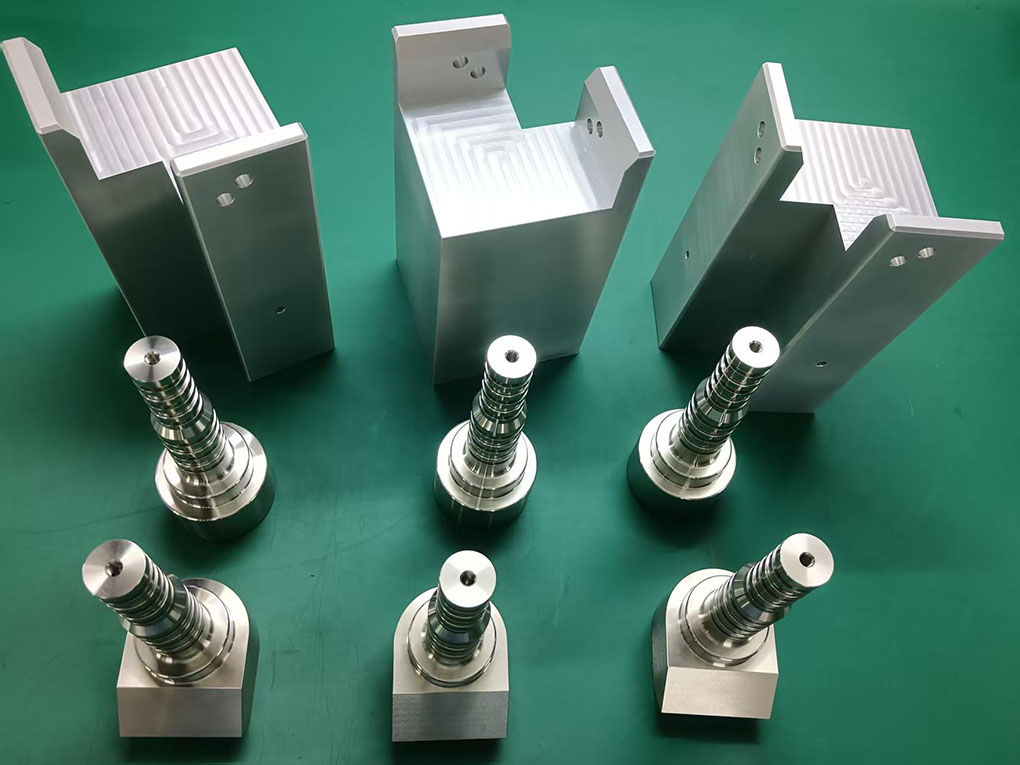
Material selection plays a crucial role in how a product performs over time. While prototypes are sometimes made using readily available materials for speed and cost efficiency, mass production demands a deeper level of validation.
Testing should assess whether the chosen material can withstand real-world conditions, including mechanical stress, environmental exposure, and long-term wear. For example, aluminum components may require anodizing to improve corrosion resistance, while certain plastics may need to be evaluated for UV stability or heat resistance.
Material testing often uncovers important insights—such as unexpected deformation, surface degradation, or fatigue under repeated stress. These findings guide decisions on whether to adjust material grades, apply surface treatments, or redesign certain features.
Choosing the right material at this stage ensures product durability and reduces the risk of field failures.
4. Design for Manufacturing (DFM) Optimization
A design that works well as a prototype is not always optimized for mass production. This is where Design for Manufacturing (DFM) becomes essential.
DFM focuses on simplifying the design to make it easier, faster, and more cost-effective to produce without compromising functionality. In CNC machining, certain features—such as deep pockets, sharp internal corners, or extremely thin walls—can significantly increase machining time and tool wear.
Prototype testing often highlights these inefficiencies. Engineers can then refine the design by adjusting geometries, standardizing features, or modifying tolerances to better align with manufacturing capabilities.
The goal is to create a design that not only performs well but can also be produced consistently at scale with minimal waste and cost.
5. Assembly Testing and Fit Validation
Most products consist of multiple components that must fit and function together seamlessly. Even if each individual part meets its specifications, issues can arise when they are assembled.
Assembly testing evaluates how well components integrate, focusing on alignment, fit, and ease of assembly. Tolerance stack-up—a situation where small variations in multiple parts combine to create larger misalignments—is a common challenge uncovered during this stage.
This phase also provides insight into the assembly process itself. If a product is difficult or time-consuming to assemble, it can significantly increase production costs and lead to inconsistencies on the factory floor.
By refining part interfaces, adding alignment features, or simplifying fastening methods, manufacturers can improve both product quality and assembly efficiency.
6. Surface Finish and Aesthetic Evaluation
Surface finish is often underestimated during prototype development, but it plays a significant role in both functionality and customer perception.
For functional components, surface finish can affect friction, wear resistance, and sealing performance. For consumer-facing products, it directly impacts visual appeal and perceived quality.
During prototype testing, it’s important to evaluate whether the desired surface finish can be consistently achieved in mass production. This may involve processes such as bead blasting, anodizing, polishing, or coating.
Inconsistent finishes, visible machining marks, or color variations can become major issues when scaling production. Addressing these concerns early ensures that the final product meets both engineering and aesthetic expectations.
7. Reliability and Durability Testing
A successful prototype must not only perform well initially but continue to perform over time. Reliability and durability testing simulate long-term usage to identify potential failure points.
This can include cycle testing, where a component is repeatedly used to replicate real-life wear, as well as environmental testing to assess performance under extreme temperatures, humidity, or vibration.
These tests often reveal weaknesses that are not immediately obvious—areas prone to fatigue, components that degrade faster than expected, or materials that fail under specific conditions.
By identifying and addressing these issues during the prototype stage, manufacturers can significantly improve product lifespan and reduce the risk of warranty claims or customer dissatisfaction.
8. Cost Analysis and Production Scalability
Even the most well-designed product must be economically viable to succeed in the market. Prototype testing should include a thorough analysis of production costs and scalability.
Small-batch prototypes are typically more expensive per unit due to setup time, tooling, and manual processes. Mass production introduces different cost structures, where efficiency, automation, and material optimization play a larger role.
This stage involves evaluating unit cost at various production volumes, identifying cost drivers, and exploring opportunities for cost reduction. In some cases, minor design changes—such as simplifying a feature or selecting a more readily available material—can lead to significant savings.
Understanding these factors before scaling production helps businesses make informed decisions and avoid unexpected financial challenges.
From Prototype to Production: Why Thorough Testing Matters
Prototype testing is not just a technical process—it’s a strategic one. It bridges the gap between design and manufacturing, ensuring that a product is not only functional but also reliable, manufacturable, and cost-effective.
Skipping or rushing this stage often leads to production delays, increased costs, and compromised product quality. On the other hand, investing time in thorough testing creates a solid foundation for successful mass production.
In today’s competitive market, where precision, quality, and speed are critical, this preparation can make all the difference.
Partner with SYM Machining for Reliable CNC Prototyping and Production
Transitioning from prototype to mass production requires expertise, precision, and a deep understanding of manufacturing processes. That’s where SYM Machining arrive.
With extensive experience in services d'usinage CNC de précision, custom metal parts manufacturing, and production optimization, SYM Machining supports you at every stage—from initial prototyping to full-scale production.
Our team works closely with you to refine designs, improve manufacturability, and ensure consistent quality across every part. Whether you need tight tolerance components, complex geometries, or scalable production solutions, we provide the technical support and manufacturing capability to bring your product to life.
Ready to move from prototype to production with confidence? Contact SYM Machining today and let’s make your project a success.
Articles connexes:
Get precision prototype machined parts with fast turnaround
Du prototype à la production : Votre partenaire pour l'usinage CNC sans faille