In the world of custom precision parts, trust is the most valuable currency. It’s not just about delivering a metal or plastic component; it’s about delivering on a promise—a promise of exacting specifications, flawless performance, and unwavering reliability. But what happens when that trust is broken? When a part fails, a deadline is missed, or a specification is misunderstood, the true test of a precision engineering partner begins.
This isn’t a theoretical guide. It’s a raw, real story from our shop floor—a case study of a mistake, a scramble to fix it, a deeper failure, and the profound lessons we learned. It’s about a Swiss customer, 26 intricate drawings, and one aluminum pipe that taught us more about custom machining than a hundred perfect orders ever could.
Customer Complaints Regarding Custom Precision Parts from Switzerland
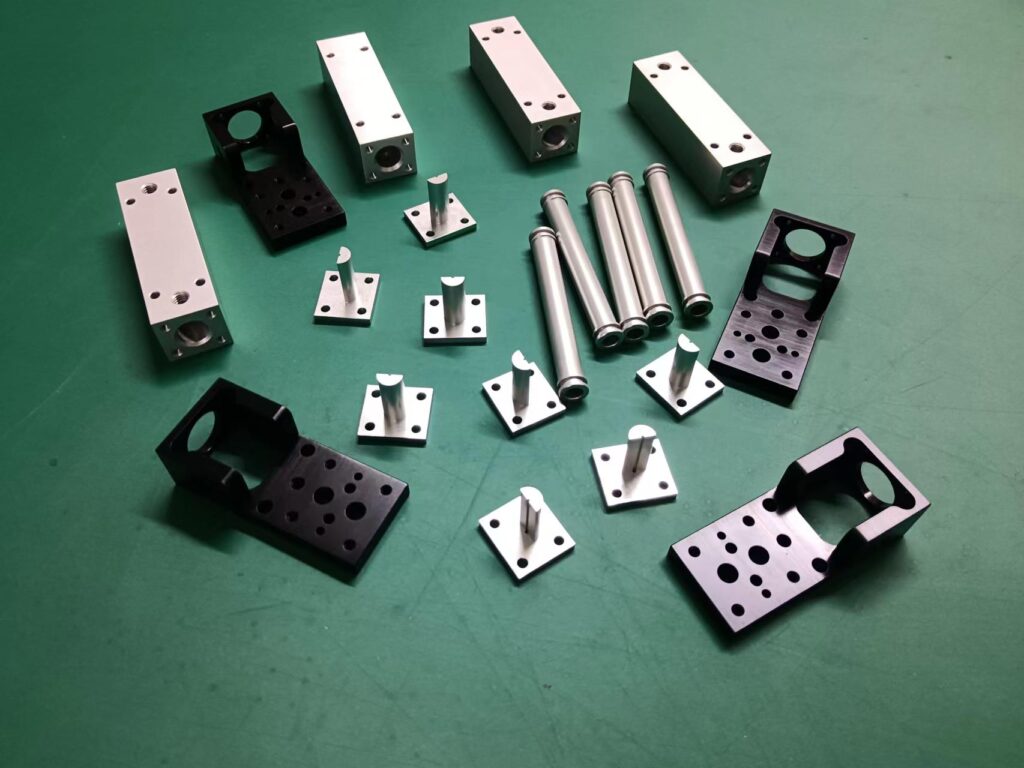
Our story begins in January 2026. We received an inquiry for a customized project from a Swiss manufacturer, known for their meticulous standards. They were building specialized, non-standard equipment and needed a suite of kundenspezifische Präzisionsteile. The package included 26 detailed drawings—a mix of aluminum machined parts, engineering plastic components, and stainless steel pieces. It was a classic Feinmechanik challenge: diverse materials, tight tolerances, and absolutely no room for error.
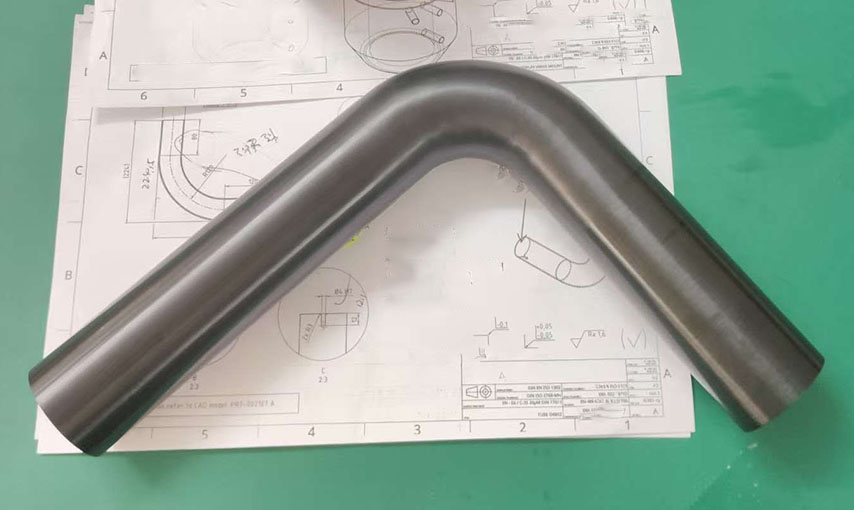
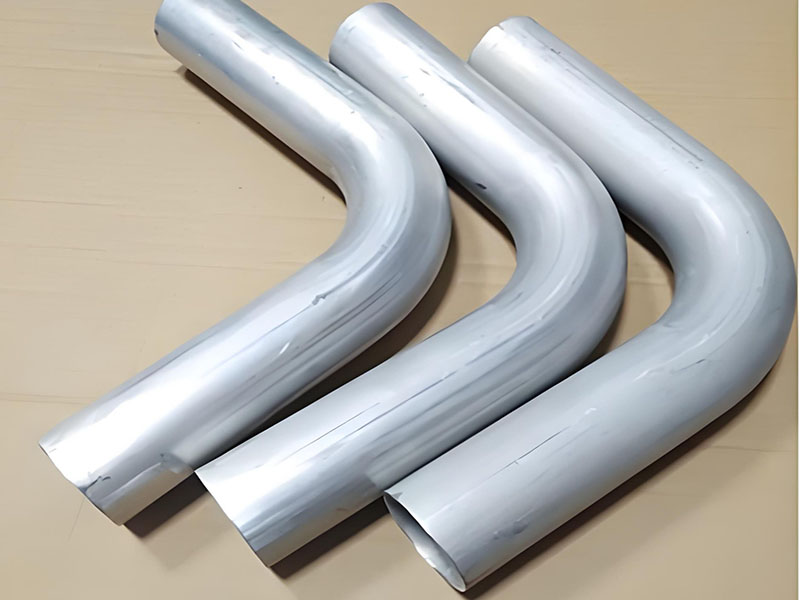
Among these parts was a specific aluminum component. The drawing was clear: it required a smooth, integrated bend in an aluminum pipe (OD 48mm x 2mm wall thickness). This wasn’t a suggestion; it was a critical design requirement for the equipment’s fluid dynamics and structural integrity. We reviewed it, quoted it, and promised to deliver. The order was placed, and the wheels of our Präzisionsbearbeitung processes began to turn.
The First Failure: A Silent Compromise on the Shop Floor
The production plan for the bent aluminum pipe was straightforward but required specialized tooling. For a true, seamless bend, we needed a specific bending mold, setup time on the tube bender, and a debugging process. The order quantity was just one piece.
Here, the first shadow of trouble appeared. Someone in the production department looked at the requirement for a single piece and saw not a Feinmechanik challenge, but a logistical headache. “For just one part? The mold setup and material waste will cost more than the part itself,” the thinking likely went. In a fateful decision, without any communication with the engineering team or the customer, a production team changed the process.
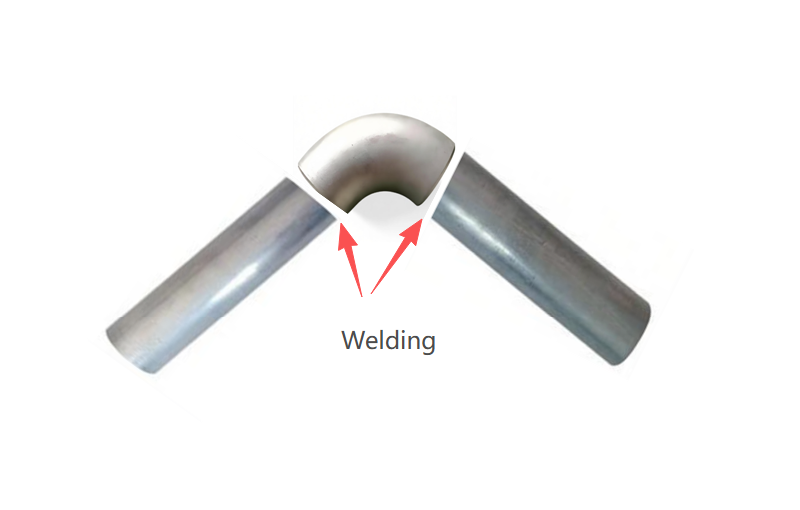
Instead of creating a genuine bend, they took a standard pipe elbow and two straight aluminum pipes and welded them together. It was a workaround. A shortcut. When the part reached quality inspection, it should have been stopped immediately—the drawing clearly called for an integrated bend, not a welded assembly. Yet, the inspectors failed to detect the deviation. The part, along with the other 25 correctly machined components, was packed and shipped to Switzerland.
The betrayal of trust wasn’t malicious; it was born of a desire for convenience and a lapse in protocol. But in kundenspezifische Präzisionsteile, there is no room for such compromises.
The Complaint: Facing the Music with Honesty
The customer’s email was polite, professional, and piercingly disappointed. They had received the shipment and immediately identified the welded pipe. It was not to print. It was not acceptable.
This was our moment of truth. We had a simple, powerful framework for such situations, and we activated it immediately:
- Accept the complaint openly.
- Respond with urgency.
- Apologize sincerely.
- Investigate the root cause thoroughly.
- Provide a concrete solution.
Within an hour of the complaint, we had not only apologized but had completed our internal investigation. We told the customer the unvarnished truth: there was an unauthorized process change, and our QC had missed it. No excuses. We took full responsibility.
Our solution was swift and clear:
- The production team involved were retrained and counseled.
- We immediately instructed the workshop to remake the product correctly, using the proper bending process, no matter the cost.
- We promised a replenishment of the correct part within one week.
- We gave a firm guarantee: if we could not deliver the correct part within that week, we would issue a full refund for the entire component.
The customer, while rightfully frustrated, appreciated the transparency and speed of our response. The trust was damaged, but the bridge wasn’t burned. We had a week to rebuild it.
The Second, Deeper Failure: When the Material Itself Betrays You
Back in our workshop, the mission was clear: make it right. We set up the proper bending machine, prepared the specific mold for the 48mm pipe, and sourced the exact Aluminium material. The pressure was on. This was our redemption arc.
Then, during the bending process itself, the new, correct aluminum pipe cracked. It fractured right at the bend.
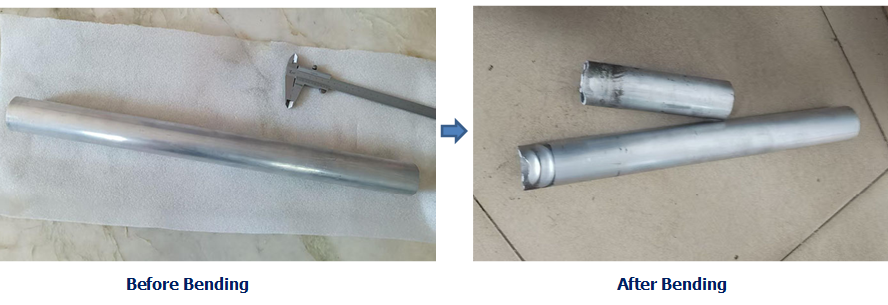
The frustration in the workshop was palpable. We were trying to fix a mistake by following the rules, and now the rules seemed to be failing us. Why did the pipe break? Was it the aluminum alloy? The wall thickness? The bend radius? The temper of the material? Suddenly, the problem was no longer about a procedural failure; it was a fundamental Feinmechanik problem.
We were racing against the one-week deadline. We attempted the bend again with another pipe, adjusting parameters carefully. It broke again. The reality sank in the choice of raw material type, at least not without specialized heat treatment or a different grade of aluminum.
We had hit a technical wall, and the clock had run out.
The Resolution: Grace in Failure and the Final Refund
We had promised the customer a solution or a refund. With a heavy heart, but with absolute commitment to our word, we had to choose the latter. We contacted the Swiss customer again.
We explained the new, deeper issue: “We remade the part as specified, but we’ve encountered a material limitation with the bend. Our analysis suggests the chosen aluminum grade may be prone to cracking with this specific geometry. Solving this will require more R&D time than our deadline allows.”
We then immediately processed the full refund for the bent pipe component, as per our initial guarantee. The customer’s response was telling. They were disappointed in the outcome, of course, but they expressed understanding and even gratitude for our relentless communication and principled stand. We had failed to deliver the part, but we had succeeded in upholding our integrity. We preserved a professional relationship for the future.
The Hard-Won Lessons: A Blueprint for Better Custom Machining
This costly episode became a cornerstone of our internal training. We dissected it not to assign blame, but to build a better system. Here are the key lessons we institutionalized:
1. The Designer-Producer Dialogue: Feasibility is a Shared Responsibility
The core of the issue started long before the weld. For custom non-standard parts, the design and production teams must be in constant dialogue.
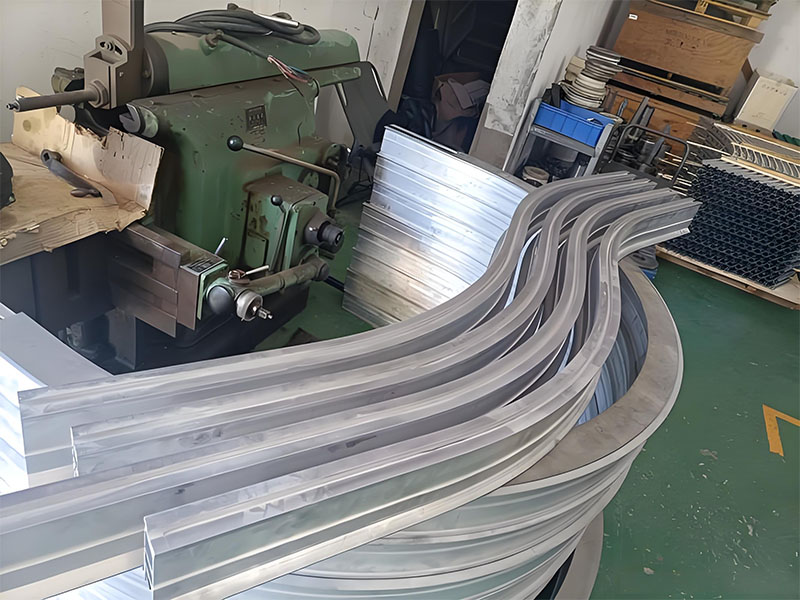
Lesson: During the design review and quotation stage, we now rigorously evaluate processing cost and feasibility. A bent pipe for a one-off order is exponentially more expensive than for a batch. We must ask: Does the customer truly need a seamless bend for a prototype, or would a qualified, precision-welded assembly (if approved) be functionally adequate and more cost-effective? This conversation must happen before the order is confirmed.
2. Communication is Non-Negotiable: The “Stop and Call” Rule
The welder’s unilateral decision was the catalyst for disaster.
- Lesson:We instilled a iron-clad rule: If a customer’s design drawing conflicts with the perceived production process, all work stops. The technician must immediately notify the project engineer. The engineer then contacts the customer with the concern, data, and alternative proposals. The final decision on any deviation is always the customer’s. This transforms a potential failure into a partnership discussion.
3. Material Mastery: The Heart of Precision Engineering
The breaking pipe revealed a gap in our applied knowledge. Präzisionsbearbeitung isn’t just about cutting metal; it’s about understanding it.
- Lesson:Our engineering team deepened its focus on material properties. We created quick-reference guides: Which aluminum alloys are most bendable? What is the minimum bend radius for a given wall thickness? Does the material need to be in an annealed state? Now, if a drawing specifies a material that appears unsuitable for the process, we flag it during the quotation stage. We become consultants, not just order-takers.
4. The Human Firewall: Empowering Quality Control
The inspectors who missed the weld were our last line of defense. They failed because they might have been checking for dimensional accuracy but not for conformance to the primary manufacturing method.
- Lesson:We strengthened QC training dramatically. Inspection now starts with a “Method Check”: does the part look like it was made the way the drawing intended? Is that a bend or a weld? Is that a machined feature or a casting? QC personnel are empowered to halt any shipment if there is any doubt, creating a powerful human firewall against procedural errors.
Conclusion: Transforming Complaints into Cornerstones
Dealing with complaints about kundenspezifische Präzisionsteile is never easy. It’s a moment of stress, accountability, and financial risk. Yet, as our Swiss pipe story shows, it is also the most potent opportunity for growth.
The formula isn’t magic, but it requires discipline: Listen, Apologize, Investigate, Solve, and Make it Right—without condition. Sometimes, “making it right” means a refund. And that’s okay. A refund preserved with dignity is far more valuable than a reluctant delivery that severs a relationship.
For anyone involved in custom machining—whether you’re an engineer designing a groundbreaking product or a manufacturer bringing it to life—remember this story. Let it remind you that Feinmechanik is a trilogy: it’s the science of materials and tools, the art of communication and collaboration, and the unwavering ethics of owning your work, especially when it goes wrong.
The trust of a customer, once earned through this level of principled problem-solving, becomes the most durable precision part you will ever create.