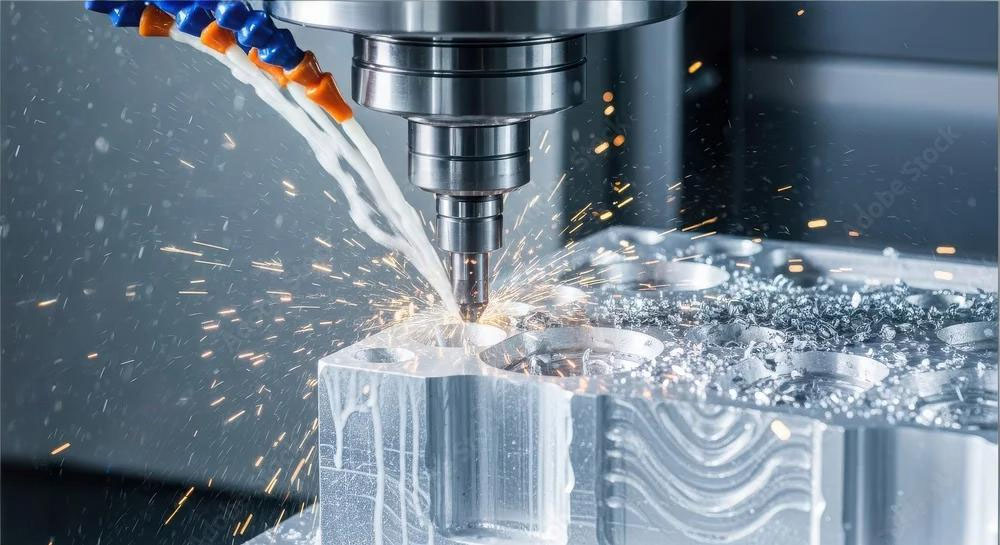
If you’ve spent any time machining aluminum, you’ve probably run into it: that frustrating moment when your surface finish suddenly deteriorates, your tool starts acting unpredictably, and your tolerances drift just enough to cause problems. Chances are, you were dealing with metal chips.
Metal chips is one of those issues that looks minor at first but can quietly undermine an entire machining process. It happens when aluminum material adheres to the cutting tool edge, forming a welded layer that continuously breaks off and reforms. The result? Inconsistent cutting geometry, poor surface quality, increased tool wear, and sometimes even scrap parts.
The good news is that metal chips isn’t inevitable. With the right approach, you can significantly reduce—or even eliminate—it. Let’s walk through seven practical, experience-driven ways to keep metal chips under control when machining aluminum.
Choose the Right Cutting Tool Geometry
Not all cutting tools are created equal—especially when it comes to aluminum. One of the most effective ways to prevent metal chips is to start with the right tool geometry.
Aluminum is soft, ductile, and prone to adhesion. That means tools designed for harder materials often struggle because they don’t evacuate chips efficiently or maintain a clean cutting interface. A high positive rake angle is key here. It reduces cutting forces and minimizes the tendency of aluminum to stick to the tool.
Equally important is a sharp cutting edge. Unlike steel machining, where a slightly honed edge can improve durability, aluminum benefits from razor-sharp edges. Any rounding or wear increases friction and encourages material adhesion.
Polished flutes also play a major role. A smooth surface reduces friction between the chip and the tool, allowing chips to flow freely instead of sticking and forming metal chips.
If you’ve ever noticed that switching to an aluminum-specific end mill immediately improved your results, this is exactly why. Geometry matters more than most people initially realize.
Optimize Cutting Speed—Don’t Go Too Slow
It might feel counterintuitive, but running too slow is one of the fastest ways to trigger metal chips in aluminum machining.
At lower cutting speeds, there’s more time for the aluminum to adhere to the tool surface. The material essentially “smears” instead of shearing cleanly, which is the perfect condition for metal chips formation.
Higher cutting speeds, on the other hand, promote cleaner shearing action. The heat generated helps prevent adhesion at the cutting interface, reducing the likelihood of material welding onto the tool.
That said, this isn’t about pushing speeds blindly. You still need to stay within the tool manufacturer’s recommended range. The goal is to avoid the low-speed zone where adhesion dominates, not to overstress your tooling or machine.
A practical takeaway: if you’re seeing metal chips and your speeds are conservative, try increasing surface speed incrementally. Often, that alone can stabilize the cut.
Maintain Proper Feed Rates for Consistent Chip Formation
Feed rate and cutting speed go hand in hand, but feed deserves its own attention when addressing metal chips.
Too light a feed can be just as problematic as too low a speed. When the chip load is insufficient, the tool tends to rub rather than cut. This rubbing action generates heat without producing a clean chip, which again encourages material to stick to the tool.
A healthy chip load ensures that the tool is always engaged in a proper cutting action. It promotes consistent chip formation and reduces the chances of aluminum smearing along the edge.
This is especially important in finishing operations, where it’s tempting to reduce feed rates to improve surface finish. Ironically, going too light can make the finish worse due to metal chips.
The balance here is subtle but critical: maintain enough feed to keep the tool cutting cleanly, even in light finishing passes.
Use the Right Coating—or No Coating at All
Tool coatings can be a double-edged sword when machining aluminum.
Some coatings, like TiAlN, are excellent for high-temperature applications such as steel or titanium machining. But for aluminum, they can actually increase adhesion because of their higher friction coefficients.
Instead, coatings like ZrN (zirconium nitride) or specialized aluminum coatings are more effective. These are designed to reduce friction and resist material buildup.
In many cases, uncoated tools with polished surfaces perform exceptionally well for aluminum. The lack of coating eliminates an additional interface where adhesion might occur.
The key is understanding that aluminum machining prioritizes low friction and smooth chip flow over heat resistance. If your tooling strategy was originally designed for harder materials, it may be worth reevaluating.
Apply Effective Cooling and Lubrication
If there’s one factor that consistently separates stable aluminum machining from problematic setups, it’s lubrication.
Metal chips thrives in conditions where friction and localized heat are high. Proper coolant application reduces both, making it much harder for aluminum to stick to the tool.
Flood coolant is a common solution, but it’s not the only one. Minimum quantity lubrication (MQL) can also be highly effective, especially in high-speed operations. The goal is to create a thin lubricating film that prevents direct metal-to-metal contact.
Dry machining, while appealing for cost and environmental reasons, can increase the risk of metal chips unless all other parameters are perfectly optimized.
Another detail that’s often overlooked is coolant delivery. It’s not just about having coolant—it’s about getting it exactly where it needs to be. Poorly directed coolant won’t reach the cutting zone effectively, limiting its benefits.
Improve Chip Evacuation and Avoid Re-Cutting
Chip control is a bigger factor in metal chips than many machinists initially assume.
When chips aren’t evacuated efficiently, they can be re-cut by the tool. This re-cutting not only damages the surface finish but also increases the likelihood of material sticking to the tool edge.
Aluminum chips tend to be long and stringy, which makes evacuation more challenging. This is where tool design, coolant flow, and machining strategy all intersect.
Using high-helix tools helps lift chips away from the cutting zone. To further reduce chip buildup, employ toolpath strategies like adaptive clearing, which maintains a consistent cutter engagement.
Even something as simple as adjusting the direction of airflow or coolant can make a noticeable difference. The goal is to keep the cutting zone clean at all times.
If chips are lingering around the tool, metal chips isn’t far behind.
Design for Manufacturability: Reduce Problematic Features
Metal chips isn’t just a machining issue—it can also be influenced by part design.
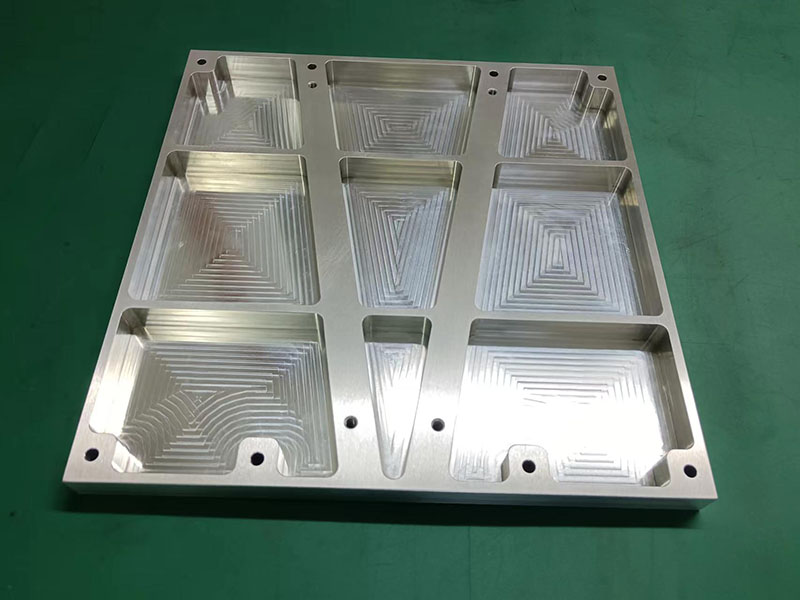
Certain geometries naturally increase the risk of metal chips. Deep pockets, narrow slots, and features with poor accessibility make it harder to maintain proper cutting conditions and chip evacuation.
When possible, designing with smoother transitions, adequate clearances, and tool-friendly radii can significantly improve machining stability.
For example, adding slightly larger corner radii allows for better tool engagement and reduces stress concentration at the cutting edge. Similarly, avoiding unnecessarily deep or tight features can improve coolant access and chip flow.
This doesn’t mean compromising functionality. It means aligning design decisions with machining realities to achieve better overall results.
In many cases, small design adjustments can eliminate persistent issues that no amount of parameter tweaking can fully resolve.
Bringing It All Together
Metal chips in aluminum machining isn’t caused by a single factor—it’s the result of multiple conditions aligning in the wrong way. That’s why solving it requires a holistic approach.
You might start by adjusting cutting speed, only to realize that tool geometry or coolant strategy is the real bottleneck. Or you may optimize tooling but still struggle because of chip evacuation issues tied to part design.
The most effective strategy is to view the process as a system. Tooling, parameters, cooling, and design all interact with each other. When they’re aligned, machining aluminum becomes smooth, predictable, and efficient. When they’re not, metal chips becomes a recurring problem.
Verwandte Artikel:
Which Aluminum Alloys Are Most Bendable? A Guide for Perfect CNC Aluminum Machined Parts
AL6061 Aluminum CNC Machining – Why It’s the Best Choice for Precision Parts