Precision manufacturing demands flawless aesthetic appeal and uncompromised functional integrity. Metal surface polishing services bridge the critical gap between raw machining and final assembly.
Engineers select specialized polishing techniques to achieve exacting surface finish parameters. Microscopic peaks and valleys compromise mechanical performance under severe operational loads. High-performance polishing transforms coarse machine marks into refined mirror surfaces. This technical article explores modern metal surface finishing processes, technical metrics, and industrial applications.
The Engineering Value of Metal Surface Polishing
Metal polishing does far more than create visual luster. Mechanical friction causes rapid component degradation in moving assemblies. Smooth metal surfaces lower friction coefficients and reduce internal heat generation significantly.
Polishing actively eliminates microscopic stress risers created during CNC milling or turning operations. Micro-cracks initiate easily along tiny tooling marks under cyclic loading conditions. Buffing and lapping remove surface vulnerabilities, boosting overall fatigue resistance remarkably.
Surface finishing acts as a powerful barrier against aggressive environmental corrosion. Smooth surfaces trap fewer corrosive contaminants, moisture particles, and chemical residues. Consequently, polished components withstand oxidation much longer than un-machined raw parts.
Cleanliness dictates performance in medical, pharmaceutical, and semiconductor processing equipment. Polished metal prevents microscopic bacterial traps and simplifies sterilization procedures. High-purity gas delivery systems require polished stainless steel to avoid particulate contamination.
| Surface Condition | Typical Roughness (Ra) | Primary Functional Benefit | Key Industrial Applications |
| As-Machined | 3.2 µm – 6.3 µm | Basic dimensional compliance | Internal structural brackets, hidden frames |
| Fine Ground | 0.8 µm – 1.6 µm | Reduced friction, wear resistance | Shaft bearings, hydraulic cylinders |
| High Polished | 0.1 µm – 0.4 µm | Corrosion defense, easy cleaning | Food processing, medical devices |
| Mirror Finish | < 0.05 µm | Maximum reflectivity, zero traps | Semiconductor tools, optical mirrors |
Core Technical Polishing Methodologies
Industrial manufacturing relies on distinct physical, chemical, and hand-finishing polishing techniques. Process engineers match finishing strategies directly to component geometry, material hardness, and production volume.
Hand Polishing and Skilled Manual Finishing
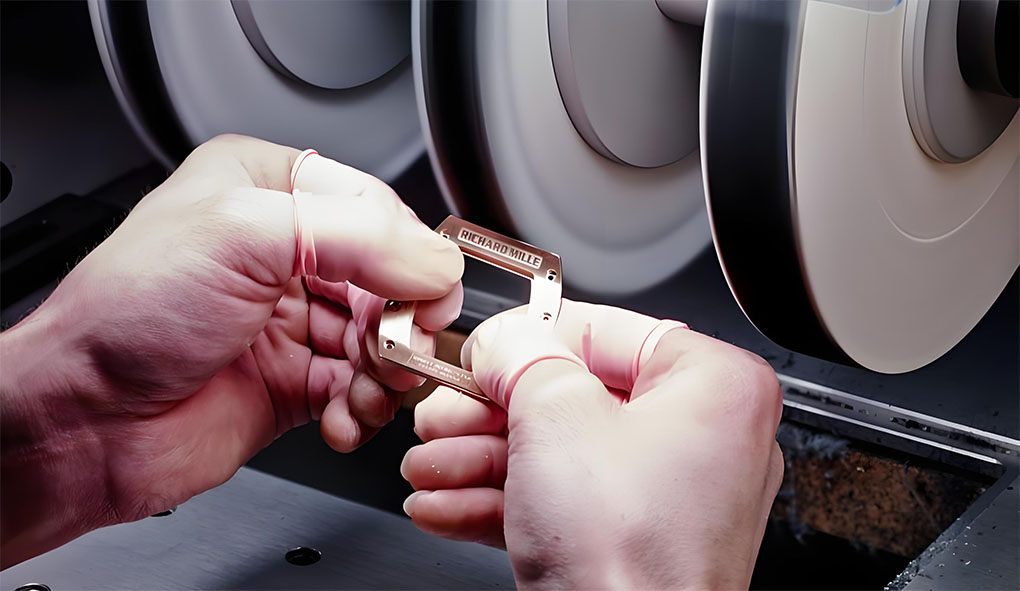
Automated machinery often struggles with intricate internal geometries, tight pockets, and delicate contours. Skilled manual polishing fills this vital production gap through human tactile control and specialized hand tools.
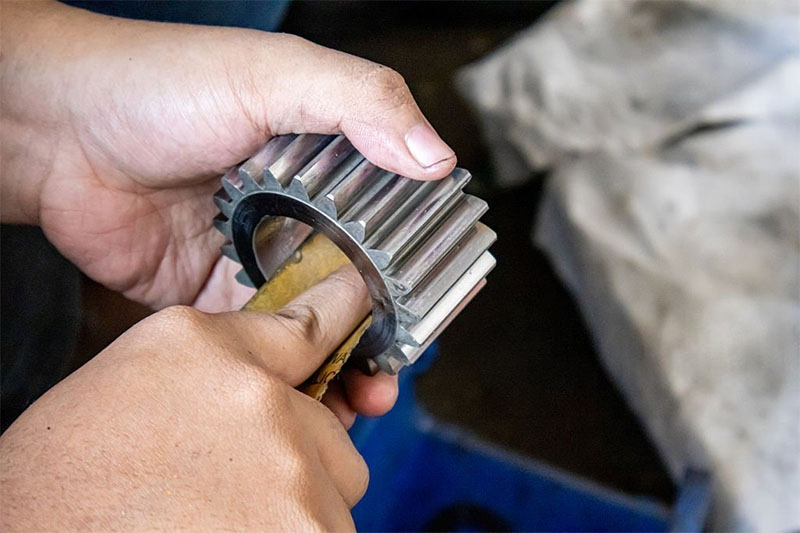
Technicians use flexible abrasive papers, wooden blocks, and precision stone points to hand-blend complex surfaces carefully. Rotary die grinders with mounted points smooth tight radii and remove stubborn micro-burrs along internal features effortlessly.
Manual polishing allows real-time visual inspection and precise localized pressure control during critical finishing operations. Artisans adapt tactile pressure dynamically to prevent dimensional over-cutting on critical tolerance zones. Injection mold dies, complex aerospace housings, and custom gears rely heavily on expert manual finishing workflows.
Mechanical Polishing and Lapping
Mechanical polishing utilizes progressively finer abrasive media to shave surface irregularities. Technicians start with coarse abrasives to strip visible cutter paths rapidly. They transition smoothly to ultrafine diamond paste for ultimate reflection.
Lapping places loose abrasive slurry between a lap plate and the target workpiece. The continuous rolling action delivers extreme flat surfaces with sub-micron tolerances. Engineers select lapping for mechanical seal rings, valve seats, and precision gage blocks.
Electropolishing Techniques
Elektropolieren functions as a reverse electroplating process inside a controlled chemical bath. Electric current dissolves microscopic surface peaks faster than surrounding valleys.
This non-mechanical method removes embedded iron particles and restores passive oxide layers effectively. Electropolishing treats complex internal geometries where traditional mechanical wheels cannot reach. It leaves a bright, stress-free surface ideal for biopharmaceutical vessel walls.
Chemical and Fluidized Media Finishing
Chemical polishing relies entirely on controlled acid baths without external electrical current. The chemical solution smooths minor surface irregularities through uniform metal dissolution.
Extrusion honing pushes abrasive-laden putty through internal passages under high pressure. This fluid method deburrs hidden intersecting holes and smooths complex turbine blade contours effortlessly. Barrel tumbling and vibratory finishing process thousands of small parts rapidly in batch runs.
Quantitative Standards in Surface Roughness Metrology
Engineers quantify polished metal quality using precise roughness metrics rather than subjective visual checks. Modern profilometers measure surface deviation down to single nanometer resolution.
- Ra (Roughness Average): Measures the arithmetic mean height of surface micro-irregularities across the evaluation length. It serves as the universally accepted standard finish metric.
- Rz (Average Maximum Height): Calculates the mean distance between highest peaks and lowest valleys across five consecutive sampling lengths. It detects isolated deep scratches effectively.
- RMS (Root Mean Square): Calculates the square root of average profile height deviations. RMS yields higher weight to extreme profile deviations than Ra.
Optical non-contact profilometers analyze delicate mirror surfaces without scratching soft alloys. Contact stylus tools provide rapid, reliable surface measurements right on the shop floor.
Industrial Applications Across Critical Sectors
Professional polishing services empower mission-critical hardware performance across global industries. Premium surface finishing prevents costly component failures under extreme stress.
Aerospace and Defense Technologies
Turbine blades endure intense centrifugal forces and extreme temperature cycles during flight. Polishing removes micro-imperfections, preventing catastrophic fatigue failures inside jet engines. Aircraft landing gear components require hard-chrome polished shafts to seal fluid pressure effectively.
Medical and Surgical Instrumentation
Surgical scalpels, bone screws, and orthopedic implants demand absolute surface bio-compatibility. Microscopic burrs or surface defects incite severe tissue irritation inside human bodies. Electropolishing stainless steel implants prevents metal ion leaching and inhibits dangerous bacterial adhesion.
Semiconductor and Precision Optics
Wafer handling tools require mirror surfaces to eliminate abrasive particle generation. Microchip manufacturing environments demand ultra-clean gas distribution blocks with sub-micron Ra finishes. Specialized nickel-plated aluminum optical mirrors rely on single-point diamond turning and lap finishing.
Essential Material Considerations in Metal Polishing
Different alloys react uniquely to mechanical abrasive pressure and chemical bath solutions. Engineering teams must understand alloy characteristics before selecting a surface finishing workflow.
Stainless steel responds exceptionally well to both mechanical buffing and electropolishing techniques. Austenite grades like 304 and 316 achieve high corrosion resistance and brilliant mirror lusters.
Aluminum alloys require precise temperature monitoring to avoid heat discoloration during high-speed polishing operations. Soft aluminum galling clogs abrasive wheels quickly, requiring specialized lubricant application throughout processing cycles.
Hardened tool steels and titanium alloys demand aggressive diamond abrasives to cut micro-peaks efficiently. Titanium reacts readily with air, requiring chemical passivation steps immediately following abrasive finishing. Brass and copper polish rapidly but require protective clear coatings to prevent quick tarnishing.
Elevate Component Performance with SYM Machining
Superior surface finishes require advanced equipment, rigorous quality checks, and deep metallurgical expertise. SYM Machining delivers industry-leading metal surface polishing services tailored to your exact engineering specifications.
Our manufacturing facility combines multi-axis CNC machining capabilities with specialized surface finishing operations. We handle tight-tolerance components from prototype runs to high-volume production schedules seamlessly. Contact SYM Machining today to discuss your precision polishing requirements and request a fast commercial quote.
Ähnlicher Artikel: