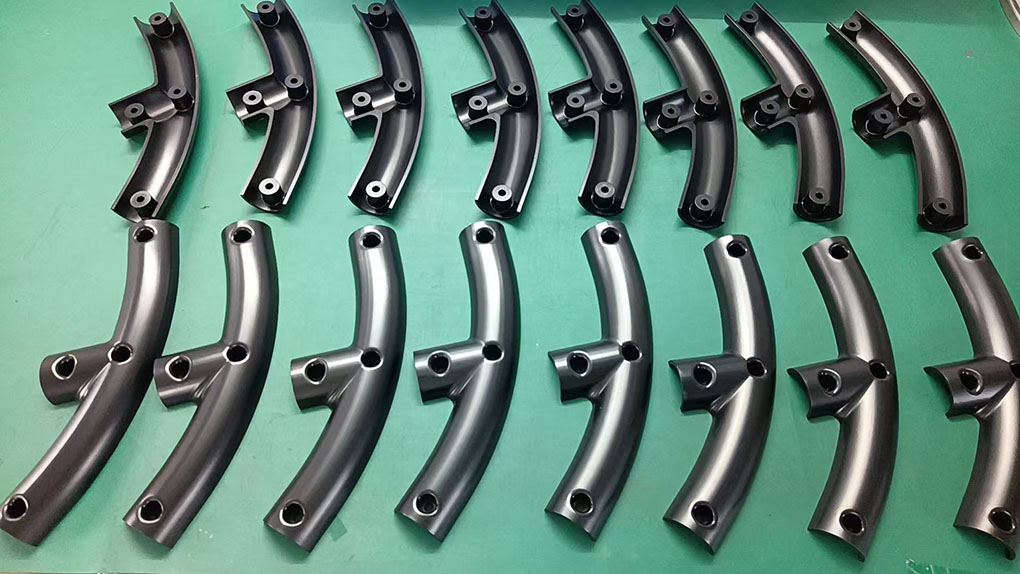
When engineers and designers look for materials that combine the lightness of aluminum with the strength of steel, AL7075 CNC Machining often emerges as the definitive solution. As one of the most robust aluminum alloys available, 7075 offers exceptional mechanical properties that make it a staple in aerospace, automotive, and defense industries. However, working with this high-strength alloy requires a nuanced understanding of its behavior under cutting tools. This guide delves deep into the specifics of AL7075 CNC Machining, covering everything from material properties and chemical breakdown to cost implications and design considerations.
Understanding AL7075: The Material Profile
Before diving into the machining processes, it is essential to understand what sets AL7075 apart from standard alloys like 6061. The primary alloying elements in 7075 are zinc, magnesium, and copper. This specific combination results in a material that boasts high strength-to-weight ratios and excellent fatigue resistance.
Key Properties of AL7075
- High Tensile Strength: In the T6 temper, AL7075 offers a tensile strength of up to 83,000 psi (572 MPa), rivaling many mild steels.
- Low Density: At approximately 2.81 g/cm³, it remains lightweight, making it ideal for weight-critical applications.
- Fatigue Resistance: Its ability to withstand cyclic loading makes it suitable for aircraft structures.
- Corrosion Susceptibility: While it has decent corrosion resistance, it is more susceptible to stress corrosion cracking than 6061, often requiring cladding or anodizing.
These properties make aluminium cnc machining of this specific alloy a challenge, as the hardness and abrasiveness can lead to rapid tool wear if not managed correctly.
Chemical Composition & Mechanical Characteristics of AL7075
To successfully execute AL7075 CNC Machining, machinists and design engineers must first interpret the material’s “fingerprint”—its chemical limits and mechanical thresholds. Unlike generic aluminum, 7075 is strictly governed by international standards (ASTM B209 and AMS 4045). The following data chart provides a comprehensive breakdown of what makes this alloy so uniquely challenging and rewarding to machine.
Chemical Composition of AL7075 (Percentage by Weight)
The performance of aluminum precision parts relies heavily on the precise balance of alloying elements. Even slight deviations from these ranges can alter machinability and heat treatment response.
| Element | Percentage (%) | Role in the Alloy |
| Aluminum (Al) | 87.1 – 91.4 (Balance) | Base metal; provides light weight and natural corrosion resistance. |
| Zinc (Zn) | 5.1 – 6.1 | Primary strengthening agent. Enhances hardness and tensile strength through precipitation hardening. |
| Magnesium (Mg) | 2.1 – 2.9 | Improves work-hardening capacity and contributes to solid-solution strengthening. |
| Copper (Cu) | 1.2 – 2.0 | Increases fatigue resistance and machinability, but reduces corrosion resistance. |
| Chromium (Cr) | 0.18 – 0.28 | Controls grain structure to prevent recrystallization during heat treatment. |
| Iron (Fe) | ≤ 0.50 (Max) | Considered an impurity; excess iron reduces fracture toughness. |
| Silicon (Si) | ≤ 0.40 (Max) | Improves fluidity during casting but is minimized in wrought alloys to maintain ductility. |
| Manganese (Mn) | ≤ 0.30 (Max) | Adds moderate strength and reduces hot cracking susceptibility. |
| Titanium (Ti) | ≤ 0.20 (Max) | Acts as a grain refiner during solidification. |
| Others (Total) | ≤ 0.15 | Trace elements that can affect anodizing outcomes. |
Analysis for Machining: The high Zinc and Copper content (which create hard intermetallic compounds) are the primary reasons why cnc aluminum cutting service providers must use premium carbide tooling. These elements make the alloy abrasive, contributing to flank wear and built-up edge formation.
Mechanical Characteristics of AL7075 – T6 Temper
The T6 temper (solution heat-treated and artificially aged) is the most common condition for AL7075 CNC Machining. It delivers the peak strength required for aerospace structural components. However, this strength comes at the cost of reduced formability and increased cutting forces.
| Mechanical Property | Metric Value | Imperial Value | Implication for Machining |
| Ultimate Tensile Strength (UTS) | 572 MPa | 83,000 psi | High UTS means high cutting resistance; requires rigid machine spindles and heavy-duty fixtures. |
| Yield Strength (0.2% Offset) | 503 MPa | 73,000 psi | The material will not easily deform plastically; residual stresses must be relieved to prevent spring-back. |
| Dehnung beim Bruch | 8 – 11% | 8 – 11% | Moderate ductility; chips are segmented (shear-localized), which aids in chip breaking but can cause vibration. |
| Härte (Brinell) | 150 HB | 150 HB | Abrasive to tools; polished carbide or diamond-coated inserts are recommended to avoid rapid wear. |
| Fatigue Strength | 159 MPa | 23,000 psi | Excellent for cyclic loads; machining must avoid creating stress-risers (sharp internal corners). |
| Modulus of Elasticity | 71.7 GPa | 10,400 ksi | Relatively stiff; deflection during aluminum prototype machining is lower than steel, allowing for tight tolerances. |
| Shear Strength | 331 MPa | 48,000 psi | Affects drilling and tapping operations; requires lower feed rates to prevent tool breakage. |
| Thermal Expansion Coefficient | 23.6 µm/m·°C | 13.1 µin/in·°F | High thermal expansion; heat management via coolant is essential to avoid dimensional drift during finishing cuts. |
Machinability Ratings & Comparative Data
To put these characteristics into perspective for aluminium cnc machining, here is how AL7075 stacks up against 6061 and 2024, two other popular aerospace alloys.
| Parameter | AL7075-T6 | AL6061-T6 | AL2024-T3 |
| Relative Machinability (Scale 0-100) | 70% | 100% | 60% |
| Tool Wear Rate | Medium-High | Low-Medium | Hoch |
| Chip Formation | Segmented (Good) | Stringy (Gummy) | Segmented (Good) |
| Schweißeignung | Poor (Not Recommended) | Ausgezeichnet | Schlecht |
| Stress Corrosion Cracking | Susceptible | Resistant | Highly Susceptible |
| Anodizing Response | Fair (Copper causes smut) | Ausgezeichnet | Fair |
Cost Implication: While 6061 is cheaper and easier to machine, 7075’s superior strength justifies the slightly higher aluminum machining cost. The table shows that although 7075 has a machinability rating of 70% (compared to 6061), it produces better chip control, reducing downtime caused by chip tangles—a factor that often offsets the tool wear costs.
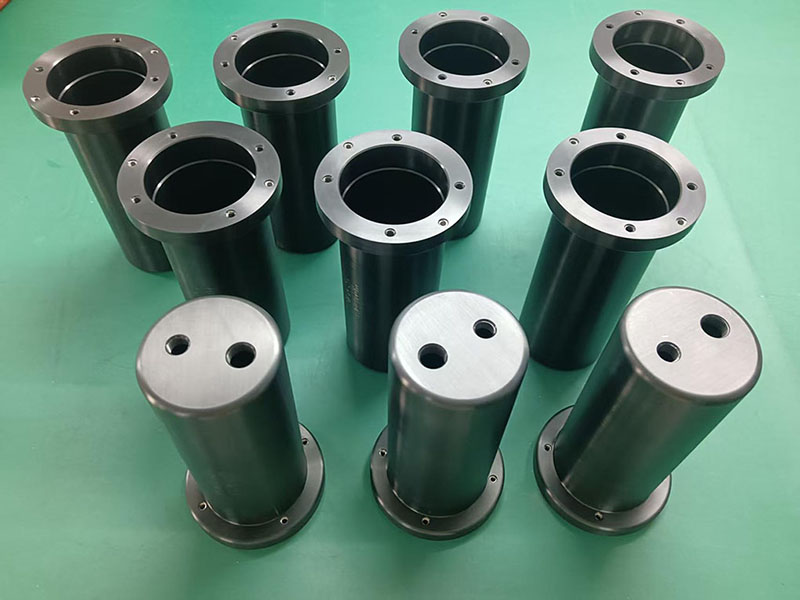
Specific Machining Operations
Whether you are engaging in aluminum prototype machining or full-scale production, the specific operation dictates the approach.
- Fräsen
Milling is the most common operation for 7075 parts. When providing aluminum milling services for this alloy, feed rates and spindle speeds must be balanced carefully.
- High-Speed Machining (HSM): HSM strategies are highly effective. By using light radial depths of cut (RDOC) and heavy axial depths of cut (ADOC) with high feed rates, heat is transferred to the chip rather than the workpiece.
- Climb Milling: This is generally preferred as the cutting edge engages the material at a maximum thickness, reducing rubbing and work hardening.
- Wenden
When turning 7075, the hardness can cause significant flank wear. Operators typically use a positive rake angle to shear the material efficiently. Coolant is crucial here to wash away chips and prevent them from scoring the finished surface.
- Drilling and Threading
Hole making is often the most problematic area. AL7075 tends to close in slightly on the drill due to its thermal expansion. Therefore, proper pecking cycles are necessary to clear chips. For threading, roll taps are often preferred over cut taps to prevent the brittle breakage that can occur due to the alloy’s high hardness.
Special Considerations: Stress Relief and Distortion
A critical aspect often overlooked is the residual stress within the material. AL7075, particularly in plate form, has internal stresses from the rolling process.
When you remove material during AL7075 CNC Machining, these stresses release, causing the part to warp or “potato chip.” To mitigate this:
- Roughing and Finishing: Perform a roughing pass, remove the part from the fixture to allow it to relax, and then perform a finishing pass.
- Stress-Relief Heat Treatment: If the part geometry is delicate, consider a stress-relieving heat treatment before the finishing stage.
Design Guidelines for AL7075 Parts
To maximize the benefits of aluminum precision parts made from 7075, designers should adhere to specific rules to reduce costs and improve manufacturability.
- Fillet Radii: Sharp internal corners should be avoided. A radius of at least 1/3 of the cutter diameter is recommended.
- Wall Thickness: While 7075 is strong, thin walls (under 0.5mm) can vibrate during machining, leading to poor surface finish. Increasing wall thickness or adding ribs helps maintain rigidity.
- Undercuts: Unless utilizing 5-axis aluminium cnc machining, undercuts add significant complexity and cost.
Quality Control and Surface Finish
AL7075 CNC Machining consistently achieves high-quality surface finishes, often reaching 32 Ra or better. However, achieving this requires a combination of sharp tools, rigid setups, and a clean cutting environment.
Oberflächenbehandlung
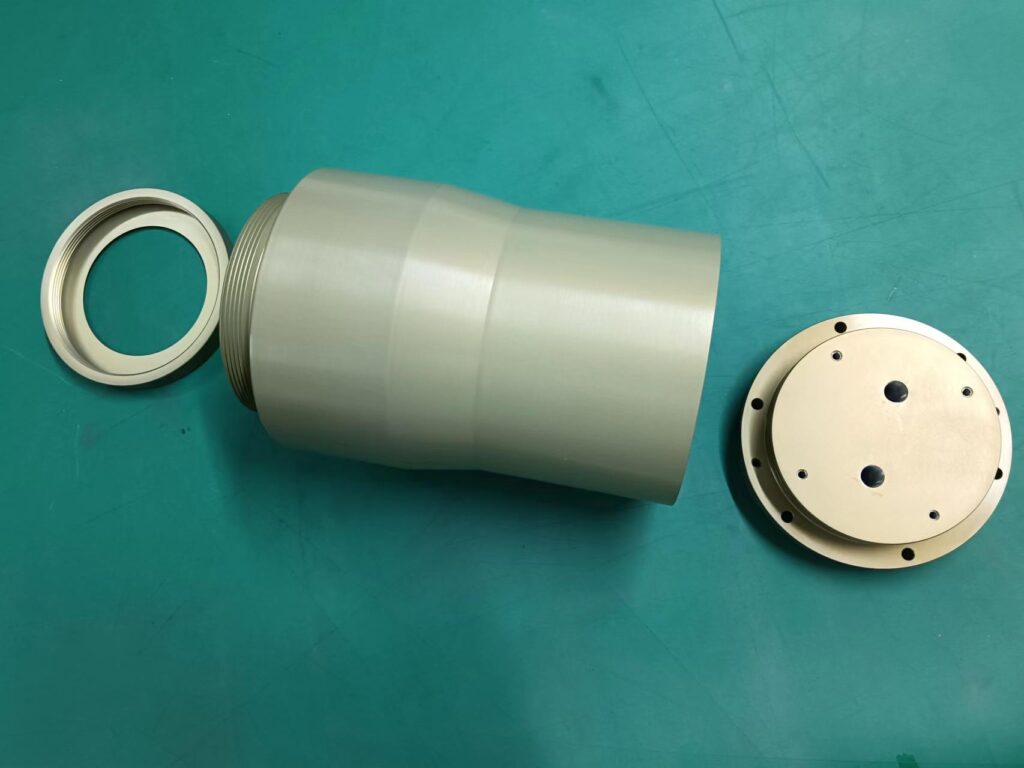
Often, the machined part requires surface treatment. Because 7075 has a high copper content, it anodizes differently than 6061, often resulting in a slightly “golden” tint or “smut” that requires desmutting. Alternatively, hard coat anodizing (Type III) is often applied to 7075 to improve its wear resistance and corrosion protection, a critical consideration for aluminum precision parts in harsh environments.
Cost Factors: How to Manage the Budget
One of the most frequent questions regarding this alloy is cost. Understanding aluminum machining cost involves several variables. While the raw material cost of 7075 is slightly higher than 6061, the final part price is often driven by the machining complexity.
Factors Influencing AL7075 Machining Cost
- Material Grade and Form: 7075-T6 plate is more expensive than 6061. Aerospace-certified material adds a premium.
- Werkzeugverschleiß: The abrasiveness of 7075 leads to higher tool consumption, increasing the cost per part.
- Cycle Time: Heavy-duty milling requires more passes or slower speeds depending on the tooling, which increases machine time.
- Toleranzen: Holding extremely tight tolerances (+/- 0.0005″) increases the machining cost due to the need for slower machining rates and more frequent inspection.
- Oberflächenveredelung: Post-machining processes like passivation, anodizing, or painting add to the total aluminum machining cost.
Cost-Saving Tips
- Design for Standard Tools: Custom tooling increases setup costs. Using standard end mills and drills is cheaper.
- Consider Tolerances: Only specify tight tolerances where functionally necessary. “General” tolerances are much cheaper to hold.
- Economy of Scale: Since setup time is amortized across parts, the cost per unit drops significantly as quantity increases.
Selecting a Manufacturer
When looking for cnc aluminum cutting service providers, it is essential to find a shop experienced with aerospace-grade alloys. A skilled provider will understand the nuances of fixturing, thermal management, and tool selection specific to 7075. They should offer a comprehensive solution, from material procurement to final finishing, and be able to interpret the data charts provided above to optimize every cutting pass.
Schlussfolgerung
Mastering AL7075 CNC Machining is about balancing the material’s incredible strength with the realities of the cutting process. While the alloy presents challenges such as tool wear and residual stress, these are easily managed with proper strategies and high-quality tooling. Whether you require rapid aluminum prototype machining or high-volume production of aluminum precision parts, 7075 remains the premier choice for applications where strength and weight are critical.
By understanding the chemical limits, mechanical thresholds, and cost drivers detailed in this guide, you can leverage aluminium cnc machining to produce components that not only meet high-performance standards but also remain cost-effective. As manufacturing technology advances, the capabilities for working with this alloy continue to improve, solidifying its position as the gold standard for high-strength aluminum manufacturing.
Verwandte Artikel: