Einführung
Aluminum is one of the most machinable metals – but it’s also one of the easiest to mess up.
Its soft, sticky nature can lead to built-up edge, poor surface finish, burrsund dimensional inaccuracies if you don’t use the right strategy.
This guide covers the most common aluminum CNC machining defects – and exactly how to avoid them.
Built-Up Edge (BUE)
What it looks like:
Small chunks of aluminum welded to the cutting tool edge. Leads to poor surface finish and inconsistent dimensions.
Why it happens:
Aluminum is “sticky.” At certain temperatures and speeds, it fuses to the carbide tool.
How to avoid it:
- ✅ Use polished or coated carbide tools(ZrN or diamond-like coating)
- ✅ Increase cutting speed (800-1500 SFM for most alloys)
- ✅ Use flood coolantor high-pressure mist
- ✅ Avoid dwell time – keep the tool moving
Worst alloys for BUE: AL5083, AL5052, AL6060, AL6063 (soft, gummy alloys).
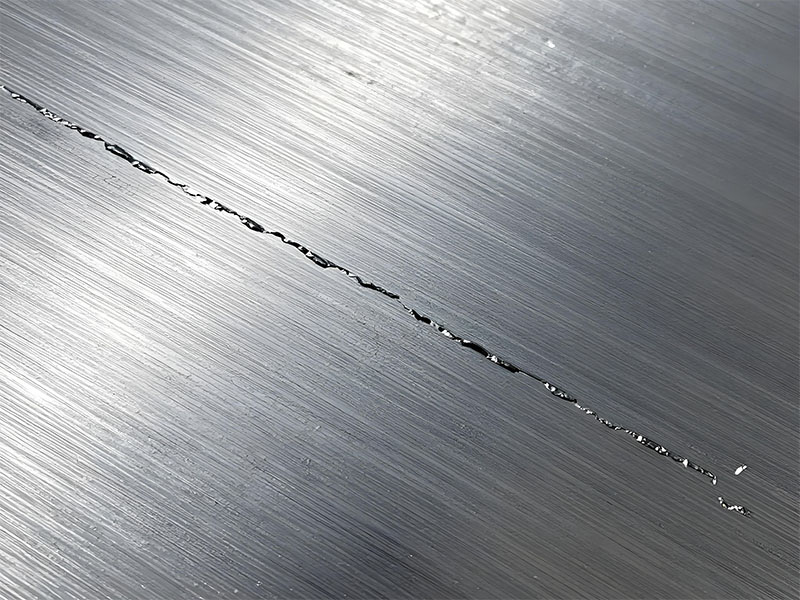
Built-Up Edge on aluminum cnc machining parts
Poor Surface Finish (Rough or Tear Marks)
What it looks like:
Rough, torn, or “grainy” surface instead of smooth machined finish.
Why it happens:
Dull tools, incorrect speeds/feeds, chip re-cutting, or excessive tool deflection.
How to avoid it:
- ✅ Use sharp, fresh carbide tools
- ✅ Increase spindle speed (higher SFM = better finish in aluminum)
- ✅ Take a light finish pass(0.2-0.5 mm depth)
- ✅ Use coolant to flush chips away
- ✅ For AL6063/AL6060 – consider climb milling only
Best alloys for great finish: AL6063, AL6060, AL5052 (with proper technique).
Burrs (Ragged Edges)
What it looks like:
Raised, sharp edges along part perimeters or holes – requires manual deburring.
Why it happens:
Aluminum is ductile. Instead of shearing cleanly, it “pushes” before cutting.
How to avoid it:
- ✅ Use sharper toolswith high positive rake angles
- ✅ Increase feed rate on final pass
- ✅ Use Gleichlauffräseninstead of conventional milling
- ✅ Add a chamfer passto break edges in-program
- ✅ For holes – use peck drilling with retract to break chips
Worst alloys for burrs: AL5083, AL5052, AL6063, AL6060.
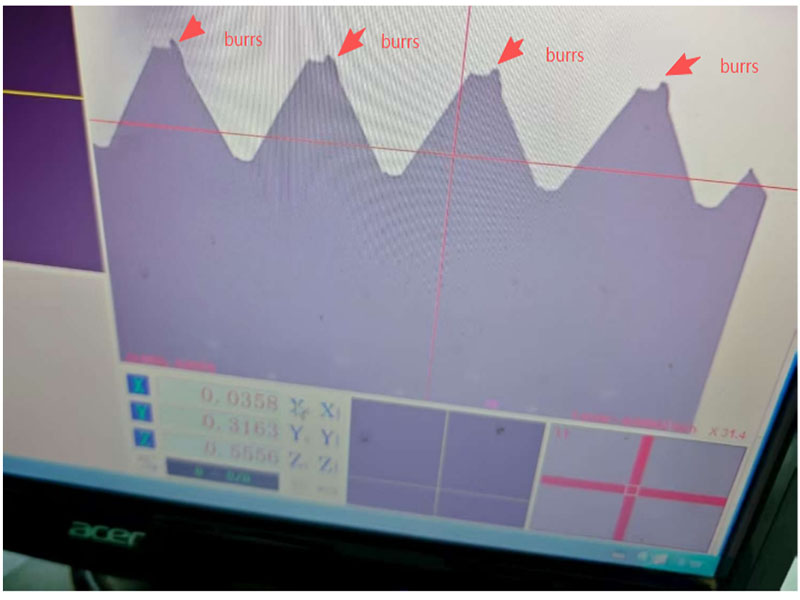
Chip Welding / Packing
What it looks like:
Long, stringy chips that wrap around the tool or pack into flutes – can break tools.
Why it happens:
Not enough coolant, wrong chip breaker geometry, or incorrect feed rate.
How to avoid it:
- ✅ Use tools with chip breakersdesigned for aluminum
- ✅ Increase feed rate (thicker chips break easier)
- ✅ Use high-pressure coolant directed at cutting zone
- ✅ For drilling – use pecking cyclesto break chips
- ✅ Consider through-spindle coolant(TSC) for deep holes
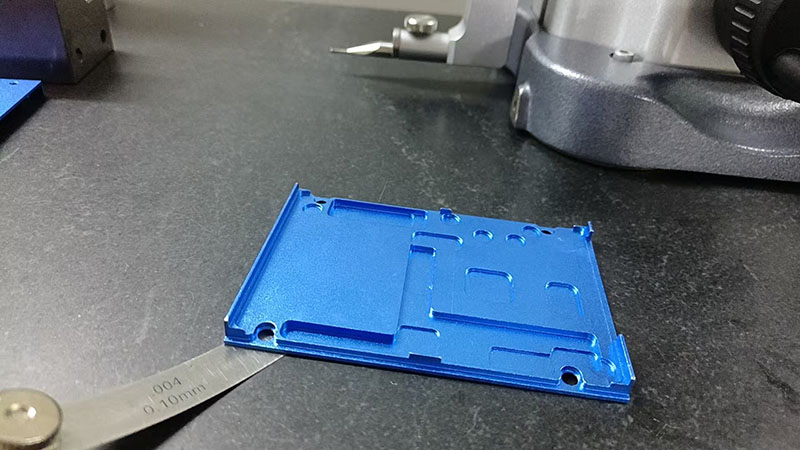
Dimensional Inaccuracy (Part Warping)
What it looks like:
Finished part doesn’t match CAD dimensions – especially on thin walls or large flat parts.
Why it happens:
Residual stress in the raw material releases during machining. Thin walls deflect. Heat distorts the part.
How to avoid it:
- ✅ Stress-relieveraw material before machining (especially AL7075 and AL2024)
- ✅ Use roughing pass first– then finish pass after material stabilizes
- ✅ Leave stock on thin walls– then take final light pass
- ✅ Use fixturingto support thin sections
- ✅ Reduce heat – use coolant and sharp tools
Worst alloys for warping: AL7075, AL2024 (high residual stress)
Quick Reference: Defects by Alloy
| Defect | Worst Alloys | Best Alloys |
| Built-up edge (BUE) | AL5083, AL5052, AL6060, AL6063 | AL6061, AL7075, AL2024 |
| Schlechte Oberflächenqualität | AL5083, AL7075 (if wrong speeds) | AL6063, AL6060, AL5052 |
| Burrs | AL5083, AL5052 | AL6061, AL7075 |
| Chip welding | AL6060, AL6063 | AL6061, AL7075 |
| Warping | AL7075, AL2024 | AL6061, AL5083 |
| Galling | AL7075, AL2024 | AL6061, AL5083 |
| Tool breakage (small tools) | All alloys – operator/strategy dependent | K.A. |
Symachining’s Defect Prevention Checklist
Before every aluminum job, we verify:
- Tool sharpness & coating (polished or DLC for gummy alloys)
- Speeds & feeds optimized for specific alloy
- Coolant flow & pressure adequate
- Fixturing supports thin walls
- Roughing vs. finishing strategy defined
- Chip evacuation path clear
✅ Ergebnis: Parts that meet tolerance on first run. No surprises.
Why Choose Symachining for Your Aluminum CNC Machining?
We’ve machined tens of thousands of aluminum parts across all 8 major alloys – from simple brackets to complex 5-axis aerospace components.
We know exactly how to avoid the defects above because we’ve solved them all – many times.
What you get:
- 🔹 Free DFM review before machining
- 🔹 Alloy-specific toolpath optimization
- 🔹 In-process inspection
- 🔹 First-article inspection report
- 🔹 No minimum order quantity
Ready to Get Aluminum Parts – Defect-Free?
Stop guessing. Start machining with confidence.
👉 Sending your CAD file and get a quote at Symachining.com
Or need help choosing the right alloy?
👉 Read our Aluminum Alloy Selection Guide →
You May Also Like