Let’s talk about MIG Welding vs TIG Welding today.
If you’ve ever stood in a workshop watching sparks fly, you’ve probably noticed that not all welding looks the same. Some welders move quickly, laying down long, steady beads, while others work slowly and precisely, almost like artists. That difference usually comes down to one key choice: MIG welding or TIG welding.
At first glance, it might seem like a simple “which is better” question. But in reality, it’s more like choosing between a power tool and a precision instrument. Both have their strengths. Both have their place. And picking the wrong one for your project can cost you time, money, and quality.
So instead of giving you a generic answer, let’s break it down in a way that actually helps you make the right decision.
Understanding the Basics Without the Jargon
MIG welding (Metal Inert Gas welding) is often considered the go-to method for speed and efficiency. It uses a continuously fed wire electrode and a shielding gas to protect the weld. You pull the trigger, and the machine does most of the feeding work for you.
TIG welding (Tungsten Inert Gas welding), on the other hand, is more hands-on. It uses a non-consumable tungsten electrode, and you manually feed a filler rod if needed. It’s slower, more controlled, and requires a bit more skill to get right.
If MIG is like using a hot glue gun, TIG is more like using a fine-tip soldering iron. Both can get the job done—but the experience and results are very different.
MIG Welding vs TIG Welding: Key Differences (Summary)
| Merkmal | MIG (GMAW) | TIG (GTAW) |
| Prozess | Continuous wire electrode fed automatically | Non-consumable tungsten electrode;
filler rod added manually |
| Shielding gas | Argon, CO₂, or mix | Argon (or helium) |
| Geschwindigkeit | Fast (great for production) | Slow (high precision) |
| Skill level | Easier to learn | Difficult to master |
| Material thickness | Thin to thick | Thin to medium (excellent for thin sections) |
| Typical materials | Steel, stainless, aluminum | Stainless steel, aluminum, titanium, exotic alloys |
| Outdoor use | Not ideal (wind disperses gas) | Worse (even more wind-sensitive) |
| Finish quality | Good, but can have spatter | Excellent, clean, aesthetic welds |
| Kosten | Lower equipment cost | Higher equipment & consumables cost |
Speed vs Precision: The First Big Trade-Off
Let’s start with what most people care about first: how fast can you get the job done?
MIG welding is built for speed. Because the wire feeds automatically, you can weld continuously without stopping to reload filler material. This makes it ideal for production environments, large structures, or any job where time is a critical factor.
TIG welding, in contrast, is slower by design. You’re controlling more variables at once—torch position, filler rod, heat input—so the process naturally takes longer. But that slower pace comes with a benefit: control.
If your project involves tight tolerances, thin materials, or visible welds that need to look clean and refined, TIG welding starts to pull ahead.
Weld Quality: What Are You Really After?
This is where things get interesting, because “quality” doesn’t mean the same thing for every project.
MIG welding produces strong, durable welds that are more than sufficient for most structural applications. Think automotive frames, heavy equipment, or general fabrication. The welds may not always be the prettiest, and there can be some spatter, but they’re reliable.
TIG welding is often considered the gold standard for weld appearance. The beads are smooth, clean, and precise. There’s little to no spatter, and the level of control allows for highly consistent results.
If your project involves aerospace components, medical devices, or high-end consumer products where appearance and precision matter, TIG welding is hard to beat.
Material Compatibility: Not All Metals Are Equal
Different materials respond differently to heat, and this is another area where the choice between MIG and TIG matters.
MIG welding works very well with:
- Mild steel
- Rostfreier Stahl
- Aluminum (with the right setup)
It’s especially effective on thicker materials where heat control is less critical.
TIG welding, however, shines when working with:
- Thin metals
- Exotic alloys
- Aluminum, magnesium, and copper alloys
Because TIG gives you finer control over heat input, it reduces the risk of warping or burning through delicate materials. That’s a big deal if you’re working on precision components.
Ease of Learning: How Steep Is the Curve?
If you’re new to welding—or if your team needs to scale quickly—this factor matters more than people often admit.
MIG welding is generally easier to learn. The process is more forgiving, and you can get acceptable results relatively quickly. That’s why it’s widely used in manufacturing environments where consistency and throughput are priorities.
TIG welding takes more time to master. It requires coordination between both hands and a good sense of timing and heat control. Mistakes are easier to make and harder to hide.
But here’s the trade-off: once mastered, TIG gives you a level of control that MIG simply can’t match.
Cost Considerations: Equipment and Operation
Let’s talk about the financial side, because it’s not just about the machine itself.
MIG welding equipment is typically more affordable upfront. It’s also faster, which reduces labor costs over time. For high-volume production, this can make a significant difference.
TIG welding machines tend to be more expensive, and the process is slower, which increases labor costs. However, for projects where rework or failure is costly, the precision of TIG can actually save money in the long run.
It’s not just about what you spend—it’s about what you avoid spending later.
Real-World Scenarios: What Should You Choose?
Instead of thinking in abstract terms, let’s look at how this plays out in real projects.
If you’re building a large steel frame or producing parts in bulk, MIG welding is usually the better choice. It’s fast, efficient, and more than capable of delivering the strength you need.
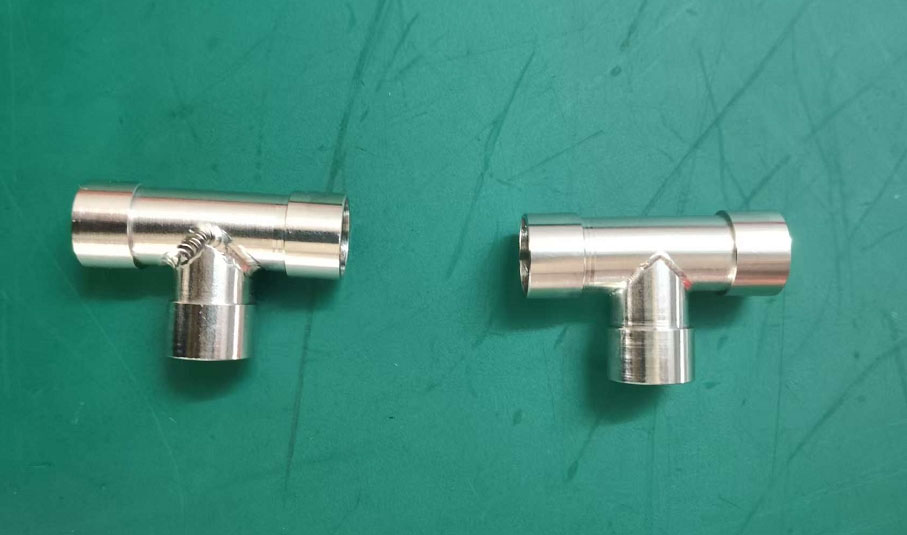
If you’re working on a custom part with tight tolerances—especially something that needs to look good as well as perform—TIG welding becomes the smarter option.
For example, in CNC-Bearbeitung nach Maß environments, welded components often need to integrate seamlessly with precision-machined parts. In those cases, TIG welding’s accuracy can make a noticeable difference in the final assembly.
The Hidden Factor: Post-Processing
One aspect that often gets overlooked is what happens after the weld is complete.
MIG welds may require additional cleanup, such as grinding or polishing, especially if appearance matters. This adds time and cost to the process.
TIG welds, by contrast, are usually cleaner right off the torch. Less spatter means less finishing work, which can offset the slower welding speed in certain applications.
So while MIG wins on speed during the welding phase, TIG can catch up when you consider the entire workflow.
Ähnlicher Artikel:
How Precision CNC Manufacturing Turns Speed into a Competitive Advantage